Urgent.News

What's breaking now, across thousands of outlets.

Business

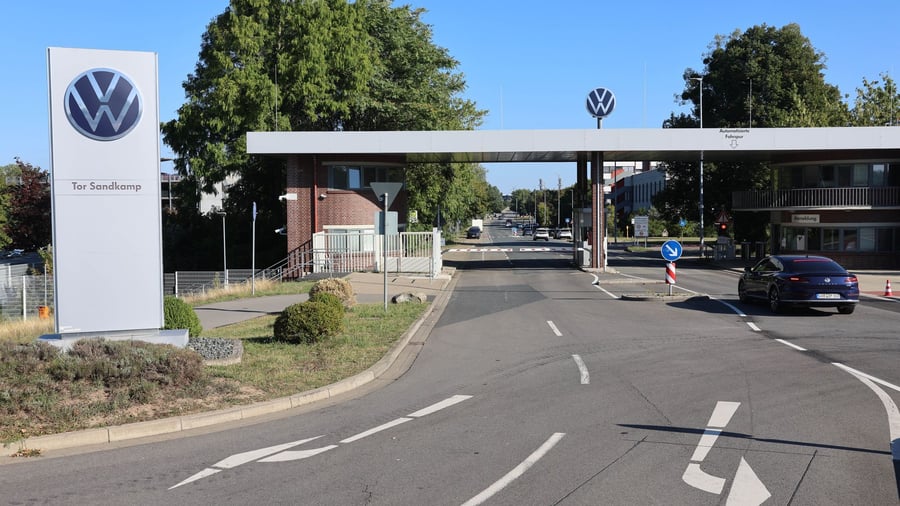
Autobauer Volkswagen: VW im Umbruch: Vorstand erntet heftige Kritik für Sparkurs

VW steht vor tiefgreifenden Veränderungen und Vorstandschef Blume sieht drastische Einschnitte dabei als unvermeidbar. Der Gegenwind fällt heftig aus.

Autobauer Volkswagen: VW im Umbruch: Vorstand erntet heftige Kritik für Sparkurs

Volkswagen finds itself in crisis mode as the company undergoes its largest transformation yet. To future-proof the enterprise, the leadership has implemented unavoidable cost-cutting measures. However, the union, the works council, and the government are not sharing the same viewpoint. Can a series of works councils meetings bring some relief?

At its kickoff in Wolfsburg, the answer does not seem to be promising. Chief executive Oliver Blume repeatedly emphasizes that the crisis is not internal to Volkswagen. "The entire automotive industry is under immense pressure," he says on Tuesday at the Wolfsburg headquarters. He attributes the situation, which affects all major manufacturers and suppliers, to US tariffs, the development of the Chinese market, and several political crises.

Blume's company appears to be doing well compared to its competitors, but he stresses the need to reduce complexity, streamline structures, and cut costs. The company has "taken early countermeasures" and begun restructuring the group and the brands. According to the chief executive, the group is capable of acting, but it also needs to act urgently.

He points to Volkswagen's 3.8% operating margin, which is solid in this demanding situation, but not enough to finance the company's future on its own. By 2030, Volkswagen has already announced the elimination of 50,000 jobs across the group. Of these, 35,000 will be in Germany, with the rest at subsidiaries such as Audi and Porsche.

Over 37,000 employees have already signed agreements. In spring, Blume announced the work on a new "vision 2030" for the group, which will further tighten the cost-cutting measures. Since then, Volkswagen has been busy trying to find thousands of additional jobs and four complete sites. Blume regards the figure of 50,000 as a "theoretical computing size," derived from costs, and not a "target size."

About half the demand can be found in Germany, and the rest worldwide in around 170 companies. With regard to possible plant closures in Emden, Zwickau, and Hannover, as well as the Audi plant in Neckarsulm, Blume speaks of a last option he would like to avoid in late July. As for plant closures, he has not yet announced any "competitive occupation" for the four plants for the 2030s.

In Emden and Zwickau, where VW invested considerable money in the shift to electric mobility, Blume announced this Wednesday. Hannover closes the series on August 31. The chief also wants to focus on more than 2,000 holdings and the model range. "We have to honestly ask ourselves: What strengthens our core business?" Blume asks.

The powerful works council responded with outrage and called an extraordinary works council meeting at the headquarters. Works council president Daniela Cavallo harshly criticizes the management led by Blume. She accuses the CEO of damaging trust, especially in the chief executive, saying that it is impossible to work with a leader who does not tell them the truth.

Cavallo, according to participant accounts from the headquarters, speaks of a headline-grabbing figure that always pleases on the stock exchange. However, she criticizes the lack of explanations about which priorities, brands, regions, and subsidiaries should be in focus. "No, that's not what they say," Cavallo complains, according to the information.

She received applause from significantly more than 10,000 employees. Lower Saxony's Prime Minister Olaf Liebs (SPD) repeatedly emphasizes that plant closures are not an option. The size of the company is rather an opportunity, the government chief says, as he sits on the VW supervisory board. Lower Saxony holds 20% of the voting rights in Europe's largest automaker.

Lies also speaks in favor of using growth potentials, especially in the electric mobility market, and the production for armaments to ensure the security of plant utilization phase by phase. Industry expert Stefan Bratzel from the Center of Automotive Management (CAM) expects a "hot autumn" at Volkswagen. But he also does not expect much clarity from the upcoming works councils.

"The strategic decisions are made in the supervisory board," says Bratzel. The next meeting of this body is scheduled for September.

Written by urgent.news from Handelsblatt's reporting — not their text. Machine-written — may contain errors; check the original before relying on it.

Read the original at handelsblatt.com →

More in Business

More from Tuesday 25 August →