APOD: 2026 August 25 – Earth’s Shadow Visualized with Lunar Eclipses
The post APOD: 2026 August 25 – Earth’s Shadow Visualized with Lunar Eclipses appeared first on NASA Science .
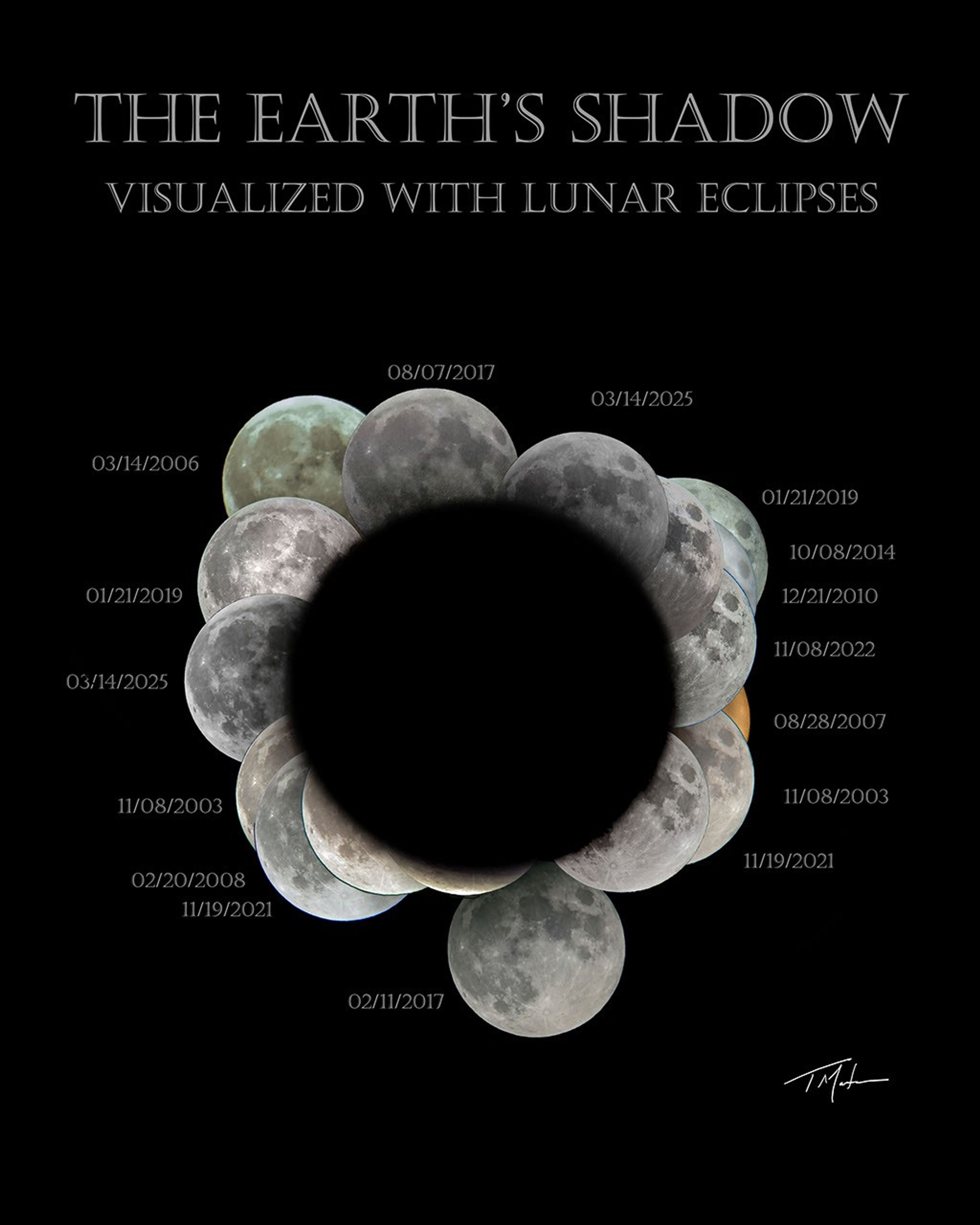
On August 25, 2026, a fascinating image of Earth's shadow visualized through lunar eclipses was featured in the Astronomy Picture of the Day (APOD). This unique perspective reveals the circular shadow cast by Earth on the Moon during partial lunar eclipses, a phenomenon that has intrigued astronomers since at least the time of Aristotle.
The shadow's circular shape is a result of Earth's roundness, but it's never a complete circle since lunar eclipses do not occur every month. The Moon's orbit is slightly tilted relative to Earth's orbit, causing the Moon to be eclipsed only during specific times when the Sun, Earth, and Moon align perfectly.
To create the impressive image, astrophotographer Tim Martin compiled data from 22 years of lunar eclipses. This compilation showcases Earth's complete shadow over time. When observing lunar eclipse images closely, one can notice a faint blue band. This band is caused by Earth's atmosphere filtering out more red sunlight, allowing blue light to pass through more easily.
The next lunar eclipse will occur later in the week and will be most visible in parts of North and South America, Europe, and Africa. As the APOD continues to share captivating images and explanations of our universe, readers are encouraged to explore the latest astronomy content at the new main NASA site, now accessible at science.nasa.gov/apod.
Written by urgent.news from NASA Science's reporting — not their text. Machine-written — may contain errors; check the original before relying on it.