Alternative zu China: Das Wirtschaftswunder von Vietnam
Vietnam galt als einer der größten Verlierer des US-Zollkriegs. Ein Jahr später boomt das Land wie keine andere große Volkswirtschaft in Asien – und wird zur Chance für deutsche Unternehmen.
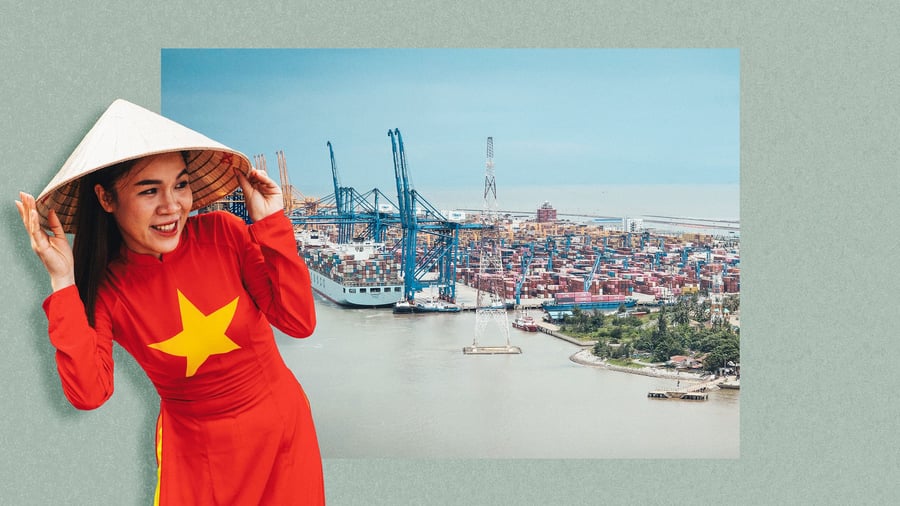
Alternative zu China: Vietnam's Economic Miracle
At a warehouse near Ho-Chi-Minh City, Vietnam, stacks of fans for AI data centers arrive in containers. Alexander Reich, head of Ziehl-Abegg's branch in the Southeast Asian nation, oversees a large order for Amazon's AI infrastructure. The fans are shipped weekly from Vietnam to the U.S. in containers. The company's production in Vietnam will supply 60% of the U.S. market next year, according to Reich.
This is due to Vietnam's strong connectivity with other countries and its ease of shipping to the U.S. compared to China. Ziehl-Abegg, the German manufacturer, opened a new factory in Vietnam's Dong Nai province two years ago, hoping to reduce its dependence on China. The company has invested nearly 25 million Euros in Vietnam and plans to invest more in expanding its ventilation technology for AI data centers.
Vietnam has attracted more foreign investment than any other Asian country, with net inflows of around 20 billion U.S. dollars last year. Only Singapore, the regional headquarters of many international companies, and China, India, and Indonesia have more foreign direct investment, according to the UN Trade Organization. Vietnam's foreign direct investment increased by 11% in the first half of this year compared to the previous year, making it a remarkable development for the communist-ruled country of 100 million people.
In 2018, Vietnam was seen as one of the biggest losers of US President Donald Trump's trade policy, initially penalized with a 46% tariff. However, this has since been largely resolved through bilateral agreements and court rulings in the United States. Currently, Vietnam faces a 12.5% tariff, the same as for dozens of other US trade partners.
Vietnam's growth is expected to continue, with the country's gross domestic product projected to grow by 10% this year and reach double-digit growth rates annually by 2030. If this happens, it would be the highest growth rate among Asia's major emerging economies since Vietnam's economic liberalization 40 years ago. Independent economists are more cautious, projecting a 7.2% increase for 2026, still the highest among major Asian emerging economies.
One of the best places to see Vietnam's boom is the northern province of Haiphong, where artificial land reclamation has created several hundred hectares of new industrial space. Companies like Apple and Sony supplier Pegatron have invested billions in Vietnam, moving their production from China to take advantage of the growing market.
Tesa, a German manufacturer, has also set up a large factory in the region, joining the wave of international corporations expanding their presence in Vietnam.
Written by urgent.news from Handelsblatt's reporting — not their text. Machine-written — may contain errors; check the original before relying on it.
Also reported by 1 other outlet
- Alternative to China: Vietnam's Economic Miracle handelsblatt.com