Almaraz: cuando el relato mata al dato
La prórroga de la central nuclear es una decisión política que el Ejecutivo no ha querido sostener con cifras ni con transparencia
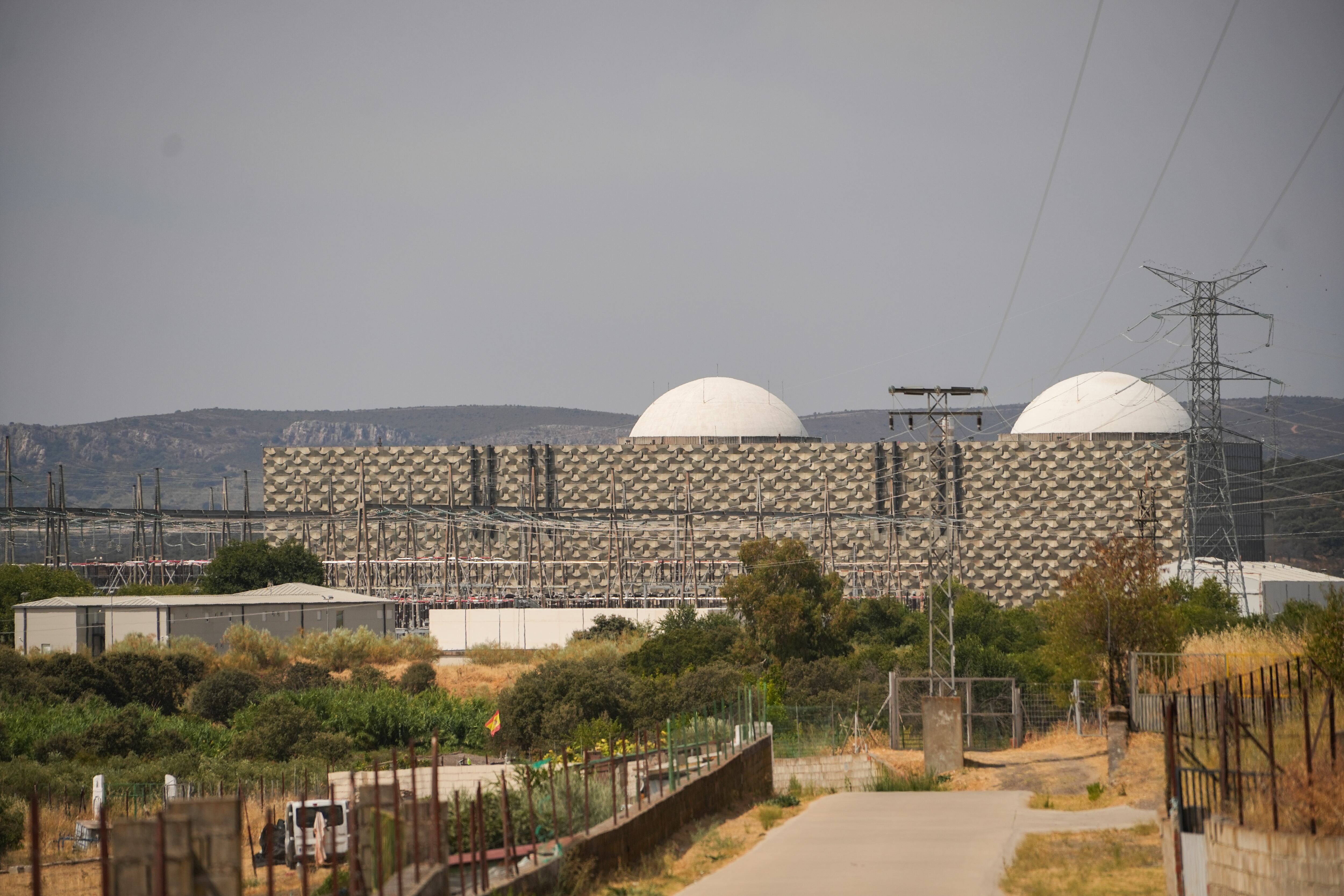
The Almaraz nuclear power plant has become a focal point for the government's strategy to shift public perception away from the evidence contradicting their claims. The "data kills the narrative" mantra has been a consistent theme for the executive branch in recent years. This sentiment can be observed in the growth of Gross Domestic Product (GDP), the predominately renewable electricity generation mix, job creation, assistance for disadvantaged classes, increases in the Minimum Interprofessional Salary (SMI), and the regularization of immigrants. However, the narrative has taken a different turn with the extension of Almaraz's operation.
The government has attempted to present this decision as inconspicuous or with minimal impact. The publication date of the Ministerial Order in the BOE on August 14th was no coincidence. If the government had data supporting the continuation of the reactors, they would not have approved the extension on a Wednesday, August 12th, a less favorable day for public attention.
The data that the government withholds or ignores are significant. The risks of maintaining the renewable option, the lack of competitiveness in nuclear-generated electricity according to the owners' statements, the lack of contribution to system manageability considering its participation in the overall energy balance, the generation of waste (a burden for future generations), and the insufficient funding for containment, all point to a non-competitive position for nuclear power in terms of country positioning and independence.
Additionally, the effects of the climate crisis on European nuclear power are noteworthy. In the summers of 2025 and 2026, European nuclear reactors were forced to shut down or reduce power due to water scarcity, which in turn affected the ability to cool reactors. It's important to note that the administrative process for closing Almaraz began in 2024, following an agreement signed in 2019 between the plant owners and the public company ENRESA.
This agreement extended the life of the nuclear park by ten years, allowing the average operational lifespan of the reactors to exceed 45 years. This concession was made in exchange for the shutdown of coal-fired plants during a gradual de-commissioning process.
The government's narrative shifted a year ago when it encouraged the nuclear plant owners to express interest in prolonging the operation. This occurred officially in October 2025. Although the government did not need it juridically, they sought an opinion from the Nuclear Safety Council (CSN), which was expected to be positive, as the company had already expressed support for a ten-year extension of the administrative life of the entire nuclear park.
The report was issued on July 16th, eight months after the request, initiating a two-month period for the government to adopt the report's conclusions or not. The report confirmed that the extension of the Almaraz reactors posed no safety issues. However, it was based on a dissenting vote by a council member appointed by Sumar, who questioned the logic of this continued operation.
Neither the dissenting vote nor Sumar's request to honor the government agreement were considered, leading to further division among government partners.
In the narrative of continued operation, the government has downplayed data-based reasons, such as the closure of the Strait of Hormuz and the risk to electricity prices. In the wake of the Iran war outbreak, the Energy Secretary, Joan Groizard, proudly boasted about the low volatility of the market price for major electricity in Spain due to the commitment to renewables, contrasting it with other European countries.
Interestingly, this reason was also used to withdraw assistance for electricity and increase incentives for diesel and gasoline, a measure that was difficult to comprehend and contrary to the climate change combat policy proclaimed. Moreover, the role of Red Eléctrica (REE) as the System Operator was overlooked, as it recommended the extension of Almaraz.
It's worth mentioning that since its creation, REE has operated with a fossil fuel mix and few operators, ignoring the additional management difficulties such as self-consumption, diversity of operators, and asynchronous generation. It's also curious that REE's technical opinion, which now serves as a justification for the extension, was not taken into account when they requested participation in voltage control for photovoltaic power in 2020, as a reason to make the system more manageable.
The political weight of Catalonia also played a role. The opposition to the closure of nuclear plants is the rallying cry of almost all political spectrums within Catalonia. Given that nuclear power generates nearly 60% of Catalan electricity, and considering the recent approval of the Territorial Sectoral Energy Plan of Catalonia (Plater), the future stance on nuclear independence is evident.
The decision to extend Almaraz's operation must be viewed solely as a political decision, a choice that will be difficult to explain to PSOE voters who have witnessed the continuous anti-nuclear stance, fueled additionally by the frequent protests of Pedro Sánchez on the political commitment to renewables and the need to maintain the program.
Written by urgent.news from El Pais Economia's reporting — not their text. Machine-written — may contain errors; check the original before relying on it.