AI won’t replace radiologists, but it will dramatically change their jobs
A pioneering AI scientist once predicted computers would replace human radiologists. They haven't.
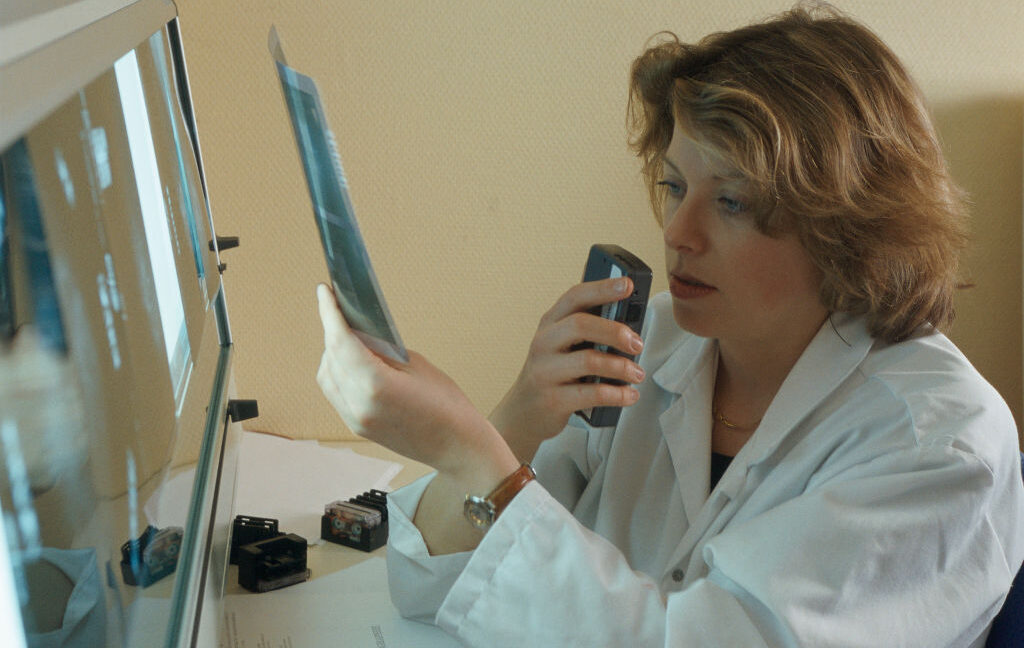
In 2016, Nobel laureate Geoffrey Hinton famously forecast that radiologists—specialists in interpreting medical images like X-rays and ultrasounds—would soon be outpaced by artificial intelligence. However, the reality is far from that. Far from disappearing, the field of radiology is actually expanding, with projections indicating that the number of practitioners will surge by 26 percent or more in the next three decades.
While Hinton may have underestimated the impact of AI on the job market, his initial insight was accurate: radiologists now have a high-tech counterpart that matches or surpasses their capabilities.
Radiology has indeed emerged as the leading sector in healthcare for artificial intelligence, accounting for the majority of FDA-approved AI-enabled medical devices. These tools enhance radiologists' efficiency by automating report generation and highlighting urgent images. Moreover, AI has the potential to surpass human performance by detecting abnormalities that may escape human eyes or interpreting images with the same accuracy, and sometimes even greater precision, than trained radiologists.
For instance, a study of 43 clinical trials revealed that AI-assisted colonoscopies uncover more polyps compared to traditional methods.
Written by urgent.news from Ars Technica Health's reporting — not their text. Machine-written — may contain errors; check the original before relying on it.