A Human Skeleton Was Found Inside a Mysterious Stone Structure in Scotland. Archaeologists Still Don't Know Why It Was Buried There
Built with fitted stone and a clay-like material that may have helped retain liquid, the unusual structure has left researchers searching for an explanation
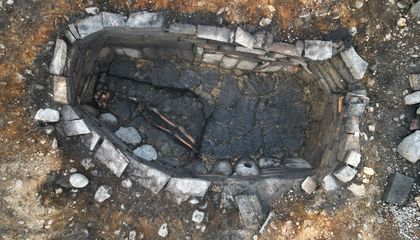
Archaeologists in northern Scotland have discovered a human skeleton inside a mysterious stone structure, which may date back to the Iron Age. The unusual burial, found near the town of Dornoch, was uncovered earlier this year by researchers with Highland Archaeology Services, a commercial archaeology company. As crews prepared for an expansion of a local quarry, they began excavating a ring of stones that revealed an oval-shaped depression measuring around 10 feet long, 6.5 feet wide, and 3 feet deep.
The structure was lined with stone, featuring a slabbed floor and steep steps leading down into it. Inside, archaeologists discovered a human skeleton, animal bones, and deposits containing charcoal, burnt wood, a broken steatite (soapstone) bowl, and a fragment of a shale bangle. These artifacts, along with nearby pits and postholes that may represent roundhouses, have led archaeologists to tentatively date the site to the Iron Age.
The discovery's resemblance to previously identified structures is unusual, leading researchers to suggest it could be a souterrain, a kind of underground room used for food storage and enemy defense, or possibly incorporated into an aboveground building, such as a roundhouse. Alternatively, it might have served as a ritual well or a place to deposit human and animal remains during the closure of the structure.
The exact purpose of the structure remains uncertain, although it appears to have been built without conventional mortar, with some stones repurposed as large knocking or grinding stones. Further analysis of the skeleton may provide more information about the individual's age, sex, and life, but determining a cause of death is unlikely.
The Dornoch burial is rare in northern Scotland, where acidic soils often hinder the preservation of ancient human remains. The site is located near a prehistoric settlement, but the connection between the burial and the settlement is unclear.
Written by urgent.news from Smithsonian's reporting — not their text. Machine-written — may contain errors; check the original before relying on it.