Why monochrome has become the most important part of my photographic style, and it could be yours too!
Why I think Monochrome photography gives ordinary moments greater purpose
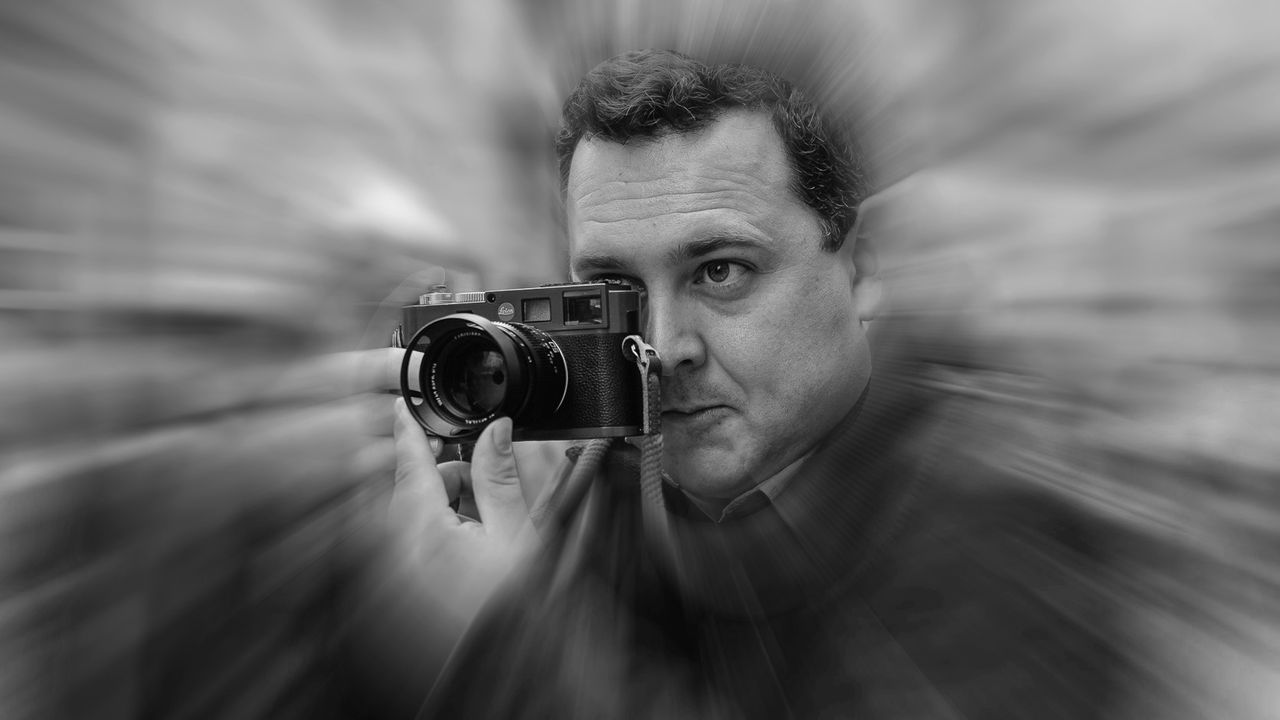
For years, I believed that discovering your photographic style was something that happened naturally. You took enough pictures, used different cameras, experimented with various lenses, and eventually, your unique look emerged. However, this moment of clarity only occurred for me when I stopped shooting in color. This decision wasn't a fleeting experiment; I've been predominantly shooting in monochrome for over four years, and I've never looked back.
Initially, this was a creative change, but it quickly became the way I wanted to see the world through my camera. The more I stuck with it, the more natural it felt, to the point where I often visualize scenes in black and white before even lifting the camera to my eye. This transformation might seem unusual for someone who spent years as a professional sports photographer, where color played a crucial role.
In sports photography, the colors of uniforms, advertising boards, floodlights, crowds, and atmosphere were essential to telling the story. Color helped place me right in the moment, and I never questioned it since it was just part of the job. However, my photography has shifted considerably since then.
Now, I'm more interested in documenting the world around me, focusing on ordinary places, people, buildings, landscapes, and little pieces of everyday life that may not seem important today but could become significant in the future. Removing color from these photographs has made me see subjects more clearly than ever before. Once I committed to monochrome, I started looking at light differently, noticing shadows, textures, shapes, and contrast instead of how colors within a scene worked together.
I deliberately aimed for a heavier, higher-contrast black-and-white style with deep blacks and strong highlights. This change altered how I approach a photograph, making me think more about how the scene would translate into tones rather than simply recording what's in front of me.
This shift wasn't instantaneous; over the past four years, my eye gradually adapted to my new vision. I now pay attention to strong shafts of light, the separation between dark and light colors, the texture of old stone buildings, and how mist flattens distant landscapes. These elements now catch my attention, and monochrome has trained me to be more selective and deliberate.
Monochrome photography also has a timeless quality that appeals to me. An image made today could almost have been taken 40 or 50 years ago, assuming the world leaves clues about the photograph's time – cars, clothes, road signs, and architecture all reveal this eventually. By stripping away color, monochrome turns contemporary photos into something that feels slightly archival, capturing a mood and moment that may no longer exist.
This timeless quality has become increasingly important to me. I no longer want my photographs to merely state, "this is what this place looked like today." I want them to feel like records, preserving not just a location but a way of life, mood, and moment that will be gone in decades. That's why monochrome increasingly feels more documentary to me.
While documentary photography doesn't require black and white, I find that stripping away color often results in a simplicity and permanence akin to records of communities, working lives, and ways of living that are changing around me.
Living in a part of England where old ways of life still exist, I'm acutely aware that these traditions will eventually disappear. Old buildings vanish, independent shops close, farms change, villages expand, and traditional pubs are refurbished or vanish. The things we overlook daily can become historically significant the moment they're gone.
The modern world moves quickly, and I want to capture these things before they're lost. An old sign painted on a building, a farmer working in a field, a village shop unchanged for decades, or the way people gather in a particular place can all hold historical significance. Monochrome seems to encourage me to treat even ordinary subjects with more seriousness, as if I'm creating an archive rather than just filling a memory card. By focusing on black and white, I make these subjects feel valuable with the passage of time.
Written by urgent.news from Digital Camera World's reporting — not their text. Machine-written — may contain errors; check the original before relying on it.