What happens inside a wildfire? A Ph.D. student is finding out
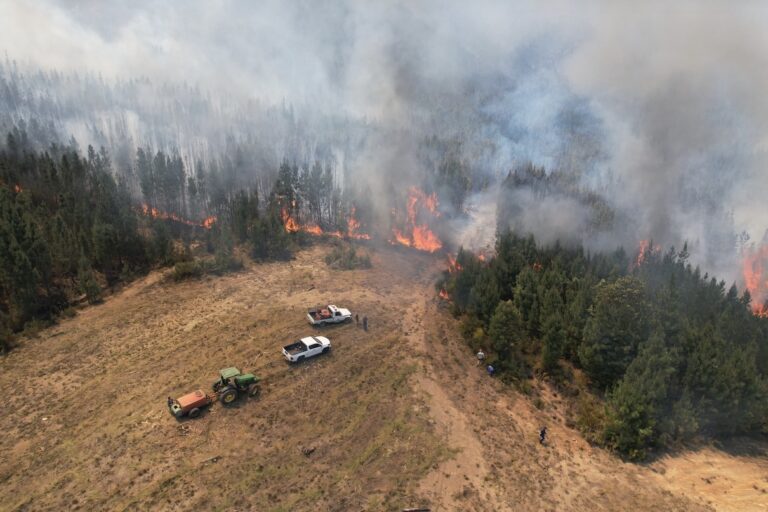
What happens during a wildfire? The short answer is: much more than we know. As wildfires burn through trees, grasses and other vegetation, heat from the flames sets off thousands of chemical reactions at once. Molecules break apart, recombine and transform into new compounds, releasing gases, soot and other carbon-rich particles into the air.

Wildfires unleash a complex chemical reaction inside the flames, releasing gases, soot and other carbon-rich particles into the air. Jas Shahanand, a Ph.D. student in mechanical engineering at CU Boulder, is studying these reactions to improve wildfire emissions models and climate predictions. The key driver of combustion is a type of tiny molecule called radicals, which are highly reactive and create a chain reaction when they steal electrons from stable molecules.
These reactions occur so quickly, however, that they are nearly impossible to observe directly. Shahanand's team focuses on resonance-stabilized radicals, which are more stable than normal radicals and can be detected and studied for a longer period of time. By understanding these radical reactions, researchers can gain insight into the chemical behavior behind different forms of combustion, from engines to planetary behavior.
Written by urgent.news from Phys.org's reporting — not their text. Machine-written — may contain errors; check the original before relying on it.