Waffen, Hacker, Zwangsarbeit: das dunkle Geschäftsmodell hinter Nordkoreas Boom
Bittere Armut trifft auf Smartphone-Rausch: Nordkorea wächst nach langer Krise seit mehr als drei Jahren wieder – finanziert von Putins Ukraine-Krieg, Kryptodiebstählen und Gefängnisarbeit.
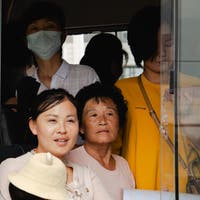
North Korea's booming economy is fueled by a combination of factors, including Putin's Ukraine war, cyber theft, and forced labor. Despite widespread poverty and a lack of modern infrastructure in many parts of the country, the capital city Pjongjang showcases a digital modernity that is thriving.
According to Martyn Williams, a technology expert at the Stimson Center in the United States, six cashless payment systems and 24 smartphone brands were observed during a guided visit to Pjongjang last year. These brands are run by various trade companies that aim to earn money, often requiring North Koreans to pay up to $500 for gadgets.
Nord Korea's recent economic success has been described as "surprisingly positive" by The Wall Street Journal. However, the source of the country's sudden influx of foreign currency remains unclear. Smartphones and luxury goods cannot be purchased with the weak domestic currency, the North Korean Won. Instead, North Koreans must use hard currencies like dollars or a digital currency for online purchases.
Foreign currency has been entering the country through trade, smuggling, and payments from North Koreans working abroad. Russia has played a significant role in providing funds, with North Korea reportedly sending entire rocket units to Russia's western border and potentially sending an additional 50,000 fighters. Bloomberg Economics estimated that Russia may have provided North Korea with $22 billion in weapons and soldiers since 2022. However, Russian payments go directly to the government, not the population.
Despite Russian payments not directly benefiting the population, North Korea's economy has grown, and average wages have increased. While North Korea does not publish reliable data, South Korea's central bank estimates the country's economic performance over decades. According to the bank, North Korea's economy grew by 3.5% in 2025, marking the third consecutive year of more than 3% growth.
The reasons behind North Korea's economic growth are still uncertain. Kim Jong Un lifted travel restrictions and used the time to mobilize resources, leading to the construction of factories, hospitals, and homes. In 2024, Kim launched the "regional development 20 times 10" policy, aiming to modernize 20 regions annually to reduce the development gap compared to the capital.
Construction and manufacturing sectors have seen growth due to the policy, with the Bank of Korea reporting more than 6% growth. Williams notes that it is unclear how many of the new factories and hospitals are actually being used. However, real improvements can be observed remotely, as evidenced by satellite imagery showing even villages with mobile internet signal.
Nighttime satellite images also reveal that the country has been getting brighter over time, indicating increased access to electricity in more areas, not just Pjongjang.
Written by urgent.news from NZZ Wirtschaft's reporting — not their text. Machine-written — may contain errors; check the original before relying on it.