U.S. Treasury could pull almost $1T from the general account to fund buybacks - report
Dow Jones futures dipped around 53,350 amid European trading on Monday. S&P 500 futures slipped 0.17%, hovering near 7,680, while Nasdaq 100 futures slipped 0.65% to about 29,200. Investors remained cautious, following the US Treasury's decision to double its buybacks of longer-dated government debt to counter rising bond yields.
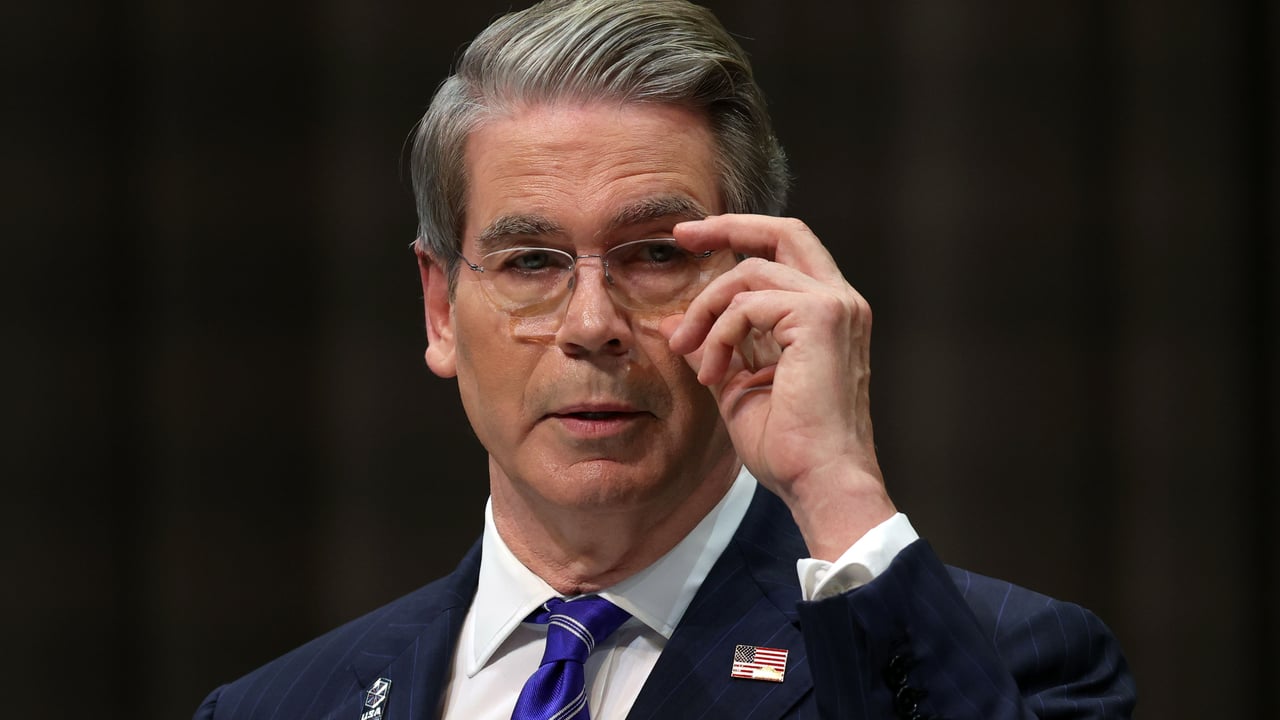
US Treasury Secretary Scott Bessent claimed that these buybacks may exceed $4 billion, aiming to demonstrate that high yields don't accurately mirror the economy's true condition. However, market sentiment continued to be hampered by worries that the ongoing US-Iran tension would maintain elevated oil prices, driving inflation and thwarting potential interest rate cuts.
The Treasury Secretary also disclosed plans for stringent sanctions against Iran and its trade allies, potentially disrupting global energy supplies due to Iran's oil shipments being halted and Chinese buyers withdrawing offers amid a U.S. naval blockade. Tehran labeled these measures ineffective, citing its past success in managing blockades and building economic resilience.
Recent market weakness saw the Dow Jones plummet 0.8% the previous week, marking its second weekly decline. The S&P 500 and Nasdaq Composite fell 1.4% and 2%, respectively, ending a three-week streak of gains. The broad sell-off came as the 30-year US Treasury yield surged to its highest level in nearly two decades, alongside multi-year peaks in bond yields from Japan, France, and Germany.
Investors are now bracing for critical economic data later this week, such as the July PCE inflation report and Federal Reserve Chair Kevin Warsh's speech at the Jackson Hole symposium. Deutsche Bank's US economists anticipate the Fed Chair's speech to either focus on the Fed's established task forces or address AI's impact on the economy and his perspective.
This suggests the speech could emphasize structural themes like artificial intelligence and internal Fed initiatives over immediate rate decisions. The Dow Jones Industrial Average, featuring the 30 most traded stocks in the US, is compiled price-weighted, as opposed to market-cap weighted indices like the S&P 500. Founded by Charles Dow, the index has been criticized for its narrow representation, tracking only 30 conglomerates instead of a broader range.
Various factors, including quarterly company earnings, US/Global macroeconomic data, and interest rates set by the Federal Reserve, collectively influence the Dow Jones Industrial Average. Dow Theory, devised by Charles Dow, aims to identify primary market trends by comparing the Dow Jones Industrial Average and the Dow Jones Transportation Average.
Volume, peak and trough analysis, and a three-phase trend model (accumulation, public participation, and distribution) support this analytical approach. Investors can trade the DJIA via ETFs, futures contracts, options, and mutual funds. The US Dollar experienced a slight recovery due to uncertainty about potential US sanctions on Iran, putting downward pressure on the British Pound.
Gold hovered near $4,650, its highest level in three months, while GBP/USD and EUR/USD exhibited defensive trading patterns amid heightened US-Iran tensions.
Written by urgent.news from FXStreet's reporting — not their text. Machine-written — may contain errors; check the original before relying on it.
This story
This is one outlet's version. Read the fullest account.