Tourism boom pushes limits of Athens air traffic control
GREEN arrows representing tourist-laden jets pile up on the screens of the Athens air traffic controllers, a puzzle to solve at the height of tourist season.
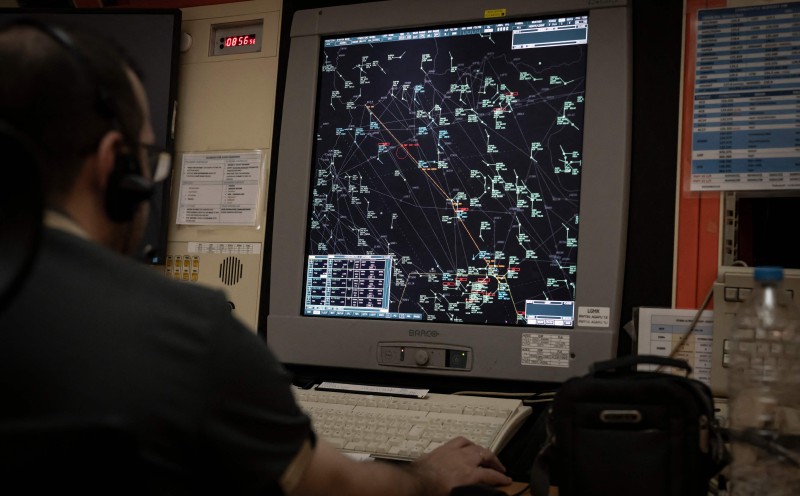
As Athens air traffic controllers grapple with a soaring influx of tourist-laden aircraft, the limits of their capacity become painfully apparent. Olga Toki, vice-president of the Association of Air Traffic Controllers of Greece, lamented the situation, declaring, "There is no room for any more planes!" In the summer months, the typically bustling Greek skies saw an average of 2,700 flights per day in early July, a sharp contrast to the usual 1,000 to 1,500 flights during the off-season, according to the Greek Civil Aviation Authority.
Tourism in Greece has boomed, with arrivals jumping 23 percent to 38 million last year compared to the pre-Covid peak of 2019, despite a shrinking population of around 10 million. This surge has placed immense pressure on the already stretched air traffic control system. In January, a breakdown in communication between controllers and pilots forced authorities to shut down Greek airspace for hours, resulting in a cascade of cancellations and diversions.
In response to the crisis, a renovation program worth about 300 million euros was announced, set to be completed by 2028. This includes the installation of new digital communication systems and the replacement of aging radar technology. However, the European Commission had previously criticized Greece for not aligning its navigation procedures with the global Performance-Based Navigation (PBN) standard.
Shift supervisor Giorgos Stamoulakatos expressed the dire staffing shortage, stating that with 154 controllers needed, the need was for 250. The controllers, working in 10 sectors, are stretched thin, with Giorgos estimating a need for 250 personnel but only 154 on hand. He lamented, "There are 154 of us controllers; we need 250."
The Middle East war has exacerbated the situation, adding an additional 300 flights daily crossing Greek airspace, accounting for nearly six percent of daily traffic. This influx of Middle Eastern flights, combined with the usual passenger traffic, has led to numerous delays and necessitated emergency measures by controllers. Areti Anastopoulos, with over three decades of experience, recounted, "Thirty-three planes landed in one hour. Twenty-eight is supposed to be our limit!"
The demands of Greece's strategic location, particularly in monitoring Turkish incursions and drones, further compound the workload. Aithitz Toki acknowledged, "Our position makes our job more challenging." Despite the extraordinary measures, Anastopoulos emphasized the critical nature of the work, stating, "What we're doing here is a superhuman attempt to keep everyone safe."
Written by urgent.news from New Straits Times's reporting — not their text. Machine-written — may contain errors; check the original before relying on it.
This story
This is one outlet's version. Read the fullest account.
- Tourism boom pushes limits of Athens air traffic control gulf-times.com
- Tourism boom pushes limits of Athens air traffic control bangkokpost.com
- Tourism boom pushes limits of Athens air traffic control freemalaysiatoday.com