Torkham’s importance for CPEC
For a border post most of the world has never heard of, Torkham carries an outsized weight this year. It is a narrow gap in the Kyber hills where trucks queue for days, drivers sleep beside their cargo, and diplomats in Beijing and Islamabad see it as one of the indicators of whether their newest infrastructure ambitions will rise or fall. In May 2025, foreign ministers from China, Pakistan and…
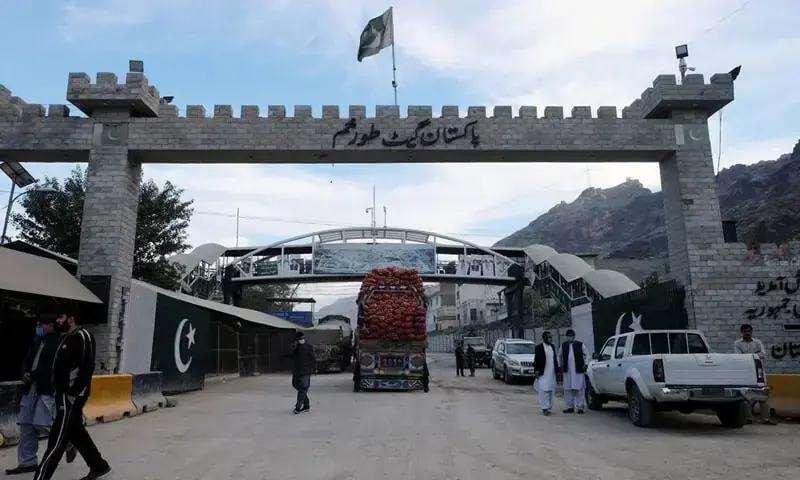
The border post of Torkham, though unfamiliar to many, holds significant importance in the context of CPEC. This narrow gap in the Kyber hills, where trucks queue for days and drivers sleep beside their cargo, serves as an indicator of the success of Beijing and Islamabad's newest infrastructure ambitions. In May 2025, foreign ministers from China, Pakistan and Afghanistan gathered in Beijing to formally integrate Afghanistan into the China-Pakistan Economic Corridor (CPEC).
Four months later, the 14th Joint Cooperation Committee (JCC) meeting approved a comprehensive Action Plan through 2029 — CPEC 2.0, centered around industrial zones, the ML-1 rail upgrade, and a westward road extension from Torkham to Kabul and from Chaman to Spin Boldak. On paper, this was CPEC's most significant expansion since its original plan was signed a decade earlier.
However, the reality proved otherwise. In October 2025, a rapid escalation in the security situation, triggered by a series of militant attacks, led to a shutdown of Torkham, impacting bilateral trade considerably. By February 2026, the closure had persisted for over three months, with a third to half of the trade measured to have collapsed, and thousands of containers stranded at the peak of the crisis.
This was the fifth major shutdown of the crossing since 2023. A deeper issue is that Pakistan lacks an alternative route to offer. According to regional transport data from Carec and the Asian Development Bank, all trade between Pakistan and Central Asia has traditionally flowed through Afghanistan, as the parallel route via China into Kazakhstan has never taken off commercially.
When Torkham closes, cargo either stops moving or reroutes permanently through Iran's Chabahar port or new rail links into Uzbekistan and Kazakhstan. This rerouting has already begun, with Afghanistan's exports to Central Asia increasing from $122 million in 2024 to $216 million in 2025. The slowdown in border clearance times, increased costs, and growing delays at Torkham are not isolated incidents but part of a larger trend, with the Carec Corridor 5, which Torkham is part of, ranking as the slowest-performing route in the region.
Despite China's growing involvement, providing Islamabad and Kabul a new avenue to manage disputes, the October 2025 closure underscores that Beijing's convening power does not guarantee a solution. Two rounds of trilateral diplomacy in 2025 were unable to prevent the crossing from closing again within a few months. A policy brief from Pakistan's Centre of Excellence for CPEC warns that further capital spending on the Afghan extension — such as the Peshawar-Kabul motorway, the ML-1 railway, and the Karakoram Highway realignment — may repeat past mistakes if not accompanied by protocols ensuring the continuous movement of commercial cargo, even during political disputes.
Digitization of customs paperwork and redundant crossing capacity at Chaman and other posts are suggested to prevent the entire western corridor from being paralyzed by a single dispute. Currently, Gwadar and Karachi remain the shortest route to the sea for landlocked Central Asia, and they continue to be vital trade routes. However, the ongoing shutdowns at Torkham are teaching traders in Kabul, Tashkent, and Almaty that Pakistan cannot be relied upon to keep these routes open during politically inconvenient times.
For CPEC 2.0, which aimed to transition from concrete infrastructure to competitiveness and reliability, Torkham will serve as the ultimate test, shipment by shipment, as politics and trade continue to intersect at this critical border.
Written by urgent.news from Dawn Business's reporting — not their text. Machine-written — may contain errors; check the original before relying on it.