The Supreme Court just revived Trump’s attempt to sabotage the 2026 election
In March, President Donald Trump issued a blatantly illegal executive order claiming that he had the power to unilaterally rewrite US election law. The order threatens prosecutions against state officials who allow certain people to vote, and it also requires states to include several federally mandated design elements in the envelopes that they use to […]
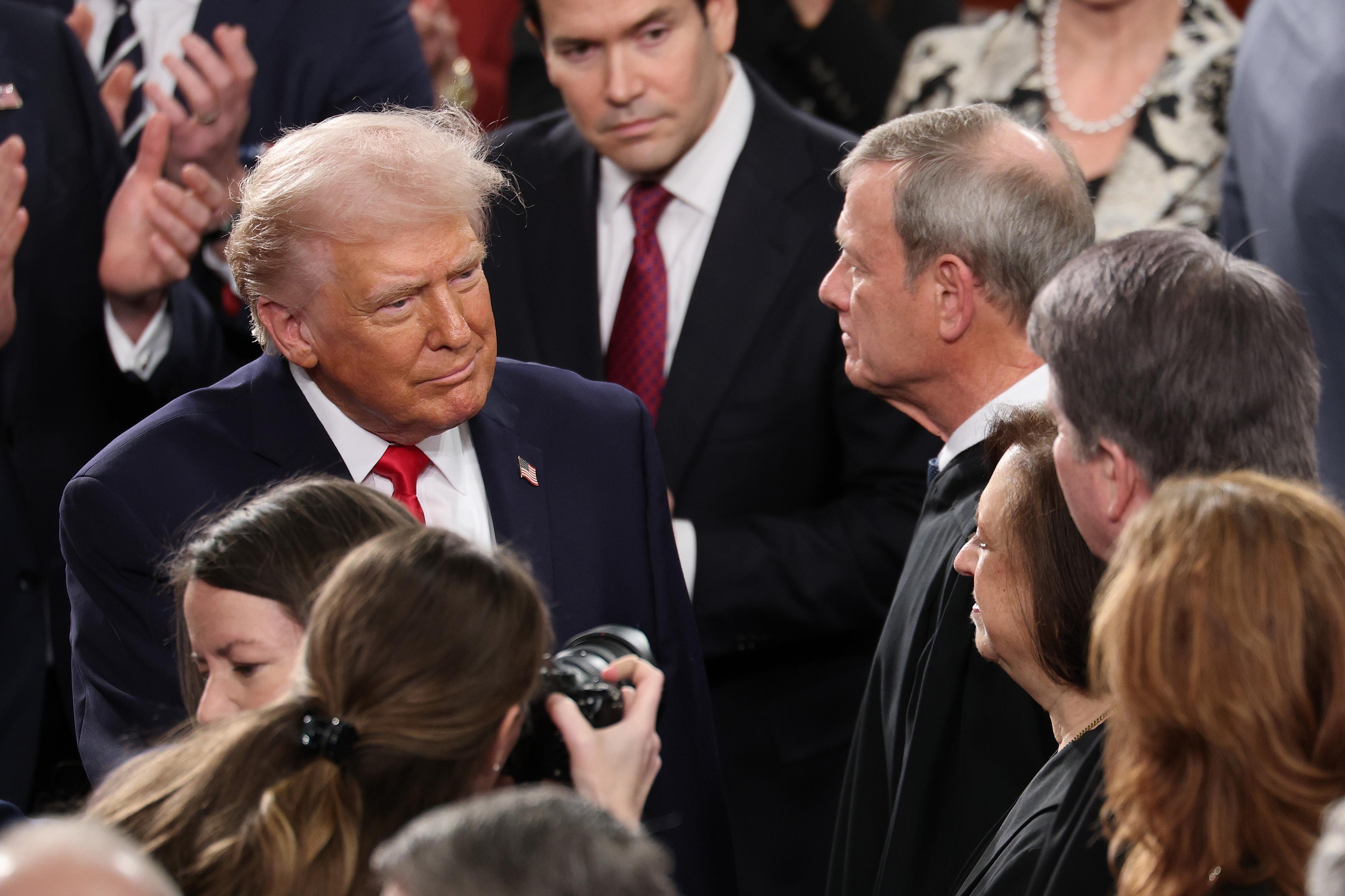
In March 2026, President Donald Trump issued an executive order attempting to unilaterally rewrite U.S. election law. This order threatened prosecutions against state officials who allowed certain individuals to vote and mandated specific design elements in the envelopes used to mail ballots. On Monday, the Supreme Court's Republican majority allowed this order to take effect, with all three Democratic justices dissenting.
Though the Court's decision in Trump v. California is troubling, it doesn't necessarily mean Trump's illegal order will be fully implemented. The Court ruled that two lower federal courts had moved too quickly in blocking the order, but it didn't address whether the order itself is legal. The decision reinstates Trump's order for now, but several lower courts are likely to issue new decisions blocking it soon.
The order's provision threatening prosecutions could deter state election officials from doing their jobs until that provision is blocked by another court. The Court's decision to reinstate the order, even temporarily, may confuse state officials preparing for the upcoming election, particularly those who rely on the provision that threatens prosecutions.
The case concerns two sections of Trump's executive order: one threatening state election officials with prosecution for allowing ineligible voters to vote, and the other aimed at sabotaging voting by mail during the 2026 midterms. The first section contains two provisions, one of which orders the Department of Homeland Security (DHS) to compile a list of eligible voters and the other allowing the attorney general to prioritize prosecutions against officials who issue ballots to ineligible voters.
While the majority opinion in Trump v. California hints at a connection between these provisions, the decision primarily focuses on whether to interpret the order's language in a literal manner. Dissenting Justice Sonia Sotomayor argues that the clauses are clearly connected, citing a previous Supreme Court decision warning against disregarding threats of criminal proceedings. However, the majority ignores Section 2's purpose and notes that the order doesn't explicitly require states to use DHS's list of approved voters.
The Republican justices hold that it's too soon to block Section 2, as DHS must compile the list or DOJ must prosecute someone before a challenge can proceed. This decision leaves Trump's threat in place but watered down considerably. The Court's ruling specifically states that the executive order does not require states to use DHS's approved voter list.
Written by urgent.news from Vox's reporting — not their text. Machine-written — may contain errors; check the original before relying on it.
This story
This is one outlet's version. Read the fullest account.