Tengku Ampuan Pahang’s journey in scholarship and heritage — Mohammad Eisa Ruhullah
AUGUST 24 — At a time when public attention is often drawn towards economic development, political contests and te...
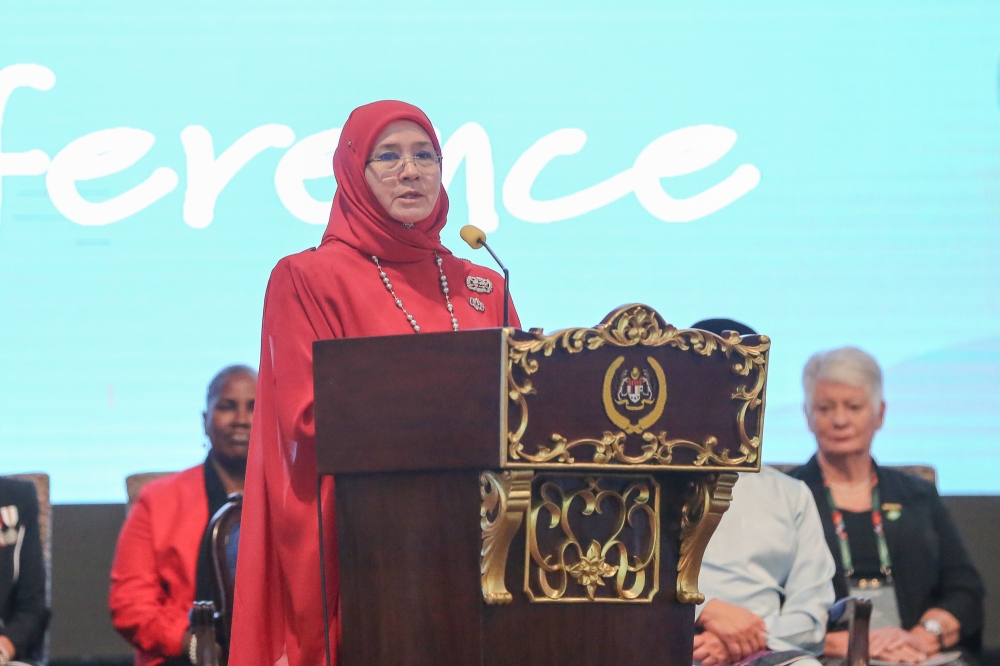
In a realm often preoccupied with economic growth, political rivalries, and technological progress, the intellectual odyssey of Tengku Ampuan Pahang, Tunku Azizah Aminah Maimunah Iskandariah Sultan Iskandar Al-Haj, has quietly unveiled the lasting bond between knowledge, governance, and cultural heritage. This narrative, viewed through the lens of an academic specializing in Islamic jurisprudence and Malay scholarly history, illuminates the intricate interplay between scholarship, leadership, and legacy.
This intellectual journey has been intricately intertwined with the International Institute of Islamic Thought and Civilisation (Istac-IIUM), one of Malaysia's preeminent institutions dedicated to the exploration of Islamic thought, Malay civilisation, and the philosophy of knowledge. This association transcends the realm of ceremonial visits; it signifies a profound dedication to preserving and rejuvenating the intellectual traditions that have molded the Malay-Muslim world for generations.
The public recognition of this bond emerged in 2023 when Tengku Ampuan Pahang embarked on a visit to Istac-IIUM. What set this visit apart was the depth of involvement exhibited throughout the encounter. Onlookers marvelled at Her Royal Highness's genuine curiosity regarding the institute's scholarly mission, architectural elegance, and scholarly atmosphere.
Instead of perceiving the institution as just another academic setting, she treated it as a custodian of civilisation — a hallowed place where history, philosophy, religion, and culture are examined not as relics of the past but as thriving traditions with contemporary relevance.
A moment that resonated deeply was Tengku Ampuan Pahang's earnest wish to introduce Tengku Hassanal Ibrahim Alam Shah, the Crown Prince of Pahang, to the intellectual milieu of Istac-IIUM. This gesture transcended the simplicity of a campus tour. Historically, the most venerated leaders in Islamic civilisation were not merely administrators or statesmen; they were also champions of knowledge who understood the value of intellectual refinement.
From the Baghdad caliphs to the Ottoman sultans and the Malay rulers of Malacca, scholarship was considered an integral facet of leadership. By championing the Crown Prince's involvement with an academic institution devoted to intellectual and civilisational studies, Tengku Ampuan Pahang reaffirmed this timeless understanding of leadership.
For her, authority and accountability must be complemented by knowledge, introspection, and reverence for cultural legacy. Leadership, in this paradigm, is not just hereditary or position-based. It necessitates intellectual maturation.
Her academic involvement with Istac-IIUM assumes heightened significance given her position as the Constitutional Head of the International Islamic University Malaysia (IIUM). While this role entails significant ceremonial and institutional duties, her active participation in scholarly pursuits exemplifies a commitment that extends beyond formal governance.
Rather than remaining a distant patron of higher education, she immerses herself in the academic lexicon, embodying the classical Islamic principle that wisdom and learning should be inseparable. This development garnered attention not only because a royal figure had joined an academic program but because it epitomised the principle of continuous learning.
In numerous societies, education is frequently viewed as a youthful pursuit. However, the classical Islamic ethos regarded the quest for knowledge as a lifelong commitment. The Prophet Muhammad (peace be upon him) frequently exhorted the pursuit of knowledge from birth till death. Throughout Islamic history, eminent scholars persisted in their studies well into their golden years, acknowledging that intellectual maturation is a perpetual journey rather than a static accomplishment.
In this context, Tengku Ampuan Pahang's decision to pursue higher education underscores a crucial public demonstration. It communicates that learning remains valuable irrespective of age, position, or social standing. Perhaps even more crucially, it exemplifies intellectual humility — the recognition that there is perpetually more to learn.
Historians and philosophers frequently cite humility as one of the hallmarks of exemplary leadership.
Written by urgent.news from Malay Mail's reporting — not their text. Machine-written — may contain errors; check the original before relying on it.