Stunning Antiquities and Frida Kahlo’s Home Are Just Some of the Offerings That Have Bolstered Mexico City’s Fantastic Array of Museums
The ancient capital has plenty of artwork and fossils, if that’s what you like. Or tour the writing rooms of a Nobel winner, the fortified home of an exiled Russian revolutionary and towers of skulls
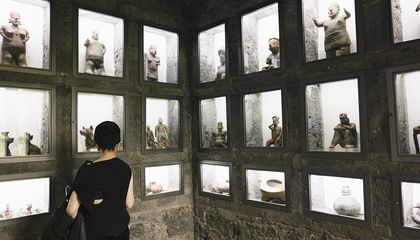
The bustling metropolis of Mexico City is home to an impressive 171 museums, ranging from world-renowned institutions to quirky, specialized destinations. The National Museum of Anthropology, a Modernist structure, houses the largest collection of pre-Columbian artifacts, while the Tequila and Mezcal Museum, Antique Toy Museum, and Mexican Sugar Art Museum cater to niche interests.
The controversial Museum of Narcotics, run by the army, displays exhibits related to the drug war, including golden revolvers and a stuffed drug-sniffing dog.
Among the many museums, several intimate spaces showcase rich experiences of Mexico City's long history, which dates back around 700 years. These cultural leftovers include personal belongings of influential figures, such as a writer's desk, painter's canvas, hanging garment, or even a cluttered kitchen sink. The visitor experience is enhanced by the cumulative effect of exploring such diverse museums, providing a unique and immersive narrative of the city's complex and multilayered history.
Recently, the number of museums in Mexico City has increased, with several quirky and compelling additions opening their doors in the past two years. Even locals find it challenging to keep up with the growing cultural offerings. To experience Mexico City through its newer museums, the reporter decided to explore the city afresh, visiting both older favorites and the newest cultural gems.
Located 7,350 feet above sea level and surrounded by volcanoes, Mexico City enjoys most of the year's sunshine, with daytime temperatures usually above 60°F.
Once ruled by the Aztec Empire, the Valley of Mexico was once a network of lakes and marshy islands. After the Spanish conquest in 1521, the region was drained and paved over, making it difficult to envision the once-majestic Aztec capital, Tenochtitlan. At its peak in the early 1500s, Tenochtitlan housed at least 150,000 inhabitants and featured the Sacred Precinct, a central area filled with pyramids, temples, and ritual sites.
The reporter visited the revered location, now situated beneath Mexico City's Historic Center, where the Spanish built their colonial administrative heart and the ornate Metropolitan Cathedral. Raúl Barrera, director of the Urban Archaeology Program (PAU) since 1991, explained that the vestiges of Tenochtitlan lie beneath our feet as we walk.
In 1978, the discovery of an eight-ton round stone carving of the moon goddess Coyolxauhqui sparked further excavations, revealing the base of the Templo Mayor, a step pyramid adorned with altars to the Aztec gods of war and rain. Since 1991, PAU has excavated other rescue sites during building construction in the Sacred Precinct, with the goal of opening them to the public.
Written by urgent.news from Smithsonian's reporting — not their text. Machine-written — may contain errors; check the original before relying on it.