Risks using AI in classrooms 'go beyond cheating', education expert says
AI use in schools has prompted the NSW government to ban take-home assignments for senior students after an influx of cheating using AI tools. But a leading expert says cheating is not the only issue.
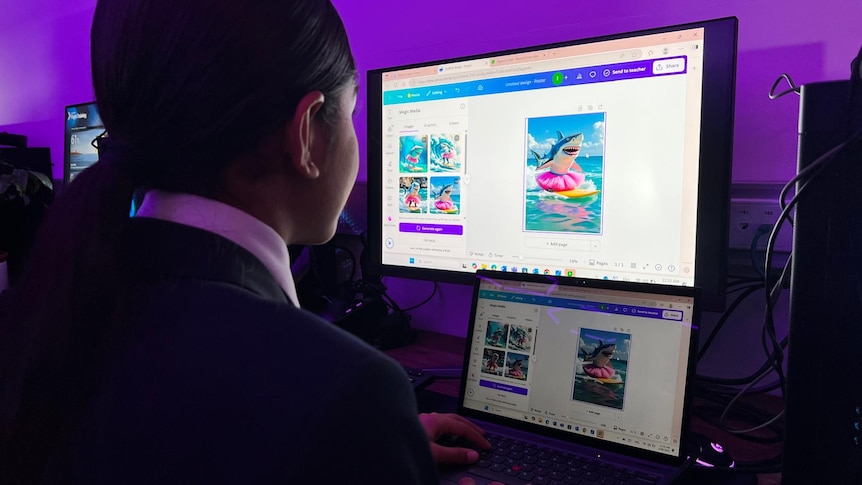
Advances in artificial intelligence (AI) technology could significantly impact the future of education, according to a leading Australian AI education expert. In 2023, the Albanese government released a federal framework for ethical and responsible AI use, emphasizing student protection and educator assistance. However, state education departments have taken their own measures to combat AI-enabled cheating.
New South Wales (NSW) has proposed a major overhaul of the Higher School Certificate (HSC), banning unsupervised take-home assignments for year 11 and 12 students. This move was prompted by over 1,000 recorded cheating cases in 2025 and growing concerns over AI in student essays. University of Technology Sydney professor Lesley Loble, an AI and Education expert, warned that AI in learning spaces could have implications beyond cheating.
She explained that AI disrupts the learning process by keeping students in surface learning rather than achieving deep, retained knowledge.
Loble highlighted that AI provides short-term boosts and increases dependency, preventing students from converting information into long-term knowledge. While the NSW government's proposal is a step in the right direction, Loble emphasized the need to take threats and risks seriously. She noted that there are a "basket of risks" associated with AI use in education, but also mentioned evidence that AI tools can help students falling behind.
South Australia stands out nationally with its approach to AI in schools. The state has embraced AI and partnered with Microsoft to develop EdChat, a large language model similar to ChatGPT. EdChat is a secure generative AI tool designed for public high schools, offering a more robust approach to learning. Professor Loble praised this design standard, stating it provides greater confidence in AI technology within schools.
Other states, such as Victoria and Queensland, have also implemented guidelines and policies to protect academic integrity in AI use. Victoria requires students to submit work they have produced independently, while Queensland's QCAA advises schools on academic integrity matters. These initiatives demonstrate the ongoing efforts to balance AI benefits with potential risks in educational settings.
Written by urgent.news from ABC News AU's reporting — not their text. Machine-written — may contain errors; check the original before relying on it.