Por qué el 'caso Airbus' es más que una rebelión contra la vuelta a la oficina
El pulso por un cuarto día presencial revela un cambio de mayor calado: dónde se trabaja se ha convertido en parte del precio del empleo. Las empresas ya no discuten solo sobre teletrabajo, sino sobre productividad, poder, talento y quién puede decidir cómo se organiza el trabajo. Leer
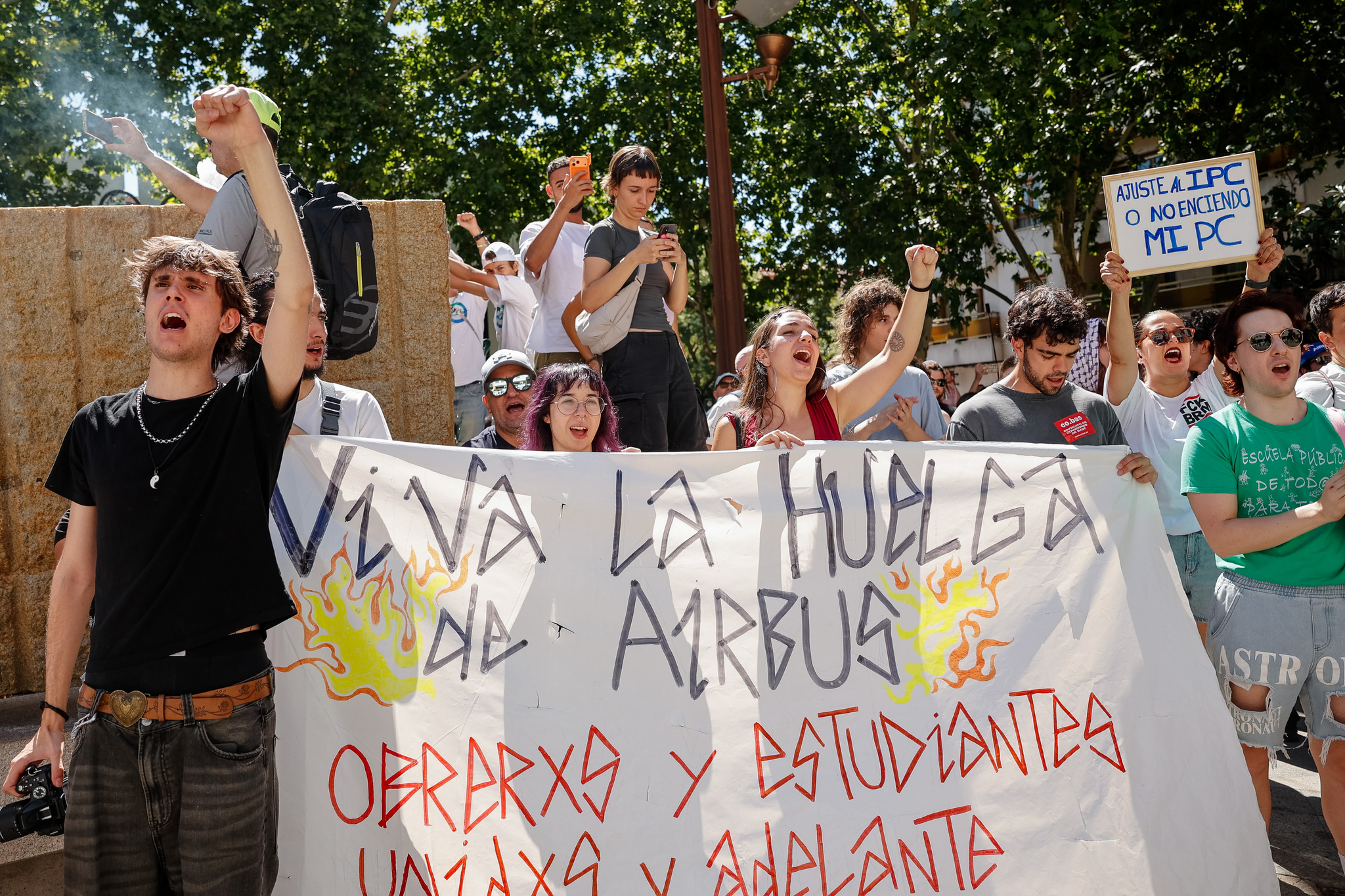
One day. On the surface, the conflict that has shaken Airbus this summer could be summed up: employees returning to the office four days a week. In June, Airbus announced plans to increase in-office presence for at least four days per week, including engineers, and this measure sparked protests in France and added to an already widespread labor dispute in Spain.
Not all production workers and technicians could take advantage of a hybrid system, creating a clear distinction between jobs that allow remote work and those that don't. Just three days later, the company backtracked on its policy. Reuters revealed that Airbus had informed its executives they could keep existing remote work agreements, suspending the plan to impose a maximum of one day remote work per week.
In Spain, negotiations even went further: Airbus pledged to restore previous remote work conditions and maintain individual agreements. Airbus still advocates for increased physical presence, but no longer insists on the uniform four-day rule. The retreat hasn't ended the Spanish conflict. Monday, assemblies convened by CGT, UGT, and �TIL in various centers rejected Airbus' proposal after mediation on August 21st and decided to continue the indefinite strike, set to resume tomorrow, August 25th.
The decision is particularly significant for understanding the case: Airbus compromised on one of the key issues that sparked the protests—restoring two remote work days and respecting individual agreements—and improved its economic offer. However, some workers still believe too many commitments remain unfulfilled. The conflict can thus be explained as much more than a simple dispute about how many days are worked remotely at home: it's a broader package of salary, flexibility, time, and working conditions.
The Airbus case doesn't prove that working more days remotely is necessarily better, nor that the office has lost value. It demonstrates that the location from which work is done has become an economic and organizational condition of employment that companies can no longer alter as a mere logistical decision. Airbus has offered arguments for wanting more people in their facilities: Guillaume Faury, the CEO, has defended a greater physical presence citing concentration, quality, and the need to share capabilities in person.
The thesis of Airbus is to improve collective efficiency, knowledge transfer, and decision-making speed. What Airbus hasn't shown is that the fourth day, rather than the third, significantly boosts productivity enough to offset costs. This distinction is at the heart of the current debate on hybrid work. The evidence since the pandemic doesn't clarify things.
We can refer to the ideas of Nicholas Bloom, a renowned time management expert at Stanford University and one of the most cited international researchers in management, productivity, and remote work. In 2024, Nature published an article based on a randomized trial involving 1,612 Trip.com employees, of which Bloom is a co-author.
Half were allowed to work remotely on Wednesdays and Fridays; the other half continued working in the office five days a week. The hybrid model increased satisfaction and reduced voluntary resignations by a third, without researchers finding significant differences in performance evaluations or promotions over the following two years.
The conclusion isn't that two days at home constitute the optimal formula. The experiment initially excluded interns and newly hired employees because the company considered their in-person learning and mentoring particularly important. Airbus, with a deeply renewed workforce, precisely faces one of the problems this study left out.
Additionally, we must consider the evidence that certain activities suffer when the hybrid organization is poorly managed. The research "Employee innovation during office work, work from home, and hybrid work," conducted by experts from the Booth School of Business at the University of Chicago and the University of Essex, cautions that it's not just how many days are spent in the office, but who is present when we are.
Furthermore, another study involving 61,182 Microsoft employees published in Nature Human Behaviour concludes that moving to fully remote work has made collaboration networks more static and compartmentalized, shifting synchronous communication to more asynchronous forms. It's difficult to directly transfer a total remote work experiment conducted during the pandemic to the current hybrid model, but it's worth noting that it supports a legitimate concern of companies: part of the information exchange and professional relationship creation suffers when physical interaction disappears.
The question is no longer whether the office is good or bad, but what work truly deserves an office. Bringing a team together to review a complex design, bring in an engineer, resolve an incident, or make a decision among multiple disciplines can justify the commute. Making the same professional cross a city to sit down and write documents or link video calls with people in other centers is not efficient.
Written by urgent.news from Expansion ES's reporting — not their text. Machine-written — may contain errors; check the original before relying on it.