Physical AI’s moment has arrived – but moving from demo to deployment is the hard part. AWS wants to fix that
Physical artificial intelligence is emerging as the next major phase of AI. These systems not only generate content or analyze data but also perceive, reason about and act in the physical world. The opportunity is massive, but so are the operational, data, latency and lifecycle-management challenges. That is why Amazon Web Services Inc. last month […] The post Physical AI’s moment has arrived –…
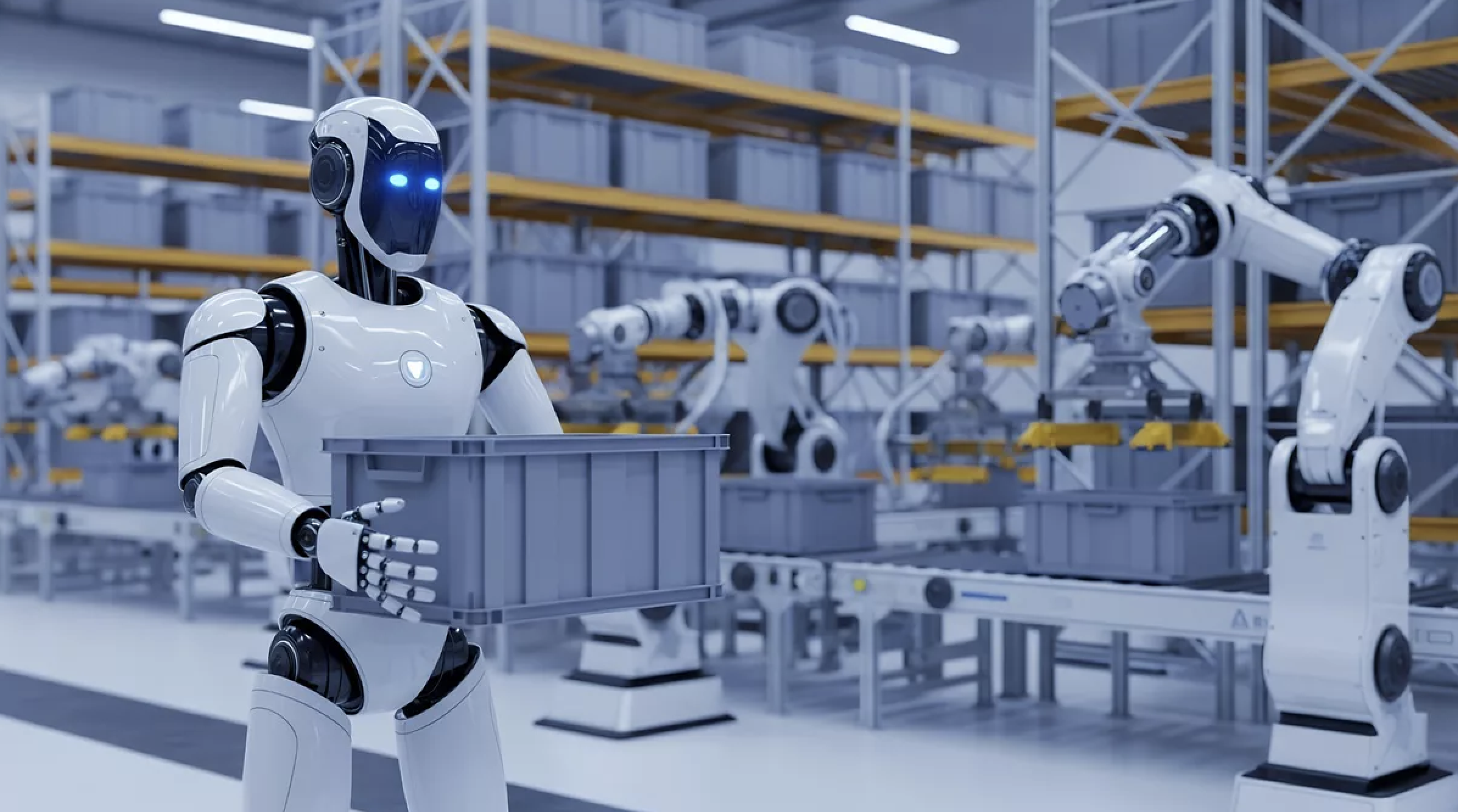
Physical artificial intelligence (AI) is emerging as the next major phase of AI development. Unlike traditional AI that primarily focuses on generating content or analyzing data, physical AI systems can perceive, reason about, and act in the physical world. Amazon Web Services (AWS) recently introduced cloud-to-edge solutions to help customers build these systems.
However, deploying physical AI systems comes with numerous challenges, including operational complexities, data management, latency issues, and lifecycle management.
One of the key advantages of physical AI is its ability to adapt to changing conditions and environments. Traditional industrial automation and robotics were designed for highly structured and repeatable workflows, making it difficult for them to handle unexpected situations such as misplaced objects, blocked pathways, or human presence.
Physical AI, on the other hand, promises greater adaptability by leveraging advances in foundation models, vision-language-action models, world models, reinforcement learning, and simulation.
AWS Director of the AWS Generative AI Innovation Center, Sri Elaprolu, highlighted that the current wave of robotics is shifting from being built around instructions to being built around learning. Conventional robots are programmed to perform specific tasks, but physical AI systems start with a robust model and can learn from real-world experience and adapt to new situations.
Despite these advancements, replicating the dexterity and capabilities of a human hand remains a significant challenge. Fine motor control, perception, tactile feedback, spatial understanding, and the ability to reason through ambiguity are essential for robots to perform tasks that require dexterity. AWS customer RLWRLD is working on addressing this problem with RLDX-1, an 8.1-billion-parameter robotics foundation model designed for five-fingered dexterity.
The model integrates vision-language understanding with proprioception, tactile, and torque sensing, and is intended to work across various robotic systems.
However, building a working physical AI proof-of-concept is only the beginning. Operating a fleet of robots or intelligent devices in diverse environments such as factories, hospitals, warehouses, retail stores, or energy sites poses additional challenges. The primary hurdle is data, as robots require examples grounded in the laws of physics, such as object, surface, lighting, geometry, friction, hand positions, and contact forces.
Building a diverse dataset for a system to generalize beyond the specific conditions it encountered during training is crucial.
AWS and its partner Config have addressed the data diversity problem by developing a generative, multi-view augmentation pipeline. By utilizing a post-trained version of Nvidia's Cosmos-Transfer2.5 model, the system can re-render real demonstrations with varied lighting, surfaces, and other variations while preserving object position, action labels, temporal consistency, and the robot gripper's appearance.
This augmentation significantly improves the robustness of physical AI systems, with one reported test showing an increase in success rates from 8.3% to 75%, a ninefold improvement in generalization capabilities.
Written by urgent.news from SiliconANGLE's reporting — not their text. Machine-written — may contain errors; check the original before relying on it.