Oil falls ahead of US announcement on new Iran sanctions
Oil prices slipped more than $1 a barrel on Monday as investors took profits ahead of an expected announcement from Washington about imposing more sanctions on Iran that may further disrupt supplies from the Middle East.
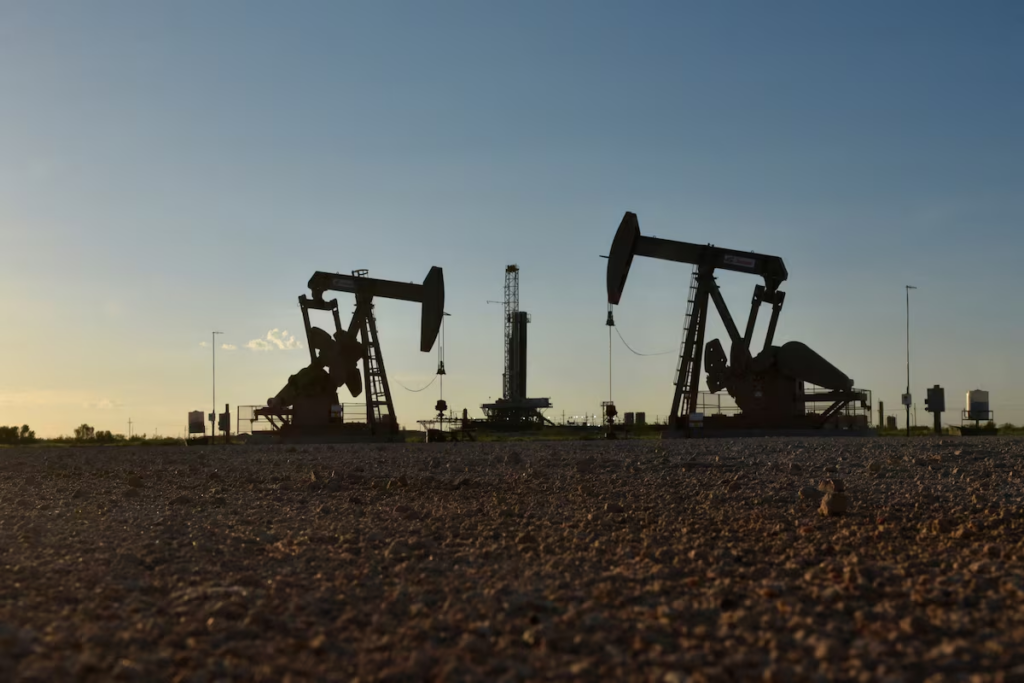
Oil prices experienced a decline of over $1 per barrel on Monday, as market participants secured profits prior to a likely announcement from the United States regarding additional sanctions on Iran. This move could potentially disrupt Middle Eastern oil supplies further. Brent crude futures dropped by $1.22, or 1.29%, to $93.17, while U.S. West Texas Intermediate crude decreased by $1.20, or 1.38%, to $85.86 per barrel.
Both contracts had posted their second consecutive weekly gains last week, with prices surging more than 5%, due to ongoing peace talks between the U.S. and Iran reaching an impasse, thereby blocking oil shipments through the Strait of Hormuz, which traditionally accounted for one-fifth of global oil transit. U.S. Treasury Secretary Scott Bessent was scheduled to deliver a press conference at 2 p.m. EDT (1800 GMT) on Monday, during which he had threatened to impose "the toughest sanctions in history" on Iran.
Furthermore, President Donald Trump had also vowed to impose sanctions on Iran's trading partners. Vivek Dhar, a commodities analyst at Commonwealth Bank of Australia, expressed uncertainty about the effectiveness of the U.S. policy to economically isolate Iran, stating, "It is unclear whether U.S. policy to economically isolate Iran will prove effective."
However, if the U.S. measures succeed in their intended purpose, Iran's potential response through heightened violence could pose an escalating risk to energy markets. Iran has vehemently opposed the U.S. plans to announce new sanctions, while President Masoud Pezeshkian called for a diplomatic resolution. Diverging opinions within the Iranian leadership were evident, with some more pragmatic members preferring de-escalation, while hardliners were likely to favor fighting until the end.
Tony Sycamore, an IG markets analyst, suggested that by the end of the week, it would become clearer which faction within the Iranian leadership held the upper hand. The flow of Iranian crude to Chinese buyers had diminished, and prices had risen as a result of the U.S. blockade limiting Tehran's shipments, according to trade sources.
Nevertheless, Iran had granted permission for several Iraqi oil tankers to pass through the Strait following repeated requests from Baghdad, as reported by Iran's state news agency IRNA on Saturday.
Written by urgent.news from MyJoyOnline Ghana's reporting — not their text. Machine-written — may contain errors; check the original before relying on it.
This story
This is one outlet's version. Read the fullest account.
- Oil prices slip over $1 as US weighs ‘D-Day’ Iran sanctions timesofindia.indiatimes.com
- Oil falls ahead of US announcement on new Iran sanctions brecorder.com
- Oil falls ahead of US announcement on new Iran sanctions nst.com.my
- Iran’s Araghchi says new sanctions threatened by 'desperate' US will fail fxstreet.com
- Iran war news LIVE Updates: Bessent to announce new US sanctions against Iran on Monday livemint.com
- India bonds could open weaker as US threatens more Iran sanctions thehindubusinessline.com
- Shares flat in Asia ahead of new US sanctions on Iran, Nvidia results businesstimes.com.sg
- NEET PG Admit Card 2026 Live Updates: NBEMS to issue hall tickets today indianexpress.com