Neglected overseas Korean independence sites raise calls for better preservation
TONGHUA, China, Aug. 25 (Yonhap) -- A bus carrying South Korean high school stud...
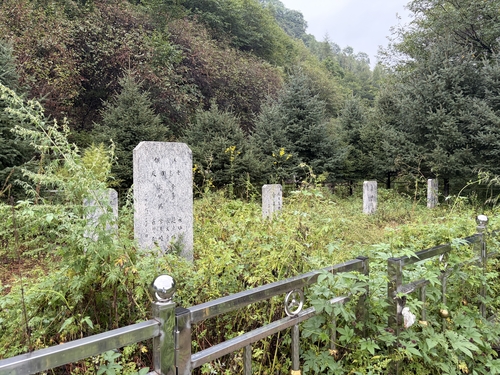
Tonghua, China – A group of South Korean high school students were taken to an unassuming spot in a field of corn near Tonghua County, northeast China. There, they discovered a burial site for seven Korean independence fighters who were slain by Japanese authorities in 1920. The somber location, once home to an ethnic Korean school, was marked with tombstones erected by local authorities and a descendant of the martyrs.
The students paid their respects by paying homage at the entrance of the graveyard, about 15 meters from the actual burial site, where high grass and bushes obscured the path to the gravestones.
During their tour, the students also visited the birthplace of Yoon Dong-ju, a revered Korean poet and independence activist. Born in 1917, Yoon Dong-ju's cousin, Song Mong-gyu, was also an activist who sought to preserve and promote Korean culture through literature and education during the Japanese colonial era. Despite being less well-known than his cousin, Song likely had a significant impact on Yoon during their time together.
Experts agree that managing historic sites abroad falls short, and propose increased funding and personnel to ensure proper preservation and vigilance.
Written by urgent.news from Yonhap News's reporting — not their text. Machine-written — may contain errors; check the original before relying on it.