Meteorite dust holds records of magnetism that may have helped form the sun
The discovery likely represents the earliest known evidence of a magnetic field in the infant solar system.
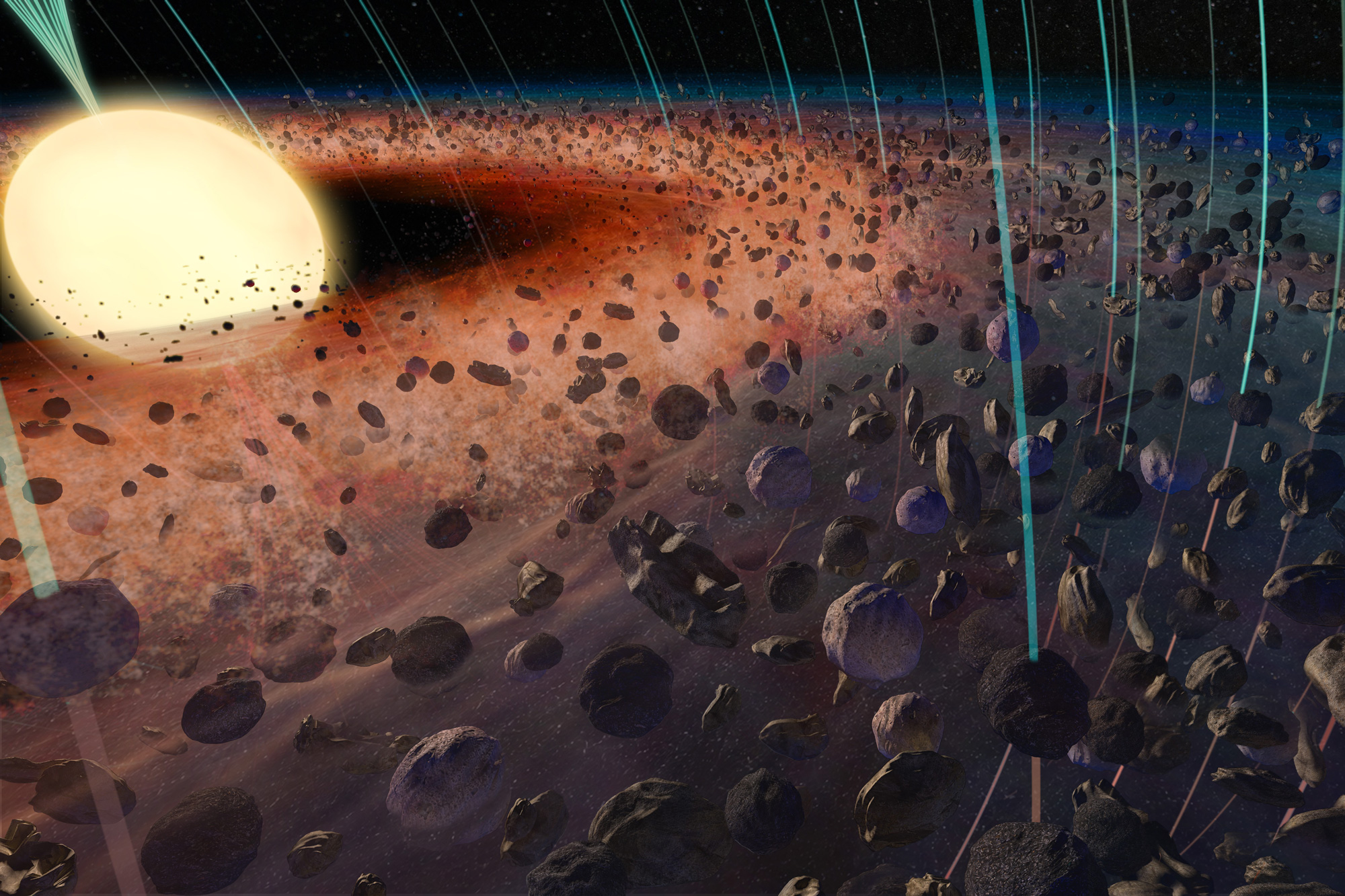
Around 4.6 billion years ago, the solar system began as a giant cloud of gas and dust, eventually forming the sun and its orbiting planets. Scientists previously believed that gravity was the primary force shaping this early solar system. However, a new study by MIT scientists suggests that magnetism also played a significant role in the formation process.
The researchers analyzed microscopic grains, called calcium-aluminum-rich inclusions (CAIs), embedded in a meteorite discovered in Antarctica in 2008. These CAIs formed during the first 200,000 years of the solar system's existence, making them the oldest known material from the solar system. By studying these ancient grains, the team discovered evidence of a magnetic field that existed very early on in the solar system's formation.
Benjamin Weiss, the Robert R. Shrock Professor of Earth and Planetary Sciences at MIT, explains that the early solar system's transition from a spherical cloud to a protoplanetary disk is a significant event in solar system history. While gravity was previously thought to be the main driving force behind this transformation, the team's measurements of magnetism indicate that it likely played a role as well.
The magnetic field identified by the researchers was stronger than Earth's current magnetic field, estimated to be around 150 to 600 microteslas. This field strength is about three to 12 times greater than the Earth's magnetic field today. The team estimates that this magnetic field could have played a crucial part in pulling together primordial matter to form the early sun.
This discovery suggests that magnetic fields were present in the early stages of the solar system, even before planets began forming. The team's findings, published in the Proceedings of the National Academy of Sciences, emphasize the importance of considering magnetism as a key factor in understanding the formation of the sun and planets.
Written by urgent.news from MIT News Research's reporting — not their text. Machine-written — may contain errors; check the original before relying on it.


