Indonesia allows Malaysian aircraft to conduct cloud seeding along border
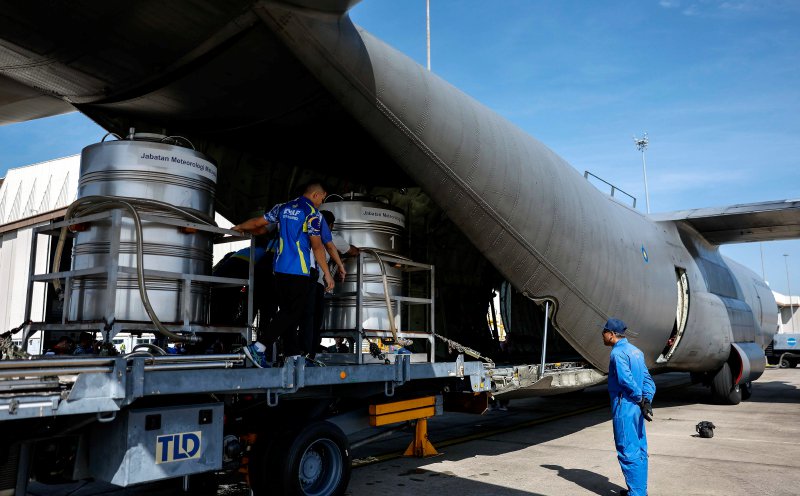
KUALA LUMPUR: Malaysia will conduct cloud-seeding operations along its border with Indonesia to help improve air quality amid transboundary haze caused by forest and land fires.
Massive forest and land fires are spreading across parts of Indonesia, sending haze towards neighboring Malaysia. President Prabowo Subianto has pledged firm action against corporations responsible for the blazes, vowing to penalize them according to the law. Over 202,000 hectares of land have burned between January and July, with nearly 95,000 hectares burning in July alone.
Six provinces have been designated as priorities, including Riau, Jambi, and South Sumatra on Sumatra island, as well as West, Central, and South Kalimantan on Borneo. The fires have created choking smoke, forced school closures, and blanketed parts of the region in haze that has drifted into Malaysia, particularly Sarawak. Thousands of ground personnel, aircraft, and even cloud-seeding technology have been deployed to contain the fires and slow the haze's spread.
However, environmental activists and analysts argue that containment efforts are insufficient, pointing to chronic weaknesses in prosecution, deterrence, and enforcement of Indonesia's forest-fire laws. Police have named 72 arson suspects nationwide, with 14 from Kalimantan. Four companies operating in West Kalimantan are currently under investigation for land burning, with Minister of State Secretariat Prasetyo Hadi warning that the companies could face stern consequences, including license revocation.
Uli Arta Siagian, national campaign coordinator at Walhi, emphasized the importance of uncompromising government action in ushering in a new era of fire mitigation. According to her organization's data, 74% of the hotspots in Kalimantan, numbering 25,524, are within the concession areas of different companies. These hotspots represent thousands of instances where commercial interests may be driving the fires, rather than natural causes.
Activists argue that this recurring pattern of forest fires indicates that the government has failed to deter corporations from causing harm to the environment. The primary reasons for the fire risk include cheap practices such as draining peatlands, which leaves dry and highly combustible carbon-rich soil, and clearing land with fire instead of using machinery or labor.
These practices persist despite the severe public-health and environmental costs associated with them.
Written by urgent.news from South China Morning Post's reporting — not their text. Machine-written — may contain errors; check the original before relying on it.
This story
This is one outlet's version. Read the fullest account.
- As toxic haze spreads, can Indonesia make land-burners pay? scmp.com
- ‘Like smoking a cigarette’: Indonesia chokes on haze as blazes intensify amid super ‘El Niño’ theguardian.com
- Malaysia cloud-seeding assist tests Indonesia’s limits as haze crosses borders thejakartapost.com
- Malaysia, Indonesia to ramp up anti-haze measures ahead of National Day freemalaysiatoday.com
- Haze persists across Malaysia as 17 stations record unhealthy air quality malaymail.com
- Indonesia to open airspace for cloud seeding to tackle haze, Malaysia says channelnewsasia.com