In Raja Ampat, children learn that their knowledge can help protect their islands
ARBOREK, West Papua, Indonesia — “Rockhead fish, salamander fish, starfish and coral.” That’s what dozens of children from Arborek, a small island in Indonesia’s Raja Ampat archipelago, said when asked what they see in nature that is yellow and orange. The children rattled off the fish and other marine life they encounter when they play […]
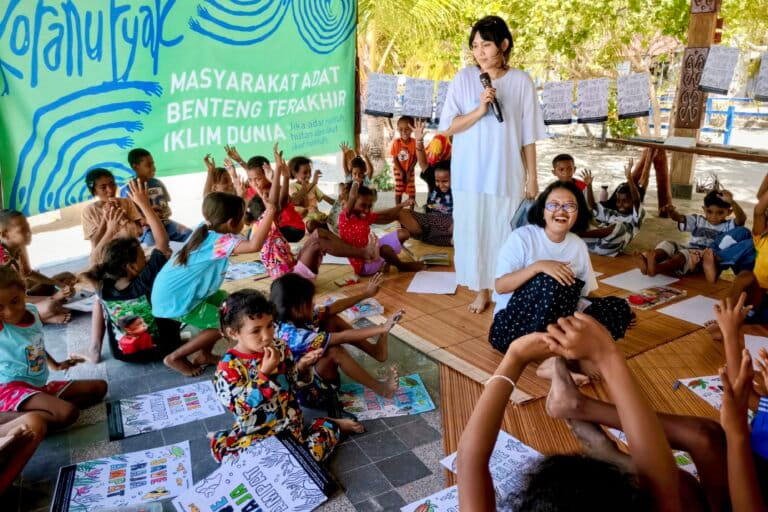
In Arborek, a small island in Indonesia's Raja Ampat archipelago, children demonstrated their deep understanding of local marine life during a reading of a children's book about the area and the threat of nickel mining. The children confidently named various species such as "rockhead fish, salamander fish, starfish and coral" when asked what they see in nature that is yellow and orange.
This observation aligns with research suggesting that children who grow up closely connected to their environment can develop sophisticated understandings of their surroundings. Sekar Bestari, the book's illustrator, expressed no surprise at the children's knowledge, emphasizing that they often grasp the concepts presented in the books.
The reading was part of a three-day gathering of Indigenous communities in Arborek, uniting representatives from 20 Indigenous subtribes in Raja Ampat and other parts of Indonesia and abroad. Organized by Greenpeace Indonesia and local NGO Institut USBA, the gathering aimed to strengthen solidarity among Indigenous communities in defending their lands, waters, and biodiversity.
Written by urgent.news from Mongabay's reporting — not their text. Machine-written — may contain errors; check the original before relying on it.