Falt ut av arbeidslivet: – Det er mye skam som deles ut
Marthe Sandven Richardsen (44) mistet arbeidsevnen etter femten år i arbeidslivet.
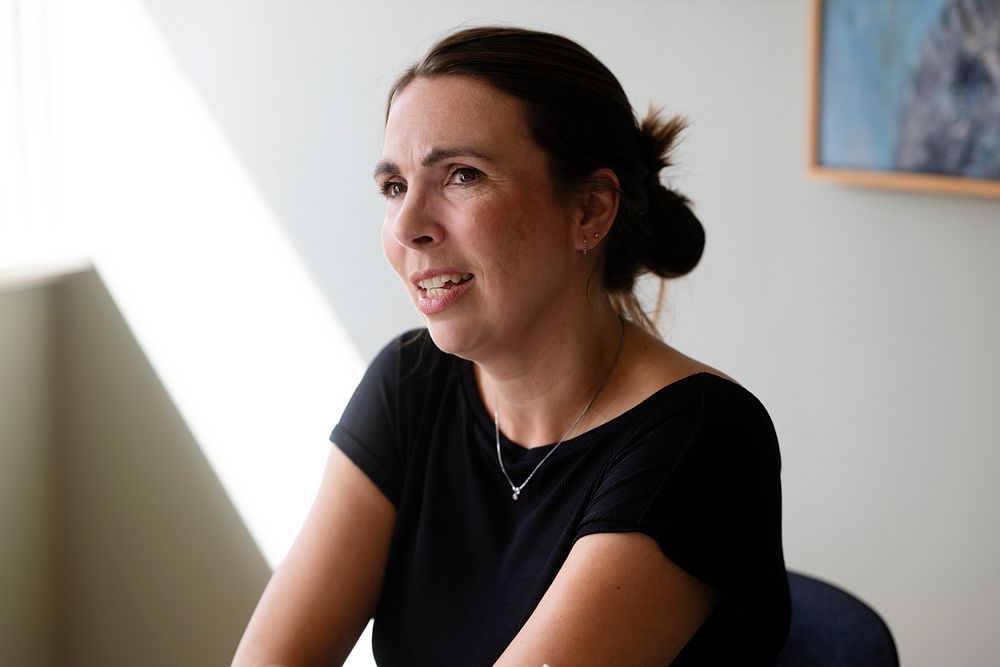
Marthe Sandven Richardsen, once a fully employed individual, found herself no longer part of the workforce after a sudden accident left her with a complex post-traumatic stress disorder. She laments that it wasn't just her employment status that vanished, but also her sense of worth. Richardsen believes that the language used by politicians and media around employment and absence contributes to the burden faced by those unable to participate in the workforce.
For Richardsen, the most challenging aspect isn't the illness itself, but the stigma associated with it. Having worked in recruitment and HR all her career, she once loved her job and felt passionate about it. However, four years ago, her life took an unexpected turn. On a train ride to the theater with a friend, her body suddenly collapsed, causing her to hit the ground in a daze.
Diagnosed with complex post-traumatic stress disorder, her body remains in a constant state of alarm. This experience has changed her perspective on how illness and employment are discussed publicly.
Over 670,000 people in Norway have reduced their work capacity due to health issues and receive sickness, employment adjustment, or unemployment benefits. Richardsen notes that the public debate on workforce participation often exacerbates the feelings of those on the outside. She says the media frequently portrays them as a social cost and uses words like "nave" and "snylter," making them feel like second-class citizens.
Richardsen also worries about the perception that it's easy to receive unemployment benefits and that those who do may have chosen not to work. She strongly objects to the notion that everyone should use their "restoring working capacity" if they can't work full-time. Richardsen feels that finding employment with gaps in the CV or reduced work capacity is extremely difficult these days.
She argues that the job market mainly offers positions for those who can deliver 100%, and believes that a different approach is needed to accommodate those with reduced work capacity.
She supports the "workbench" initiative, agreeing that those who can work should be allowed to do so and earn for being in work. However, she emphasizes the distinction between willingness and ability. While economic incentives can influence decisions, they cannot fix illness. Richardsen believes it's legitimate to discuss costs and misuse of benefits, but stresses that it's a matter of how it's done.
She believes that Minister Kjersti Stenseng has a crucial role in fostering a different debate atmosphere. Richardsen is willing to meet with her if she's interested in hearing her experiences and reflections. She believes that one can be sick without feeling they've lost their sense of self-worth as a human being. "We all know who might be struck by illness tomorrow," she says.
Written by urgent.news from E24 Norway's reporting — not their text. Machine-written — may contain errors; check the original before relying on it.