ECC approves bonded storage of imported petroleum products
ISLAMABAD: In view of recent supply disruptions following the closure of the Strait of Hormuz, the government on Monday formally approved allowing foreign fuel suppliers to establish bonded storage facilities in Pakistan at their own expense for multiple purposes, including re-export and supplies to the domestic market. Subject to formal ratification by the federal cabinet, the new policy…
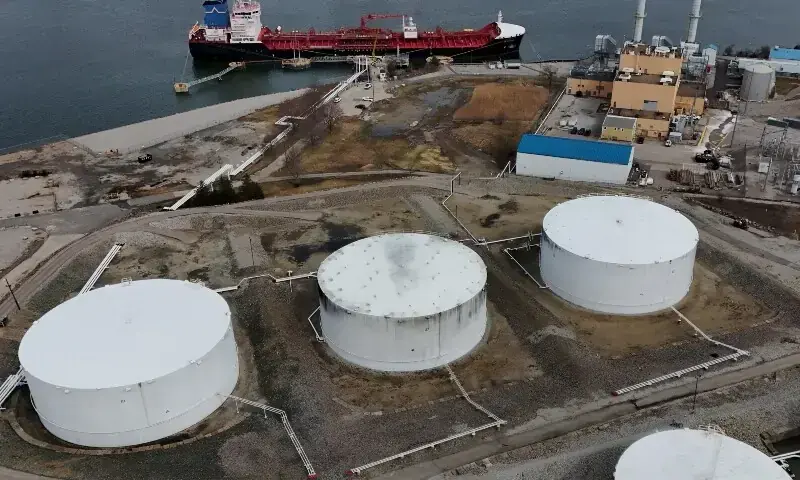
In response to recent supply disruptions stemming from the closure of the Strait of Hormuz, the Pakistani government officially approved the establishment of bonded storage facilities for foreign fuel suppliers on Monday. The policy guidelines, which have been pending since June 2023, were approved during a meeting of the Economic Coordination Committee chaired by Finance Minister Muhammad Aurangzeb.
The new measures aim to bolster Pakistan's energy security by enhancing the resilience and sustainability of the petroleum supply chain.
The policy allows foreign suppliers to store petroleum products, including crude oil, motor spirit (petrol), high-speed diesel, jet fuel, furnace oil, liquefied petroleum gas, and liquefied natural gas, in Pakistan through Customs bonded storage facilities. These imports would be subject to specifications approved by the Directorate General of Customs (Ogra). The guidelines would not cover goods subject to international sanctions or listed in the Negative List of the Import Policy Order 2022.
Foreign suppliers could maintain bonded inventories at private and public bonded storage terminals at approved locations, including Port Qasim Authority, KPT/Keamari, Hub, Gwadar Port, Mahmood Kot, and Machike, Sheikhupura. They would be able to transport these goods to inland locations via the national petroleum pipeline network for local sale to licensed oil marketing companies and refineries. No duty or tax would be imposed on these bonded pipeline movements, but goods declaration filing requirements would apply.
The new policy does not impact the existing regime for imports of petroleum products by licensed oil marketing companies and refineries. Foreign suppliers would not be required to register with the Federal Board of Revenue under the Sales Tax Act, 1990 for domestic sales of bonded goods to these companies. Instead, sales tax obligations would fall solely on the importer of record at ex-bonding.
Several system changes are required to implement this arrangement, including a joint State Bank-FBR circular and configuration of the Web-Based One Customs system.
Written by urgent.news from Dawn's reporting — not their text. Machine-written — may contain errors; check the original before relying on it.
This story
This is one outlet's version. Read the fullest account.