Context is the new intelligence in agentic AI
At DevSparks Hyderabad 2026, UBS CTO Elango Somasundaram explored what comes after copilots: agentic AI that understands context, connects the dots, and orchestrates enterprise workflows.
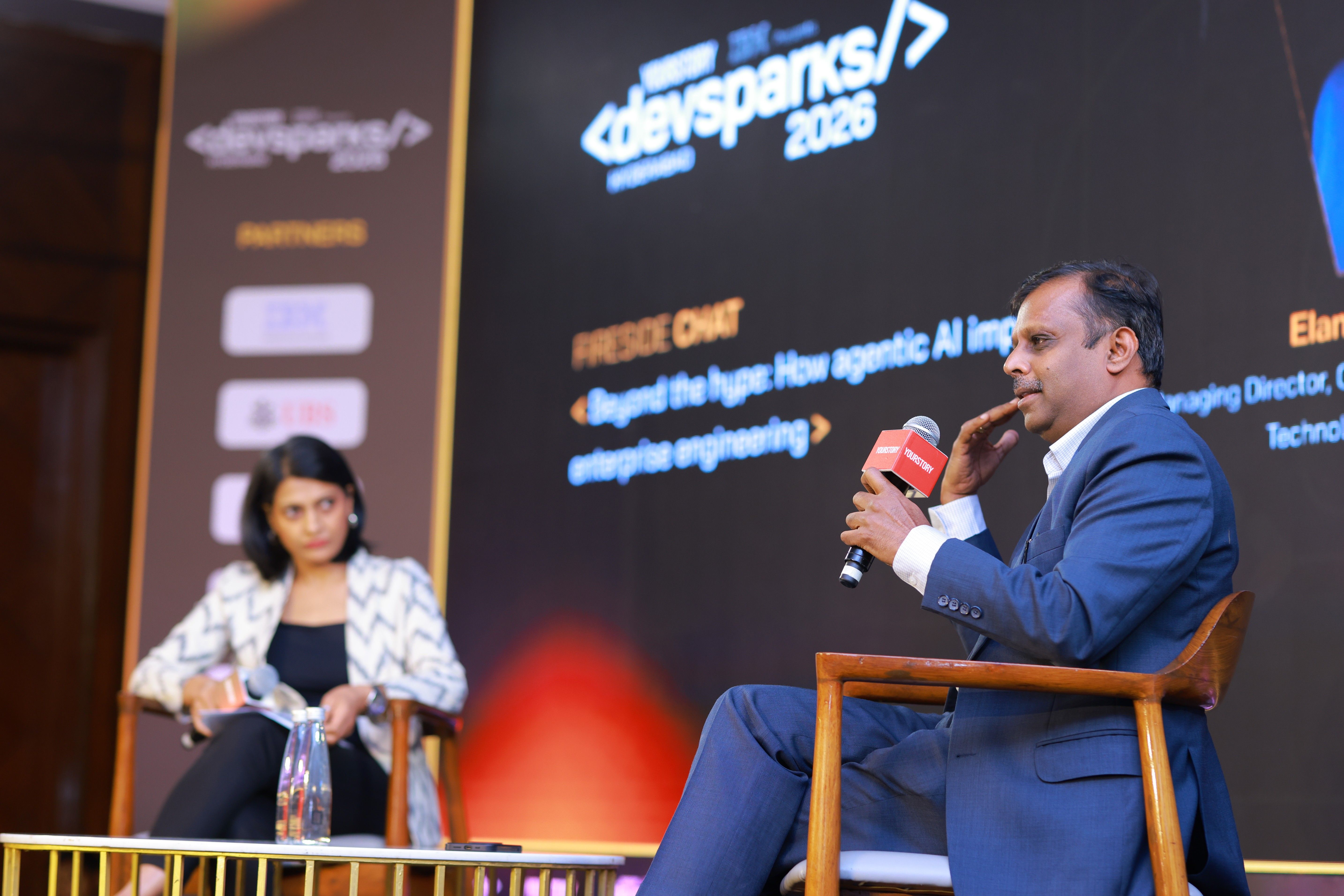
AI is evolving from assisting developers to creating autonomous agents that can reason across workflows and deliver outcomes with minimal human input. At the DevSparks Hyderabad 2026 conference, Elango Somasundaram, UBS India's Managing Director and CTO, explained that the shift to agentic AI is not about replacing engineers but altering the nature of engineering work. The next competitive advantage will stem from richer context, stronger guardrails, and developers capable of thinking beyond code.
Elango traced AI's trajectory, highlighting transitions from robotic process automation and cloud services to copilots, natural language coding (vibe coding), and specialized task agents. Agentic AI takes this a step further by beginning with intent, determining necessary tasks, delegating them to specialized agents, and ultimately delivering results.
The next frontier is agentic engineering, where AI systems start comprehending relationships between requirements, dependencies, and workflows, essentially participating in architectural decisions traditionally managed by human engineers.
According to Elango, skills are becoming commodities as most organizations now have access to powerful foundation models and specialized expertise through open-source ecosystems and AI/ML communities. The key differentiator now is context—how to incorporate more context into developed agents. For enterprises, especially in regulated sectors like banking, context encompasses proprietary processes, product knowledge, security policies, customer expectations, and organizational workflows.
While generic models can write code, they lack the ability to understand an organization's specific context, such as how a bank approves transactions, how a healthcare provider ensures compliance, or how an automotive company designs products.
Data quality is therefore paramount. Enterprises often possess vast amounts of information, but it is frequently scattered across systems, duplicated, inconsistent, or disconnected from the workflows AI needs. The focus is shifting from counting AI tool users or measuring token consumption to determining if AI systems can leverage enterprise context to generate accurate and reliable outcomes.
Developers' roles are also evolving. Instead of merely implementing stories and epics, they will increasingly need to enrich AI systems with the knowledge essential for correct problem-solving. Every layer in an agentic system matters. Agentic AI cannot solely focus on the application layer; it requires reasoning across the broader ecosystem, including infrastructure, networking, identity management, software development practices, governance, and security.
As agents exchange information, identity and access management become critical, as errors can cascade and lead to unintended and harmful outcomes.
Enterprise architecture consists of interconnected layers, from infrastructure and networking to governance and security. Agentic systems must reason across this complex environment rather than just generating functional code. Guardrails at every architectural layer are essential, encompassing connectivity, authentication, Software Development Lifecycle controls, regulatory compliance, and security policies, all integrated into the agentic workflow rather than being checked at the end.
The role of humans in this new paradigm remains significant—defining objectives, validating outcomes, and providing business context. While AI can rapidly generate tens of thousands of lines of code, rigorous testing is essential to ensure the accuracy and reliability of the final output. As AI workflows become more autonomous, enterprises are slowing down deployment not due to lack of promise but due to the heightened importance of governance.
Every model entering an enterprise environment now requires thorough curation. Security teams must prevent proprietary information from leaking into external models, while developers need assurance that AI-generated outputs adhere to internal policies before production deployment. In banking, agentic AI is set to transform operating models, revolutionizing routine processes like payment settlements and customer operations.
Written by urgent.news from YourStory's reporting — not their text. Machine-written — may contain errors; check the original before relying on it.