Colorado land sold for 30 cents an acre later helped create a vast national park
The story of Colorado's Baca Ranch showcases how a seemingly forgotten investment can become an integral part of a national treasure. In 1862, Luis María Cabeza de Baca's heirs sold the land to Territorial Governor William Gilpin for a mere 30 cents per acre. Over a century later, the Nature Conservancy purchased the ranch for $31.28 million, which played a crucial role in expanding protection around the Great Sand Dunes and establishing a national park and preserve.
The Baca Ranch's history began in the early 19th century when Luis María Cabeza de Baca received a land grant from the Mexican government in present-day New Mexico. After the United States acquired control of the Southwest, the Baca claim became entangled in a complex legal dispute. Eventually, the claim was exchanged for a vast property near the base of the Sangre de Cristo Mountains in Colorado. However, this Colorado parcel was never inhabited by the Baca family – it was merely treated as an investment.
The land remained largely unrecognized for its ecological significance until 1862 when the Baca heirs sold it to William Gilpin, the first territorial governor of Colorado, for 30 cents per acre. This seemingly insignificant price reflected the era's approach to land acquisition in the American West, where vast areas were bought, sold, and developed with little understanding of the ecological systems they contained.
At the time, the San Luis Valley was primarily seen as open land with potential for ranching, settlement, and resource development.
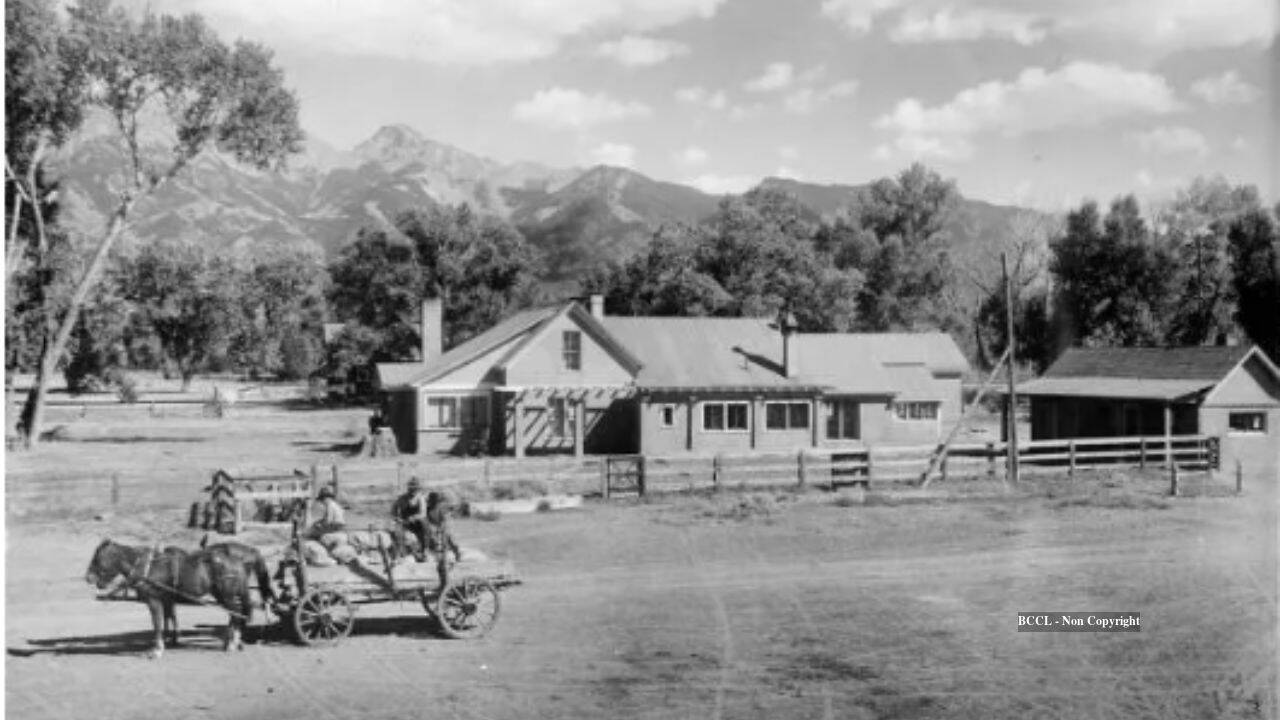
In 1870s, George Adams transformed the property into a working ranch by adding fences, irrigation ditches, sheds, and corrals. Although the ranching era shaped the Baca's identity for generations, it was by no means an untouched wilderness. It was a working landscape where human activity coexisted with rivers, wetlands, grasslands, mountains, and dunes.
This combination highlights a crucial aspect of conservation history – nature was not always protected from all human influence. Ranching, water management, land ownership, and wildlife habitat were all intertwined in the Baca's story.
The surrounding region, featuring the Great Sand Dunes and the rugged Sangre de Cristo Mountains, also played a vital role in the Baca Ranch's ecological significance. Snowmelt from the high country and wind-blown sand contributed to the unique environmental system around the dunes. Wetlands and groundwater helped maintain the ecological conditions that made the area so remarkable.
The Baca Ranch's value extended beyond its acreage listed on a deed. It encompassed the intricate relationships between land, water, and wildlife within the larger system. As concerns grew about potential water development in the late 20th century, the Baca Ranch became entangled in a water-export controversy. American Water Development Inc. sought to export several hundred thousand acre-feet of water from the valley to nearby municipalities.
Local water users feared that such large-scale water extraction would jeopardize existing water rights, agriculture, and the valley's ecological balance.
The Baca Ranch's history demonstrates how land ownership and water rights are deeply connected, shaping the region's ecological landscape. Ultimately, the ranch's conservation story became a crucial part of protecting the Great Sand Dunes and establishing a national park and preserve, showcasing the far-reaching impact of seemingly insignificant investments.
Written by urgent.news from Times of India's reporting — not their text. Machine-written — may contain errors; check the original before relying on it.