Urgent.News

What's breaking now, across thousands of outlets.

Business

Breaking down Scott Bessent's comments on Canada, tariffs, Mark Carney

The U.S. is imposing a 50% tariff on $20 billion in Canadian goods. Canada vowed to retaliate with tariffs of their own that would go into effect on Sept. 8. Rob Russo, a Canadian correspondent for The Economist, joins CBS News to discuss.

President Trump's recent 50% tariffs on certain Canadian products are expected to have a modest impact on U.S. prices, according to trade experts. The narrow scope of these levies is unlikely to trigger a broader spike in inflation, as Canada has vowed to retaliate with tariffs on U.S. imports starting September 8. Both sides are likely to live with the tariffs for some time, given the uncertainty surrounding their duration.

While the tariff rate is unusually high for the limited sector it affects—about 5% of Canada's exports to the U.S.—businesses are often reluctant to immediately pass these costs onto consumers, especially with the uncertainty about the levies' longevity. Companies have implemented various strategies to mitigate or share the costs, such as absorbing some of the burden to avoid passing it directly to customers.

The new tariffs primarily target Canadian alcoholic beverages, Canadian dairy products like milk and ice cream, paper and wood products, hockey sticks, and various clothing items. The rationale behind these tariffs is that Canada unfairly penalizes American-made products, particularly in the alcohol and dairy sectors. For example, Canadian provinces stopped buying, distributing, and selling U.S. alcohol in 2025, causing a 81% drop in U.S. alcohol exports to Canada, which harmed businesses and workers.

The tariffs also aim to address the disadvantage Canadian dairy farmers face compared to other countries.

Written by urgent.news from CBS News's reporting — not their text. Machine-written — may contain errors; check the original before relying on it.

This story

This is one outlet's version. Read the fullest account.
Read the original at cbsnews.com →

More in Business

Interim examiner appointed in bid to save HSI

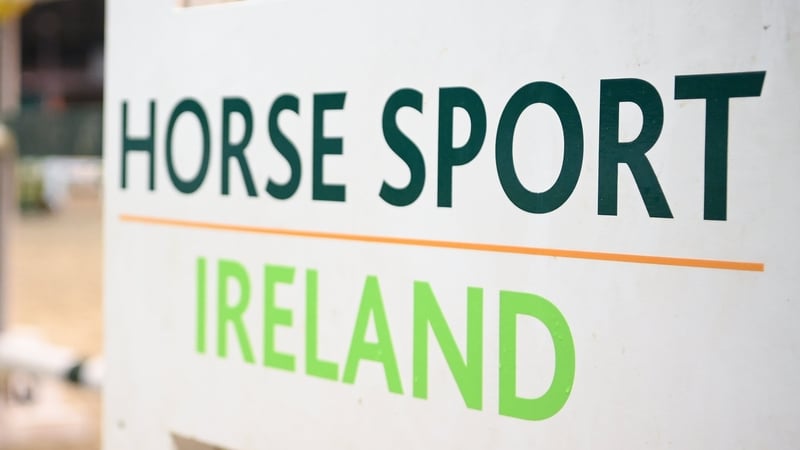
Horse Sport Ireland, the all-Ireland national governing body for the equestrian sector, has been given the protection of the High Court, with an interim examiner appointed in a bid by its directors to…

The Trump administration has announced new economic sanctions targeting Iran. The sanctions, announced on Monday, aim to further pressure Tehran over its ballistic missile program and what the US calls its “support for terrorism.” US Treasury Secretary Steven Mnuchin said the measures would leave Iran “isolated.” The new sanctions target 20 individuals and entities, including Iranian Supreme Leader Ayatollah Ali Khamenei’s office. They also target Iranian financial institutions and a number of Iranian companies doing business in the United Arab Emirates, Lebanon and China. The US Treasury Department said the sanctions were aimed at disrupting Iran’s support for militant groups in the Middle East. The new measures also blacklist 18 entities and individuals for supporting Iran’s Revolutionary Guard and its Quds Force. The Quds Force is accused of supporting militant groups across the Middle East. The US has repeatedly accused Iran of supporting militant groups in countries such as Lebanon, Syria, and Yemen. Iran has denied such allegations. The new sanctions come as the US and Iran are locked in a tense standoff over Iran’s nuclear deal with world powers. The US withdrew from the deal in May and reimposed tough sanctions on Iran. Iran has responded by ramping up its nuclear activities. The European Union has tried to salvage the deal, but efforts so far have had little success. The new sanctions also come as Iran is marking the 40th anniversary of the US Embassy hostage crisis. On November 4, 1979, a group of Iranian students stormed the US Embassy in Tehran, taking 52 Americans hostage and sparking a diplomatic crisis that lasted for 444 days. The crisis marked a low point in US-Iran relations and helped galvanize anti-American sentiment in Iran. The hostage crisis led to a freeze in diplomatic relations between the two countries that has lasted for decades. US President Donald Trump has taken a hard line against Iran since coming to office. He has pursued a policy of “maximum pressure” aimed at forcing Iran to curb its ballistic missile program and its support for militant groups in the Middle East. The policy has included a series of tough sanctions aimed at crippling Iran’s economy. The Trump administration has also pulled out of the Iran nuclear deal and reimposed tough sanctions on Iran. The administration has also designated Iran’s Revolutionary Guard as a terrorist organization. The US has also recognized Jerusalem as Israel’s capital, a move that has been opposed by Iran and other Muslim countries. The tensions between the US and Iran have raised concerns about a potential military conflict in the region. The two countries have been locked in a bitter standoff for decades. The standoff has raised concerns about the stability of the region and the potential for a wider conflict. The US and Iran have had no formal diplomatic relations since the 1979 revolution. The two countries have had sporadic contacts, but the relations remain tense. The US has maintained a tough stance against Iran, accusing it of supporting militant groups and pursuing a nuclear program. Iran has denied such allegations, saying its nuclear program is peaceful. The tensions between the US and Iran have had significant implications for the region. The standoff has raised concerns about the potential for a military conflict and the stability of the region. The US and Iran have been locked in a tense standoff over Iran’s nuclear program and its support for militant groups. The standoff has had significant implications for the region and the world. The US has maintained a tough stance against Iran, while Iran has denied allegations of supporting militant groups. The tensions between the two countries remain high.

More from Monday 24 August →