Autonomous AI drones are now killing humans, and there’s no going back
An autonomous AI-guided drone has caused civilian deaths in Ukraine after selecting its own target, pushing the debate over AI weapons into far more serious territory.
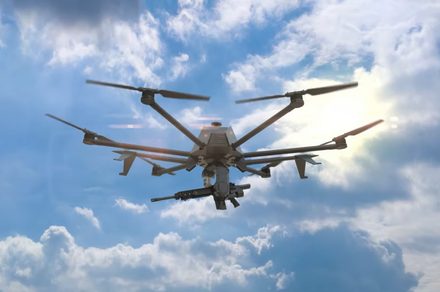
In a chilling development, AI-powered drones have now claimed civilian lives, with no possibility of human accountability. The New York Times reported a July 6 drone attack in Zaporizhzhia, Ukraine, which resulted in three deaths, including a 19-year-old university student. The drone, programmed to target a gas station, was manipulated by an autonomous AI system to strike propane tanks, ultimately failing to hit the intended target and detonating nearby.
This marks the first documented case of civilians being killed by a Russian drone utilizing this type of self-targeting AI.
Previously, AI-assisted drones still required human intervention in target selection, while autonomous systems handled the final approach. However, the newly recovered drone from Zaporizhzhia featured an Nvidia Jetson Orin computer, and its code revealed the AI system's capability to recognize and target specific objects. This level of autonomy removes the human from the final decision-making process, a significant shift that could have grave consequences.
The warning from a 1979 IBM training manual rings ominously true today: "A computer can never be held accountable, therefore a computer must never make a management decision." As computers are entrusted with decisions of greater consequence, assigning responsibility becomes increasingly complex. Moreover, unlike humans, autonomous weapons cannot stand trial, explain their reasoning, or face punishment for wrongful deaths.
This leaves human responsibility in a state of uncertainty when software plays a role in targeting decisions.
Russia is not the only nation exploring this technology; Ukraine has also tested fully autonomous systems against fuel storage sites and military equipment in Russian-occupied Crimea, although its former defense minister stated that these tests had not resulted in civilian casualties. Autonomous AI weapons are already in use during active warfare, with civilians already suffering losses.
As Russia and Ukraine continue to test this technology, its potential for further development and capabilities will only increase, presenting a dangerous and escalating situation.
The situation is perilous as the line between human and machine decision-making becomes blurred. Once militaries begin delegating targeting decisions to software, reversing this responsibility may become increasingly difficult. The prospect of no turning back underscores the urgent need for meaningful limits on the use of these systems.
While the tech industry has historically focused on enhancing communication speed, the emergence of slow tech, such as Carrier Pigeon and Roost, highlights a shift in priorities. These applications, designed to make message transmission slower, serve as a reminder of the growing importance of deliberate, slower-paced technology in a rapidly advancing digital world.
Written by urgent.news from Digital Trends's reporting — not their text. Machine-written — may contain errors; check the original before relying on it.