Asus ZenScreen OLED (MQ16FC) portable monitor review: A great all-around performer
The Asus ZenScreen OLED (MQ16FC) excels on several fronts, including pricing.
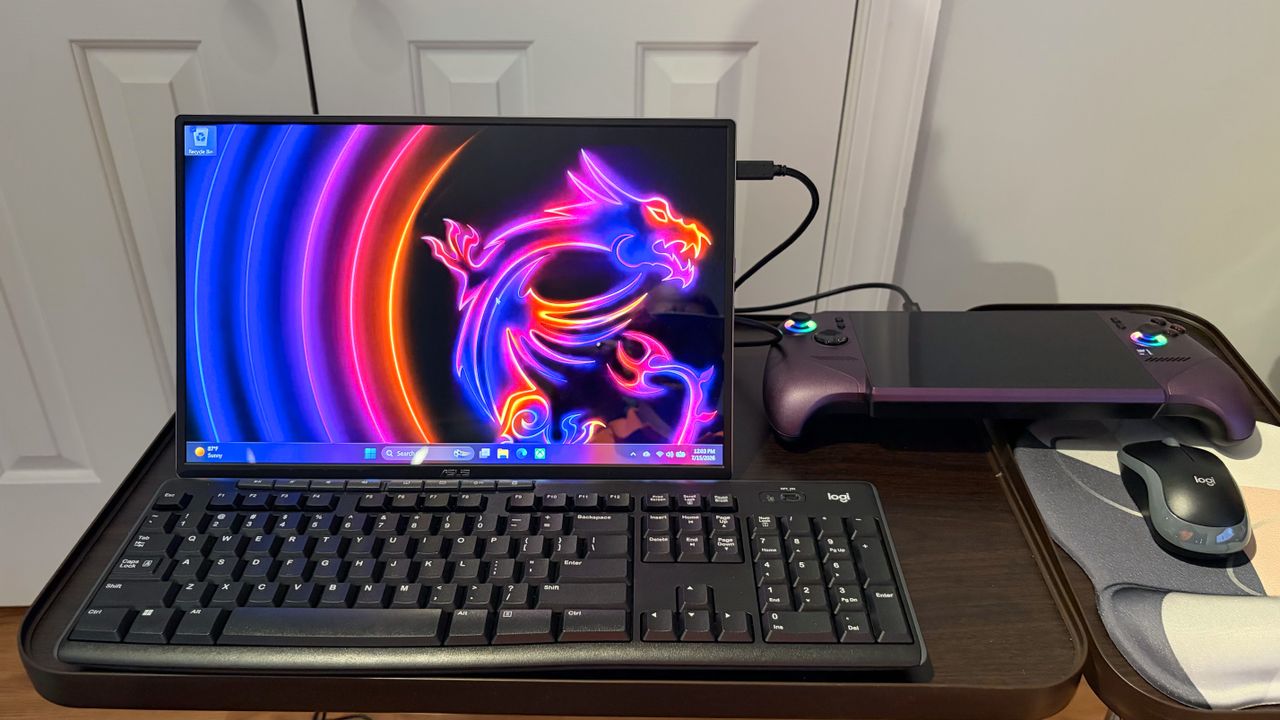
Asus, a well-known brand in portable monitors, has released its latest single-panel option, the Asus ZenScreen OLED (MQ16FC). This 16.1-inch OLED display boasts a 1920 x 1200 resolution and an integrated kickstand with excellent color performance, all for under $300. Weighing only 1.5 pounds, the MQ16FC features a sleek aluminum enclosure and comes with a padded case, cables, and a year-long warranty.
The monitor's design is minimalist, with thin bezels and an aluminum build contributing to its lightweight and sturdy construction. The kickstand pivots halfway up the back, allowing for adjustable angles with rubber feet for stability. Ports and controls are located on the right side, including a headphone jack, USB-C ports, a micro-HDMI port, a power button, a jog wheel, and an action button. Additionally, there's a tripod socket for mounting the monitor.
The MQ16FC's on-screen display (OSD) can be accessed through a jog wheel or action button and offers various display settings, including color modes and input selection. For enhanced convenience, the Asus DisplayWidget Center app can be installed for easier access to these settings.
Color-wise, the OLED display provides deep blacks and vibrant colors, with a glossy finish enhancing hues while minimizing reflections. It covers 153.2% of DCI-P3 and 216.2% of sRGB, outperforming competitors like the ViewSonic ColorPro VP16-OLED and Innocn 15A1F. However, it falls short in brightness, delivering only 300 nits in typical mode, although it can be boosted to 271 nits in user mode.
Despite this, the MQ16FC's versatility, connectivity options, and overall performance make it a strong contender in the portable monitor market.
Written by urgent.news from Tom's Hardware's reporting — not their text. Machine-written — may contain errors; check the original before relying on it.
This story
This is one outlet's version. Read the fullest account.