Anonymous Ox Alpha raises questions over prompt retention
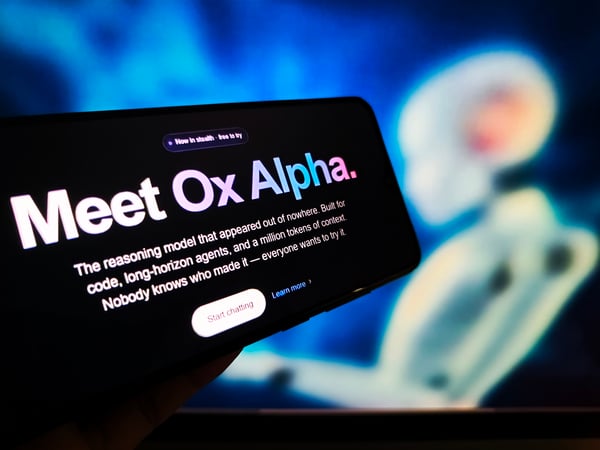
A powerful anonymous artificial intelligence model designed for coding has emerged with an unusually large context window, free access and a data policy that allows its unidentified operator to retain users’ prompts and responses. Ox Alpha appeared on OpenRouter on August 20 as a “stealth” reasoning model aimed at coding, sustained agentic work and production workloads. Its developer and operator…
A recently unveiled artificial intelligence model, Ox Alpha, has generated significant debate due to its retention of user prompts and responses. This coding-focused model, available on OpenRouter, boasts an astonishingly large context window of 1,048,576 tokens, allowing it to handle extensive codebases, documents, and conversations within a single session.
OpenRouter states that they only route requests to the model without ownership, development, or operation. The model's operator remains anonymous, adding to the intrigue surrounding its development. Access to Ox Alpha is free for both input and output tokens during the preview period, attracting developers with its zero-cost nature.
However, the model's treatment of data raises concerns. While it explicitly states that prompts and completions are retained by the provider and not used for training, the specifics of what else happens to this data are governed by OpenRouter's Stealth Model Terms. These terms suggest a broader agreement where user content may be collected, shared, licensed, and used for model training and improvement.
Despite these potential privacy implications, Ox Alpha offers the opportunity to execute complex, long-horizon software engineering tasks. Its ability to accept text, images, and video, and generate text, coupled with a 131,072-token maximum output allowance, makes it potentially useful for intricate programming tasks requiring repeated reasoning across large repositories.
The model's performance on the DeepSWE software-engineering benchmark, which it completed with a 66/113 success rate, suggests strong agentic coding ability. However, this result should not be considered an official benchmark. The identity of Ox Alpha's developer remains unknown, with speculation ranging from Chinese AI labs to Western tech giants, none of which have publicly claimed ownership by the time of the publication.
Written by urgent.news from Arabian Post's reporting — not their text. Machine-written — may contain errors; check the original before relying on it.