Amelley Djosu: PR is not propaganda; Ghana’s music industry needs a professional reset
There is a strange thing happening in Ghana's entertainment industry. We have become very good at making noise about our artists, but increasingly poor at managing the reputations we claim to be protecting.
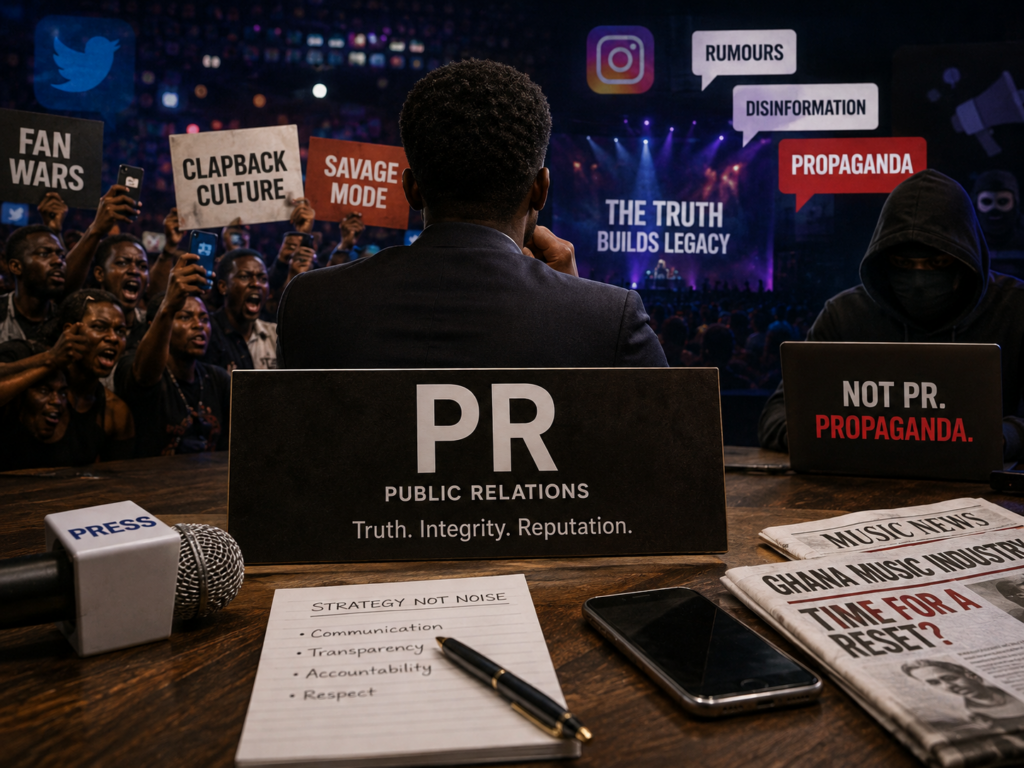
Ghana's entertainment industry has become increasingly focused on public relations, with a strange phenomenon taking hold. Publicists have become skilled at creating noise about artists, but are often poor at managing the reputations they claim to protect. Public relations has transformed into a competition over who can best defend their clients, trend on social media, insult rivals, and create the most flattering versions of reality.
The loudest publicist gets the most attention, and the most aggressive social media handler is celebrated. Sometimes, the sharpest-tongued publicist is seen as the best communicator.
This trend has obscured the actual practice of public relations. While there are excellent communications professionals working quietly behind the scenes, the loudest examples are setting the standard. PR should protect reputation, not manufacture reality. Its core definition involves reputation, relationships, understanding, and lies in listening and comprehending rather than simply broadcasting information.
The Public Relations Society of America and the British CIPR both emphasize honesty, accuracy, independence, loyalty, and fairness as core values. They require practitioners to be truthful and accurate in their communications, correct erroneous information, maintain professional integrity, deal honestly and fairly with clients, colleagues, and the public, and uphold the reputation of the PR profession.
The rise of fan armies in Ghana's music industry has also impacted public relations. Fan communities like Bhim Nation, Shatta Movement, SarkNation, and High Grade Family can create extraordinary visibility but can also lead to toxicity. When publicists behave like fan soldiers, insulting rivals and provoking fan bases, they contribute to the toxicity that makes the industry harder to navigate. Once the publicist becomes part of the fight, who manages the reputation?
The problem becomes particularly evident during awards season. The race for the Telecel Ghana Music Awards' Artist of the Year has created a parallel communications battle among publicists and representatives, who sometimes engage in heated exchanges. While strategic awards campaigning is legitimate, attempting to discredit opponents is a different matter.
Visibility should not be confused with competence. The best publicist may not be the one with the most followers or who trends every weekend. They are the one who knows who to call early, which stories to address, which interviews to decline, and which controversies to ignore or handle appropriately.
Written by urgent.news from MyJoyOnline Ghana's reporting — not their text. Machine-written — may contain errors; check the original before relying on it.