AI’s new cost equation: Why token economics matters
At DevSparks Hyderabad, NVIDIA’s Jigar Halani explained why as AI moves toward agents and more complex workloads, managing the utility, demand, supply, and monetization of tokens is becoming increasingly important.
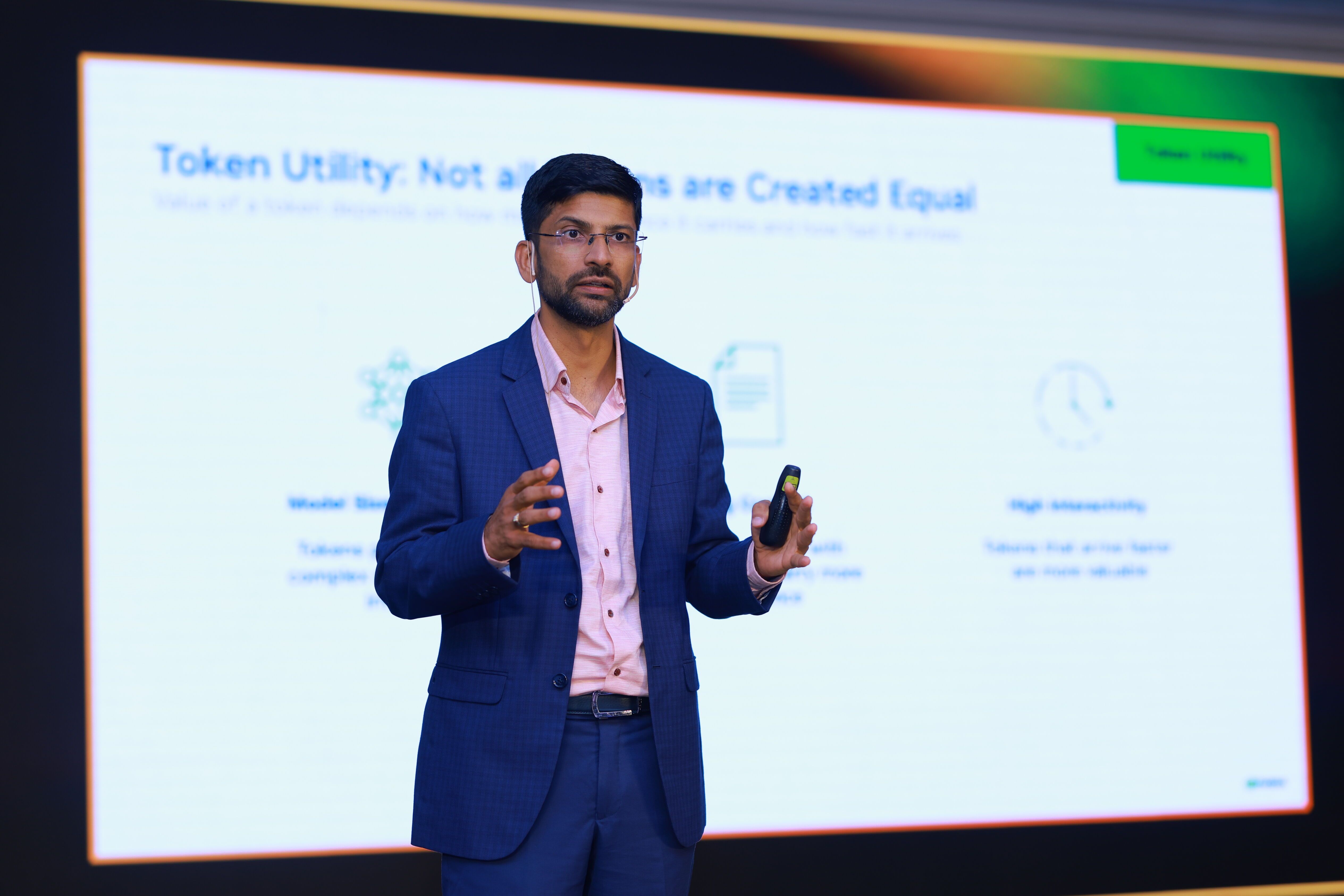
AI's new cost equation: Why token economics matters
As AI applications evolve from simple prompts to complex agents, the economics of tokens is gaining attention for developers and businesses. At YourStory's DevSparks Hyderabad 2026, NVIDIA's Jigar Halani explained the four factors of the token economy: utility, demand, supply, and monetization. Halani stressed that token consumption is increasing rapidly, with NVIDIA initially projecting 16 trillion tokens in 2026, surpassing 18 trillion by August, excluding tools like Microsoft Copilot.
For developers, Halani emphasized that the initial question should be the most suitable model for a specific task, not just the model itself. He noted that simple queries do not always need large models, and that complex tasks require more advanced models and can face latency issues. Choosing the appropriate model for the workload becomes crucial in managing AI costs.
The demand side of token economics becomes more intricate with agentic AI. An AI application's token consumption extends beyond the initial user request, including reasoning, feedback, tool calls, and iterative loops. Halani proposed a simple equation to assess token demand: the number of concurrent users, requests per user, and tokens consumed per request. Organizations must also consider workload types, usage patterns, and potential cache usage for reduced costs, which can range from 20% to 12.5%.
Written by urgent.news from YourStory's reporting — not their text. Machine-written — may contain errors; check the original before relying on it.