AI Citations Look Great, But Are They Actually Bringing You Traffic?
So your got an AI citation and it looks great. But. Did anyone visit? Did they read? Did they return did you get any traffic?
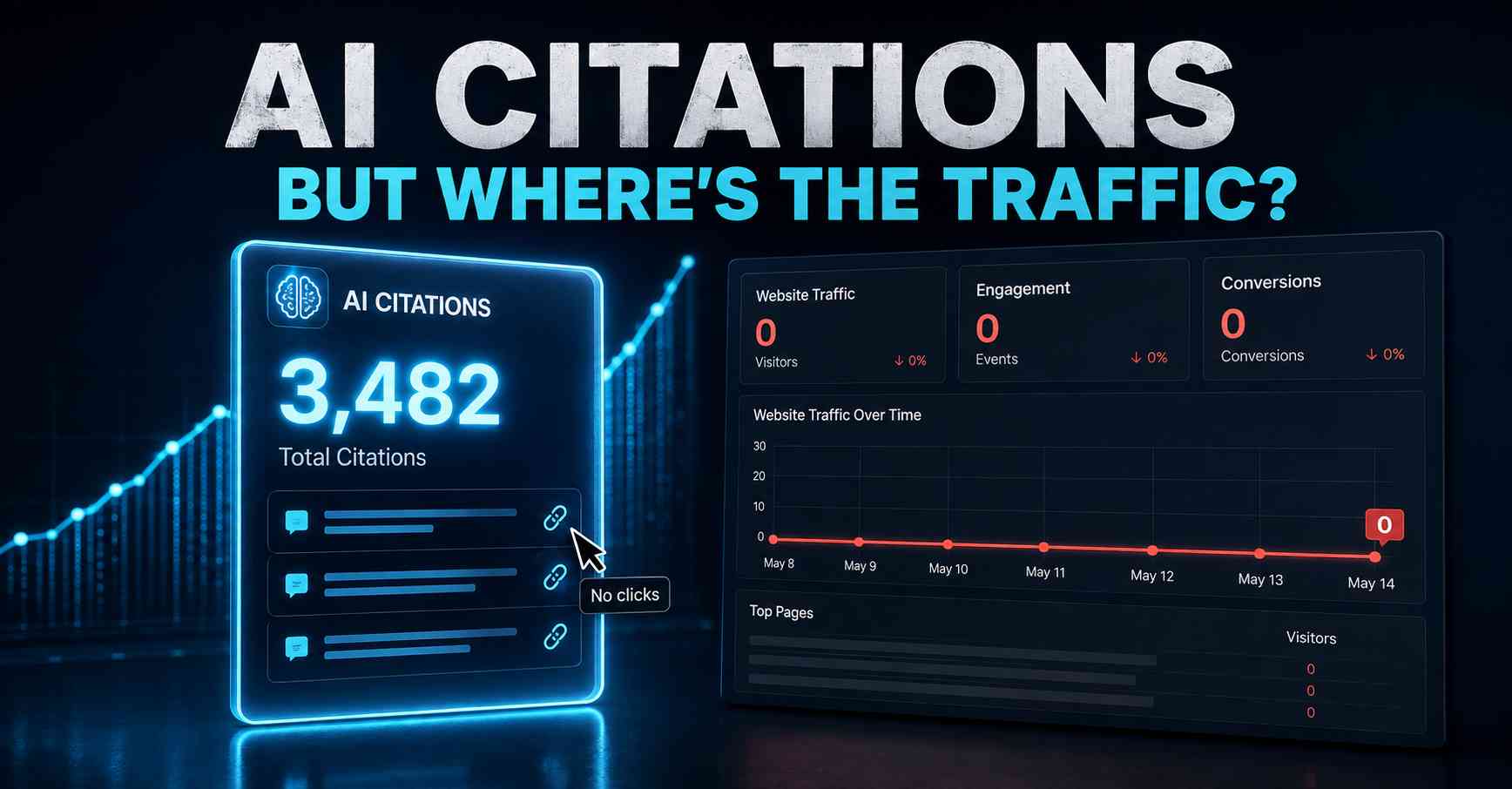
Brands are placing increasing importance on tracking mentions across AI platforms like ChatGPT, yet many still struggle to determine if those citations translate into traffic, inquiries, or revenue. While it's impressive to see your site mentioned in an AI answer, it doesn't necessarily mean it's driving results. Brands often showcase AI citations as proof that their optimization efforts are paying off, but this conclusion is premature.
A citation simply indicates that an AI system identified your page as a relevant source for a response. It doesn't prove that any person saw the response, clicked the link, read the page, or ultimately became a customer. The journey from AI discovery to actual user engagement involves multiple steps. First, the model or retrieval system identifies a potentially relevant page.
Next, the platform tags it with a citation or source. Only after that does acquisition happen, which requires a user to click through to your website. However, many AI visibility tools fail to measure genuine user demand accurately. They generate synthetic tests using their own prompts and record which domains show up. Although these prompts can be useful for benchmarking, they don't reflect real-world query volumes.
AI citations can fluctuate significantly without changes to your content. Different model versions, locations, wording, conversation histories, and available information at the time can all impact the sources cited. A single prompt may lead to different sources in subsequent tests, making citation tracking far noisier than many dashboards suggest.
Moreover, a surge in citations might result from a model update, changes to the monitoring tool's prompt library, or different retrieval methods. Conversely, a drop in citations doesn't necessarily reflect the quality of your page. The model could simply be drawing from a different index or selecting another source during answer generation.
When an agency reports a 40 percent increase in AI visibility, it's crucial to question how that figure was produced. Were the same prompts used? Were tests conducted from the same location, with the same models, and under identical account settings? Were personalized answers, browsing modes, and model updates controlled? Without this context, the percentage may appear more precise than it actually is.
Simply being listed beneath an AI-generated answer doesn't guarantee traffic. If the AI answer already addresses the user's query, the citation might be present but not driving any actual visits. This highlights the zero-click problem in AI search. Publishers invest time and resources in creating original content, which is then summarized by AI systems.
Unfortunately, the website often receives little to no traffic from these citations. While citations can contribute to brand recognition, particularly when your company or publication is directly mentioned, this should be measured as brand exposure rather than website acquisition. It's essential to differentiate between visibility, traffic, and conversion.
These are distinct outcomes that should be reported separately. GA4, Google's analytics platform, may not provide the full picture when it comes to AI referral traffic. Some platforms pass recognizable referral information, while others obscure it through redirects or open links in ways that strip or hide the original source. Depending on the platform, browser, app, and privacy settings, a visit might appear under referral traffic, an unexpected domain, or direct traffic.
Channel grouping can further complicate the issue, potentially mixing AI referrals with other traffic sources and making the performance appear better than it truly is. To gain a clearer understanding, publishers should inspect referral headers, request timestamps, and landing-page reports. Where feasible, separate known AI crawlers from human visitors.
A spike in requests from a crawler doesn't necessarily indicate actual audience engagement. Bot activity might coincide with citation visibility, creating misleading metrics. By examining these factors, publishers can make more informed decisions about their AI visibility strategies and accurately assess the true impact of citations on their business.
Written by urgent.news from HackerNoon's reporting — not their text. Machine-written — may contain errors; check the original before relying on it.