24-Hour Economy secures $5.5bn project commitments – Advisor
The 24-Hour Economy programme has mobilised about $5.5 billion in project commitments, largely from the private sector rather than government capital funding, a year after its launch.
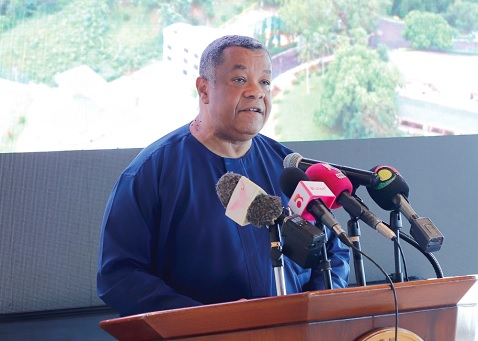
The 24-Hour Economy programme has attracted approximately $5.5 billion in project commitments from the private sector within a year of its launch in July 2025. The initiative, led by Presidential Advisor Augustus Goosie Tanoh, aims to transition Ghana from an import-dependent, raw material-exporting economy to a self-reliant, round-the-clock productive economy.
The programme relies on private sector implementation while the government facilitates the environment for investments. Despite its relatively short lifespan, the programme's credibility has attracted significant investment interest, according to Tanoh. The government's involvement primarily consists of administrative support, such as hiring consultants and providing equipment.
Major projects underway include WAPCo's solar project, valued at $1.45 billion, and renewable energy and renewable natural gas projects amounting to an additional $2 to $3 billion. For large-scale projects, developers must demonstrate substantial equity before signing agreements. The Buipe solar and battery project, expected to generate 1,500 MW of electricity and create 13,000 jobs, is part of the pipeline.
The 24-Hour Economy seeks to create 1.7 million jobs by the end of 2028, aiming to increase factory capacity utilisation to 90-100%. The programme's secretariat does not have jurisdiction over the 24-hour markets being developed, which are financed by district assemblies and implemented by the Ministry of Local Government. Despite four or five lawsuits, the secretariat maintains no control over these market projects.
Written by urgent.news from MyJoyOnline Ghana's reporting — not their text. Machine-written — may contain errors; check the original before relying on it.