20-year-old student finds 1,200-year-old gold 90 minutes into her first dig
In an exciting turn of events, an American archaeology student has stumbled upon a ninth-century gold artifact in Northumberland during her very first excavation. This intricately designed piece, likely serving a ceremonial purpose, was found close to Dere Street, linking it to the historical narratives of Roman and early medieval Britain.
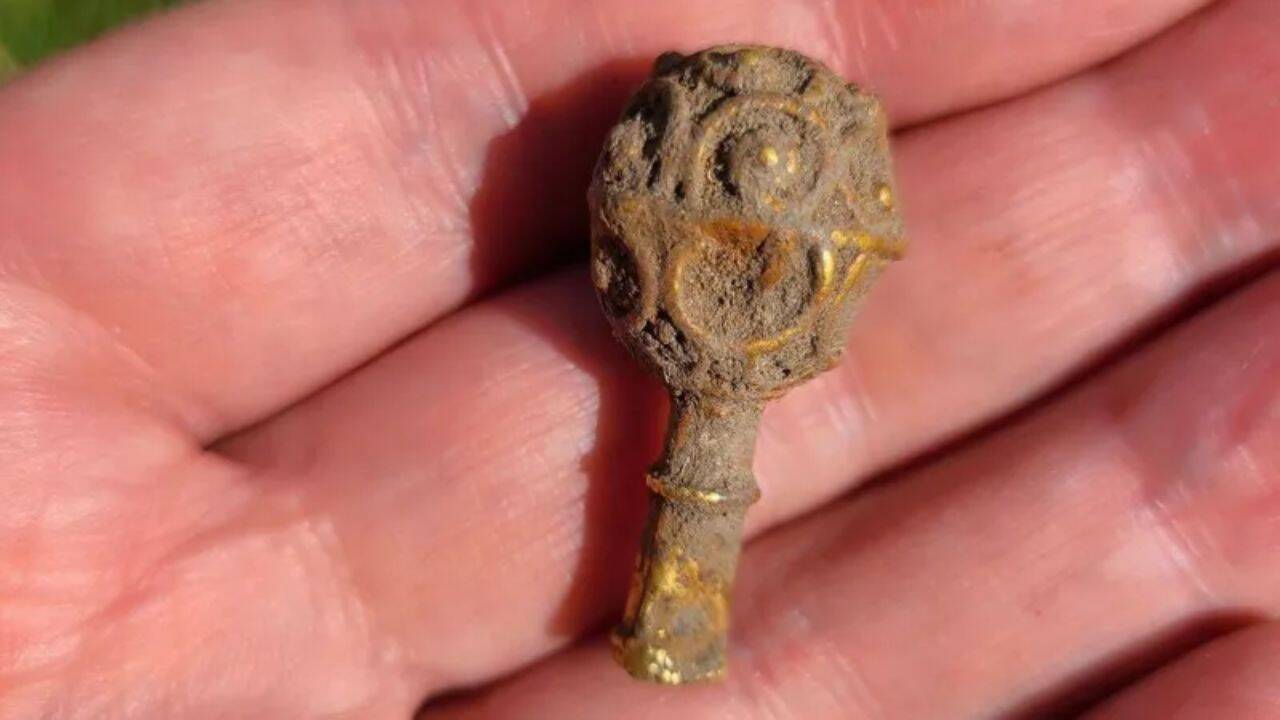
An American student, Yara Souza, made a significant discovery on her very first excavation. After just 90 minutes of digging, the 20-year-old undergraduate from Florida unearthed a gold artifact that is estimated to be 1,200 years old. The small, intricately decorated piece is believed to have been used for ceremonial purposes during Britain's early medieval period.
The excavation took place in Redesdale, a valley within the Northumberland National Park, which is close to the historic Roman road Dere Street. Dating back to 79-81 CE, Dere Street was constructed by Roman soldiers and served as a crucial route for the empire's expansion into northern Britain. The two major religious centers connected by Dere Street, Jedburgh and Hexham, have Christian roots that trace back to the seventh to ninth centuries.
James Gerrard, an archaeologist at Newcastle University, commented on the discovery, stating, "We know that Dere Street continued to be a major thoroughfare long after the Romans, and it's clear from this discovery that high-status people were using it." The two gold objects, including Souza's find, will be further studied before being displayed at the Great North Museum: Hancock.
The collaboration between the university and the museum allows students like Souza to gain hands-on experience in archaeological techniques while exploring the region's rich historical context.
Written by urgent.news from Times of India's reporting — not their text. Machine-written — may contain errors; check the original before relying on it.