Self-driving Ford F-250 truck with shotgun-equipped drone-killing turret tested by US Army — autonomous system designed to blast fast-moving drones at between 10 and 100 meters range
The US Army tested an autonomous breaching vehicle with an onboard counter-UAS turret during a live-fire exercise at Fort Bragg on August 18.
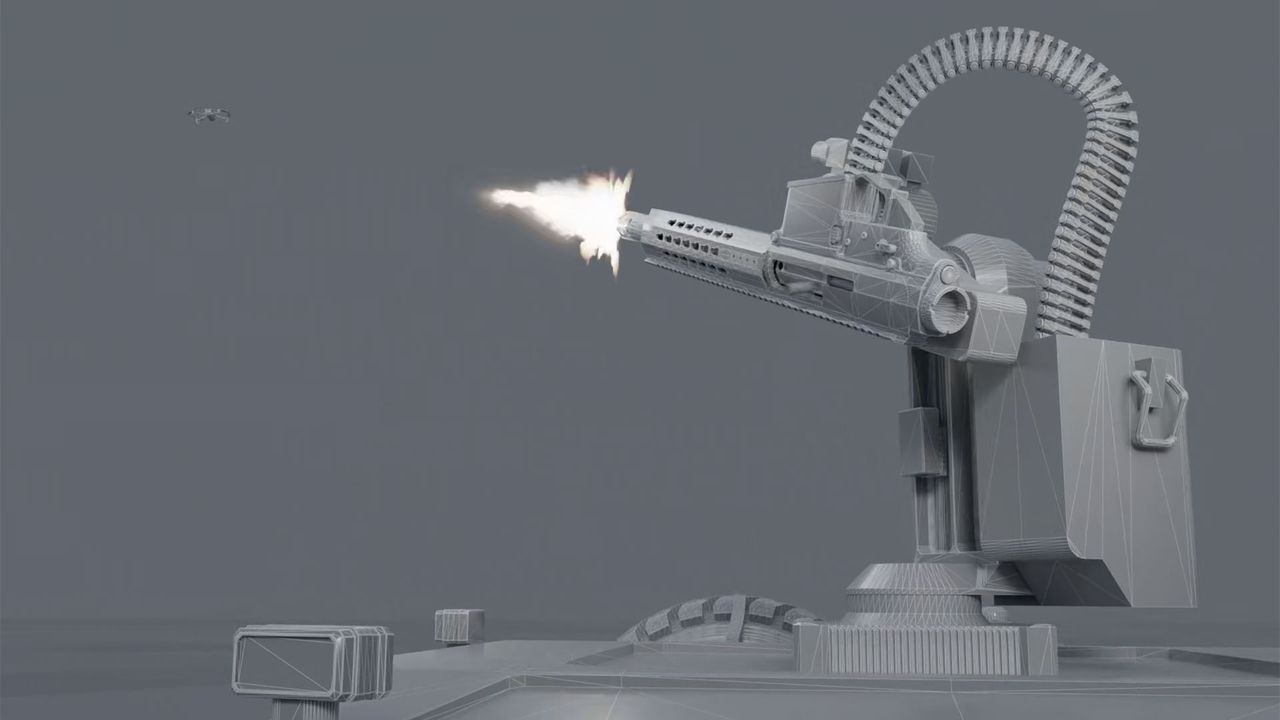
On August 18, the U.S. Army conducted a live-fire exercise at Fort Bragg to test an autonomous breaching vehicle equipped with a counter-UAS (C-UAS) turret. This development is part of Project Sandhills 2.0, which builds upon the original Sandhills project that created the Lancer UGV. The new addition to the arsenal features Ford F-250 trucks, some of which are armed with a shotgun-equipped drone-killing turret.
The Sandhills 2.0 project aims to enhance breaching operations by countering the growing threat of fast-moving drones. One of the key components of this autonomous system is the Edda counter-unmanned aircraft system turret, developed by Austin-based 9 Mothers. The Edda turret is capable of detecting and engaging drones with a 7-inch diameter or larger, at ranges between 10 and 100 meters.
Weighing around 23kg (50 pounds), the turret operates acoustically to avoid detection by advanced enemy drone sensors before employing a visual tracking system to lock onto the target. Once engaged, the Edda turret uses a shotgun to neutralize the threat. According to 9 Mothers, the Edda turret is an "ultra-fast, ultra-light, ultra-accurate motion platform" capable of making 5° rotations in under 15 milliseconds and achieving 1.5 arcminute precision.
While more test data would be beneficial, such as the percentage of drones destroyed with a single shot, the maximum speed of drones the Edda can engage, and its handling capacity per minute, the addition of this C-UAS turret to the autonomous breaching vehicle represents a significant advancement in countering rapidly evolving unmanned aerial system threats.
Written by urgent.news from Tom's Hardware's reporting — not their text. Machine-written — may contain errors; check the original before relying on it.