Neue Handelsroute: Südkorea schickt erstmals Frachter über Arktis nach Europa
Südkorea testet die nördliche Handelsroute zwischen Asien und Europa. Die Passage ist deutlich kürzer - sofern es das arktische Eis zulässt. Auch China und Russland wollen die Route stärker nutzen.
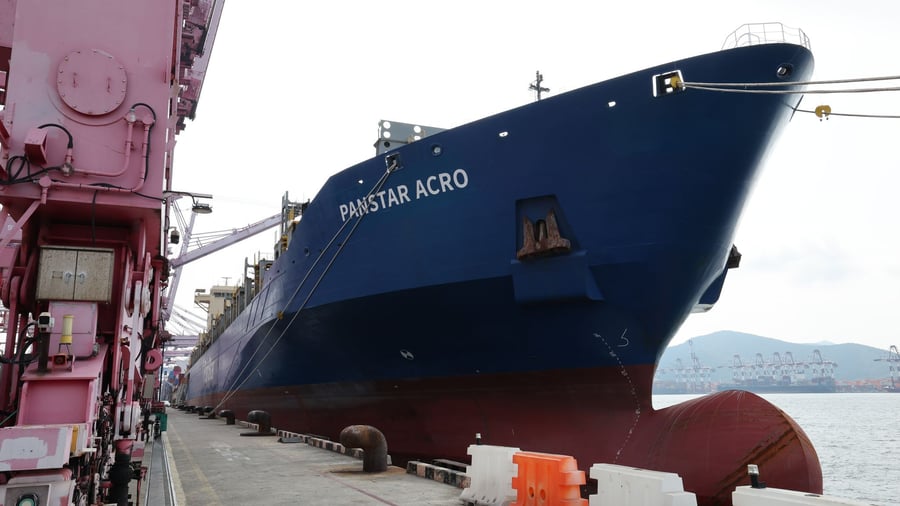
South Korea has embarked on a pioneering shipping route through the Arctic, known as the North-East Passage, to Europe for the first time. The move comes as countries, including Russia and China, explore alternative shipping routes in the wake of the Iran war and Iran's strait of Hormuz restrictions. The South Korean Ministry of Oceans and Fisheries announced the departure of the container ship "PanStar Acro" from Busan on Saturday evening for a commercial trial voyage through the North-East Passage.
The ship, loaded with chemicals and used cars, is set to call at European ports in Felixstowe, Rotterdam, and Danzig. The test voyage aims to assess the feasibility of using the North-East Passage for commercial shipping, with data collection on travel time, fuel consumption, and operational costs. South Korea aims to establish the Arctic Passage as a new trade route and upgrade Busan into an international logistics hub.
The round trip, including return to Busan, is expected to take 45 days, significantly shorter than the traditional route via the Indian Ocean, Red Sea, and Suez Canal. Each passage through the Arctic would take around eight days. Environmentalists warn of the potential impact of increased shipping traffic on the Arctic's fragile ecosystems.
Both Russia and China are also pushing for the commercial use of the North-East Passage, with a Chinese-owned container ship, "Dubai Tower," starting its journey from Ningbo, China, to Europe via the Arctic on August 15. This marks the beginning of a new seasonal shipping line that aims to halve the distance between China and Europe.
Russia uses the route primarily for liquefied natural gas (LNG) transportation to Asian customers from the Sabetta port on the Siberian Kamchatka Peninsula.
Written by urgent.news from Handelsblatt's reporting — not their text. Machine-written — may contain errors; check the original before relying on it.