Migration: Italien und Deutschland streiten über Flüchtlinge im Mittelmeer
Trotz neuer EU-Regeln will Italien keine Migranten zurücknehmen, die nach der Ankunft an Italiens Küsten bis nach Deutschland gelangt sind. Der rechte Vize-Regierungschef gibt den Ton an.
The dispute between Germany and Italy over handling Mediterranean boat refugees is escalating. Italian Vice-Prime Minister Matteo Salvini announced over the weekend that Italy would not take back a single "illegal immigrant" from Germany as long as the latter's aid organizations were operating in the Mediterranean. The federal government, however, refers to existing EU regulations, including the new Asylum and Migration Pact, which has been in effect since this summer.
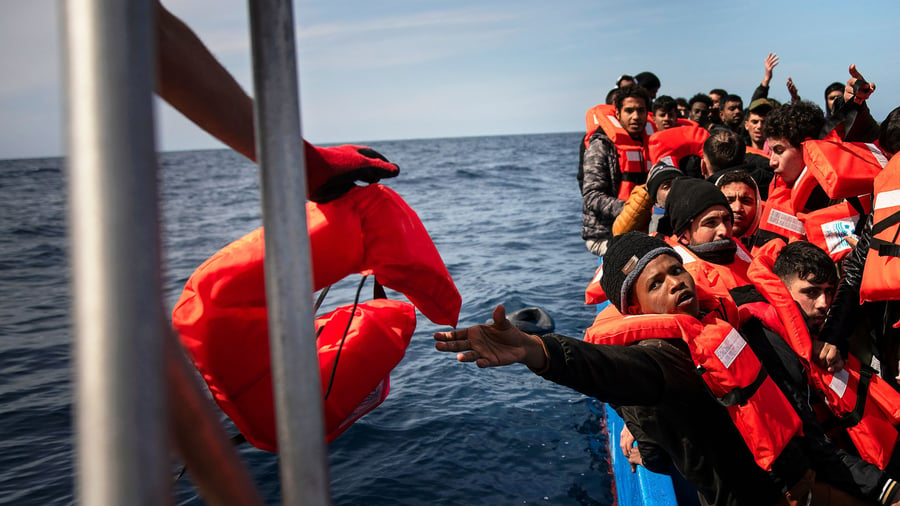
Italy's three-party coalition led by Prime Minister Giorgia Meloni bases its opposition on the fact that German non-governmental organizations (NGOs) have been boarding refugee ships in the Mediterranean for years, bringing them to Italian ports. According to Rome, around 2,200 migrants were taken aboard these vessels alone since the beginning of the year.
Some of them then travel further to Germany or other countries. In theory, every migrant must apply for asylum in the EU country they first enter. This issue has been a point of contention between Germany and Italy in recent years, especially as the region receives many refugees from Africa and the Middle East. The EU hoped that the new Asylum and Migration Pact would resolve these differences.
However, the dispute between Rome and Berlin has now dragged on throughout the summer. Vice-Prime Minister Salvini has further intensified his stance at a meeting of his right-wing party Lega, stating that "Germany has no right to send us even a single illegal immigrant, as long as German NGO ships are operating in the Mediterranean to bring thousands of illegal immigrants to Italy and Europe."
Salvini has previously taken a tough stance against boat refugees and aid organizations. However, he is not alone in Rome. Prime Minister Meloni and current Interior Minister Matteo Piantedosi, both from the Fratelli d Italia (Brothers of Italy) party, also insist on a "compensation." Italy argues that under maritime law, the country whose ship is sailing determines the laws that apply to it, which would make Germany the initial reception country for boat refugees, not Italy.
A meeting between Italian Interior Ministers Piantedosi and Alexander Dobrindt (CSU) is scheduled to discuss this. On the German side, there has been repeated emphasis in recent days that cooperation is maintained on the issue of migration. Piantedosi also set the German rescue ship "Sea-Watch 5" aside for 45 days, for which the authorities imposed a 4,500 euro fine.
Such fines have repeatedly been imposed on German ships. Other European countries such as Austria, Switzerland, the Netherlands, Sweden, and Finland have meanwhile announced that they will send migrants back to Italy. According to the Italian Interior Ministry, only three migrants were returned from European partner countries since the beginning of the year, and none from Germany.
Italy had previously rejected around 80,000 return requests from other states in 2023, citing an overloaded national reception system. Meloni had successfully campaigned on a tough stance against migrants during her election campaign. At the beginning of September, she will be continuously in office as no other Italian Prime Minister has been for the entire post-war period.
In the upcoming election next year, Meloni's Fratelli party is expected to secure about 27 percent, which is clearly ahead of all other parties. However, her right-wing coalition has increasingly come under pressure from the new Futoro Nazionale (National Future) party led by former General Roberto Vannacci, who still demands an even tougher stance against migrants.
Written by urgent.news from Handelsblatt's reporting — not their text. Machine-written — may contain errors; check the original before relying on it.