How do astronauts return from space and survive re-entry? | Explained
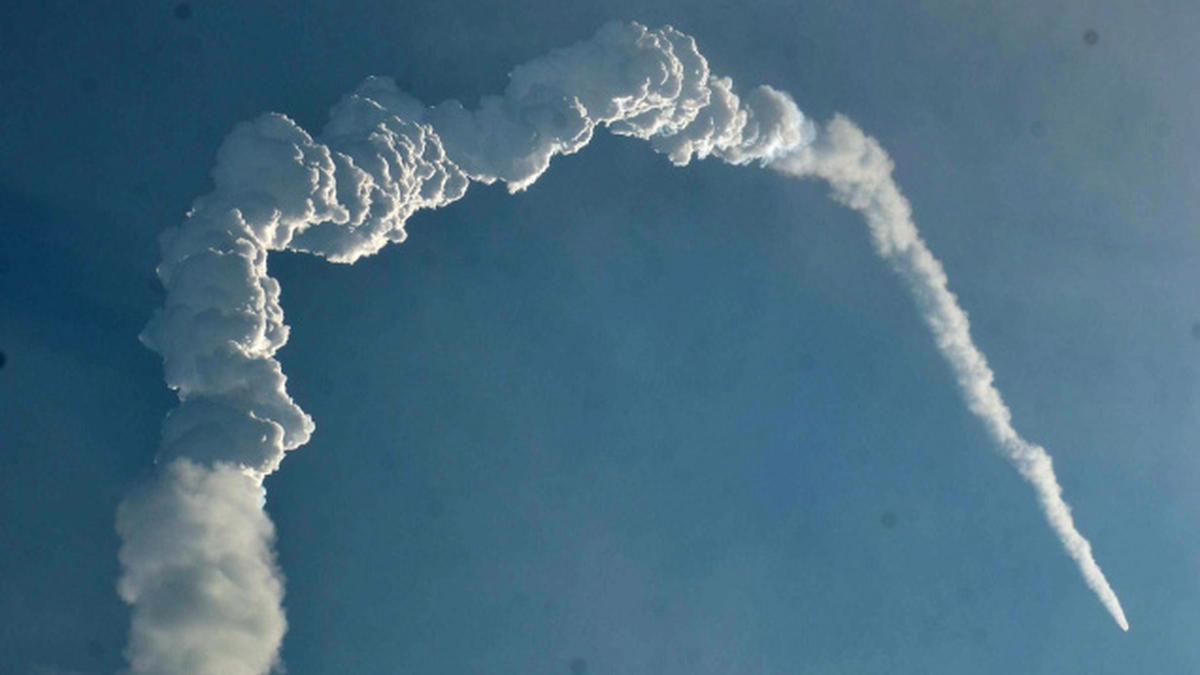
A launch vehicle’s ascent battles gravity to gain orbital velocity, while re-entry is a controlled struggle against the atmosphere to systematically shed that immense kinetic energy through aerobraking, thermal protection and precise guidance within the re-entry corridor
Astronauts return from space through a process called re-entry, which involves carefully shedding the immense velocity gained during orbit. Initially, scientists doubted the feasibility of surviving re-entry due to extreme temperatures generated by the conversion of kinetic energy into heat. However, the development of the blunt body theory allowed spacecraft designers to mitigate this heat by allowing it to disperse into the atmosphere rather than directly impacting the capsule.
The heat shield, a critical component of the capsule, uses thermal protection systems to manage this heat. These systems can either ablate material to carry away heat or employ thermal insulation to prevent heat conduction to the capsule's main structure. To exit orbit, the spacecraft performs a deorbit burn, firing its engines to reduce forward speed and allow gravity to pull the capsule out of its orbit and into a downward curve towards the atmosphere.
Re-entry is a delicate process with specific atmospheric windows. The entry angle must be precise to prevent the capsule from bouncing off the atmosphere (overshoot boundary) or hitting the air too hard, leading to lethal forces (undershoot boundary). To navigate this, the capsule employs a semi-ballistic flight path, adjusting its angle of attack to create lift and steer toward a target landing area.
During re-entry, the capsule enters a communication blackout due to the ionized plasma sheath formed by heated air molecules. This plasma layer reflects radio waves, disrupting communication. To address this, engineers use orbital relay networks and high-frequency signals that can transmit through the less dense plasma regions. As the capsule slows down, the plasma dissipates, allowing normal communication to resume.
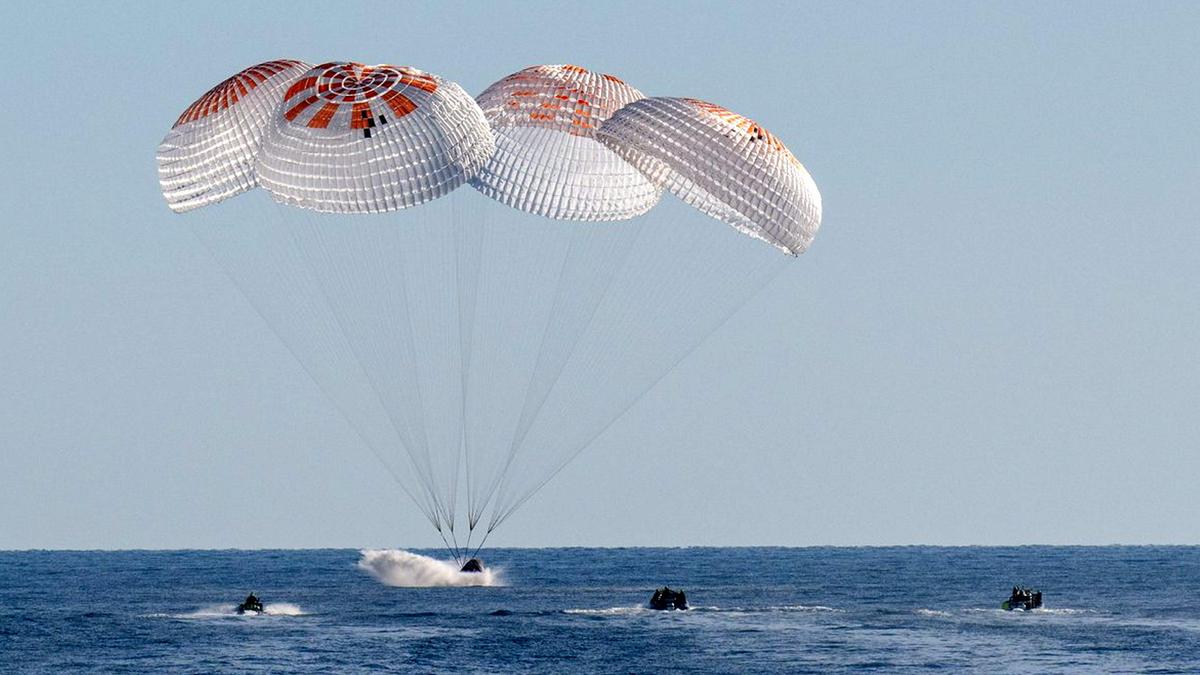
Deceleration is managed through aerobraking, using atmospheric drag to reduce speed until a terminal velocity is reached. Parachutes further slow the capsule, reducing velocity to safe landing levels before splashing down in the sea. The Indian Space Research Organisation (ISRO) pioneered re-entry technology with the 2007 Space Capsule Recovery Experiment (SRE) and further refined these capabilities with the 2014 Crew Module Atmospheric Re-entry Experiment (CARE).
The Gaganyaan program, aimed at human spaceflight, incorporates these lessons, featuring a crew module and service module that separate during re-entry. The crew module utilizes thrusters, parachute systems, and precise trajectory control to achieve a safe splashdown in the Bay of Bengal.
Written by urgent.news from The Hindu - Sci-Tech's reporting — not their text. Machine-written — may contain errors; check the original before relying on it.