‘Crippling traffic jams plague Karachiites’
KARACHI: Megacity Karachi, the pulsating heart of Pakistan’s economy, is currently in the grip of a crippling traffic crisis, with citizens enduring hours-long commutes as a confluence of protests, infrastructure failures, and security closures grind the city to a halt, said Pasban Democratic Party (PDP) Chairman Altaf Shakoor here Sunday. What was once a manageable rush hour has devolved into a…
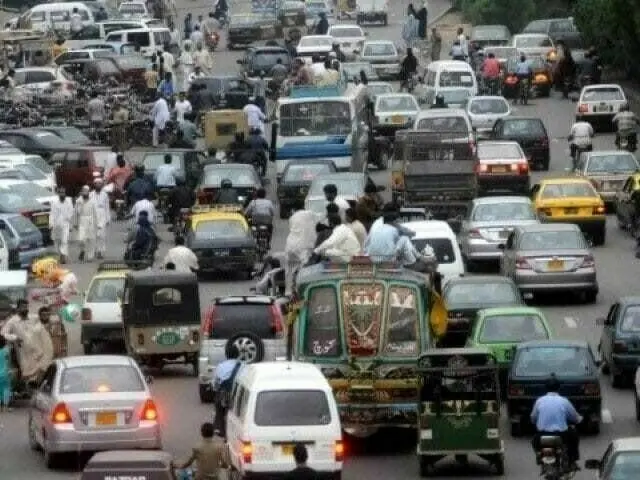
Karachi, the bustling economic hub of Pakistan, is currently besieged by an unprecedented traffic crisis, with commuters enduring grueling commutes as protests, infrastructure shortcomings, and security closures converge to cripple the city, Pasban Democratic Party (PDP) Chairman Altaf Shakoor reported on Sunday. Once a tolerable rush hour, it has transformed into a daily ordeal, with significant roadways blocked and regular travel turning into a logistical nightmare.
On August 20, a lawyer-led sit-in near the Chief Minister's House led to the closure of roads in the South district, resulting in severe congestion and paralyzing a central business district for hours. This issue has been compounded by a series of interconnected problems, Shakoor stated. On August 22, residents in areas such as Liaquatabad, Pak Colony, and Nishtar Road took to the streets to protest prolonged power outages, blocking intersections with burning tires and causing additional congestion.
The normally swift journeys have stretched into hours, with some travelers stuck for as long as four hours between S.I.T.E and Liaquatabad. However, this current gridlock serves as a symptom of a more profound, persistent structural failure, with M.A. Jinnah Road, one of the city’s busiest thoroughfares, symbolizing this administrative breakdown.
Shakoor highlighted that the ongoing construction of the Green Line BRT extension and rampant encroachments have left limited space for traffic, while University Road continues to be a nightmare for commuters. The PDP Chairman expressed alarm over the inadequate traffic management, stating that the road has been "destroyed from a traffic-management perspective," with minimal hope for improvement.
He emphasized that the breakdown extends beyond urban planning to encompass national resource management, as frequent road closures for security reasons are causing substantial fuel wastage and lost productivity. The city's cars idling for hours consume precious petrol and diesel, creating an economic burden that impacts the entire nation.
Shakoor criticized the Karachi Port Trust (KPT), attributing past gridlocks to poor operational planning that overwhelmed the road network, particularly on Mauripur Road and Mai Kolachi. The megacity remains vulnerable to natural disasters, as recent heavy rains exposed the urban infrastructure’s fragility, leading to wall and roof collapses and further traffic disruptions.
Although initiatives like the introduction of China-made EV buses and the partial reopening of Jahangir Road offer a ray of hope, they have yet to alleviate the immediate daily suffering of millions. The situation, if left unchecked, threatens a potential city shutdown, and urgent, coordinated intervention is urgently needed. Shakoor demanded a comprehensive strategy addressing illegal encroachments, improved construction project planning, and a more predictable security framework that does not compromise public mobility.
"Without decisive action, Karachi risks being suffocated by its own traffic," he warned. While protests are a democratic right, he argued that blocking busy roads for hours or days is unacceptable, as cities like London and Paris manage protests and processions by keeping at least one lane open. The Pakistani constitution guarantees free movement of citizens, and blocking this right is a constitutional violation, Shakoor argued.
He called for political and religious parties to work with the government to develop standard operating procedures (SOPs) for protests, rallies, and sit-ins, ensuring public mobility during these events.
Written by urgent.news from Business Recorder's reporting — not their text. Machine-written — may contain errors; check the original before relying on it.