Charcha Time: Are Political Labels Killing Democratic Debate?
A single label can end a conversation before it even begins. In today’s political climate, terms such as ‘andhbhakt’, ‘anti-national’, ‘tukde-tukde gang’, and ‘dimagi naxal’ are increasingly replacing arguments with assumptions. As political identities become shorthand for entire viewpoints, an important question emerges: are these labels helping people understand each other, or are they making…
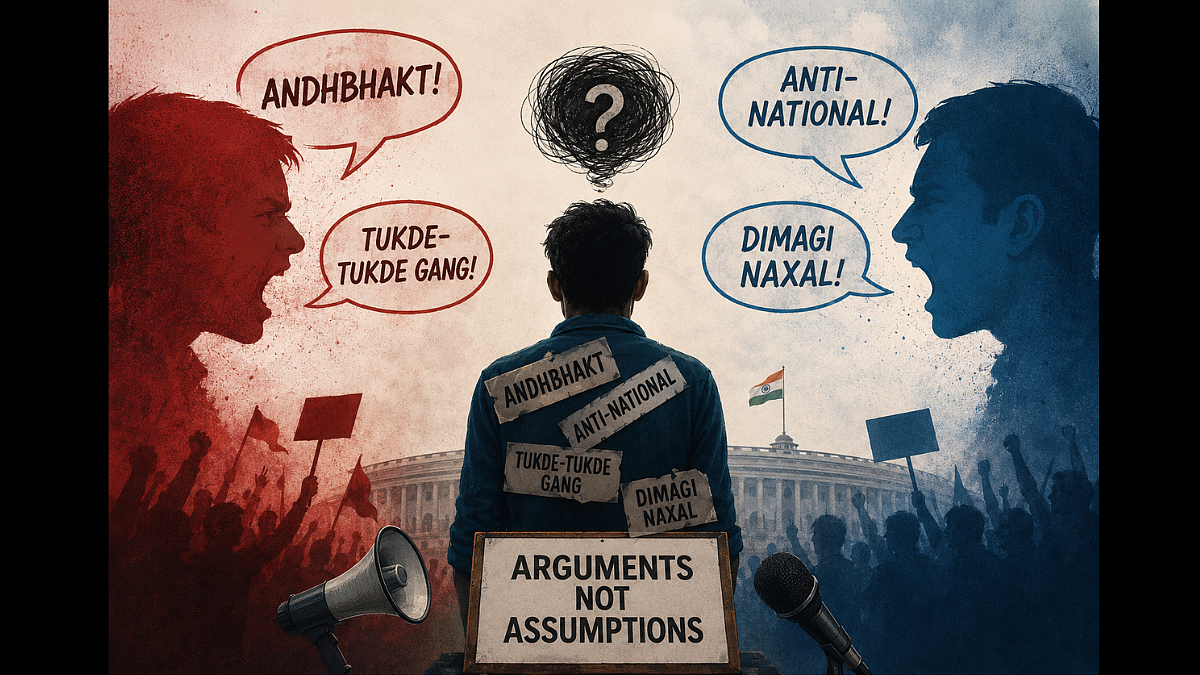
Labels like "anti-national", "andhbhakt", or "dimagi naxal" may seem satisfying to use, but they rarely help in meaningful conversation. These labels compress complex issues into insults, making real debate nearly impossible. As many hesitate to post political opinions online, not because they lack views, but because they know disagreement often invites mockery, people avoid engaging in public discourse.
This leads to silence or echo chambers where only like-minded people speak, unable to persuade others who have been labelled. Short-form content accelerates this by creating sensational titles that are more shareable than detailed explanations. Platforms reward this conflict-driven engagement, leading to a destructive cycle. Younger citizens must choose curiosity over contempt, influencers must resist division for engagement, and platforms must redesign algorithms to reduce conflict-promoting content.
Respectful disagreement is not a weakness, but the only way for democracy to function effectively in the online space. Political labels blur the lines between different viewpoints, preventing nuanced discussions based on facts and issues. Political leaders, media organisations, and citizens all have a role to play in fostering a more constructive political discourse.
Written by urgent.news from Free Press Journal's reporting — not their text. Machine-written — may contain errors; check the original before relying on it.