After gaining EV dominance, Chinese carmakers shift goal to take on full-hybrid behemoths
Chinese carmakers, already at the vanguard of electric vehicle (EV) technology and production, are looking to make a dent in international marques’ full-hybrid vehicle stronghold as they continue to disrupt the global car industry’s pecking order. Major car builders including Geely Auto and Changan Automobile have reported impressive sales of hybrid electric vehicles (HEVs), luring domestic…
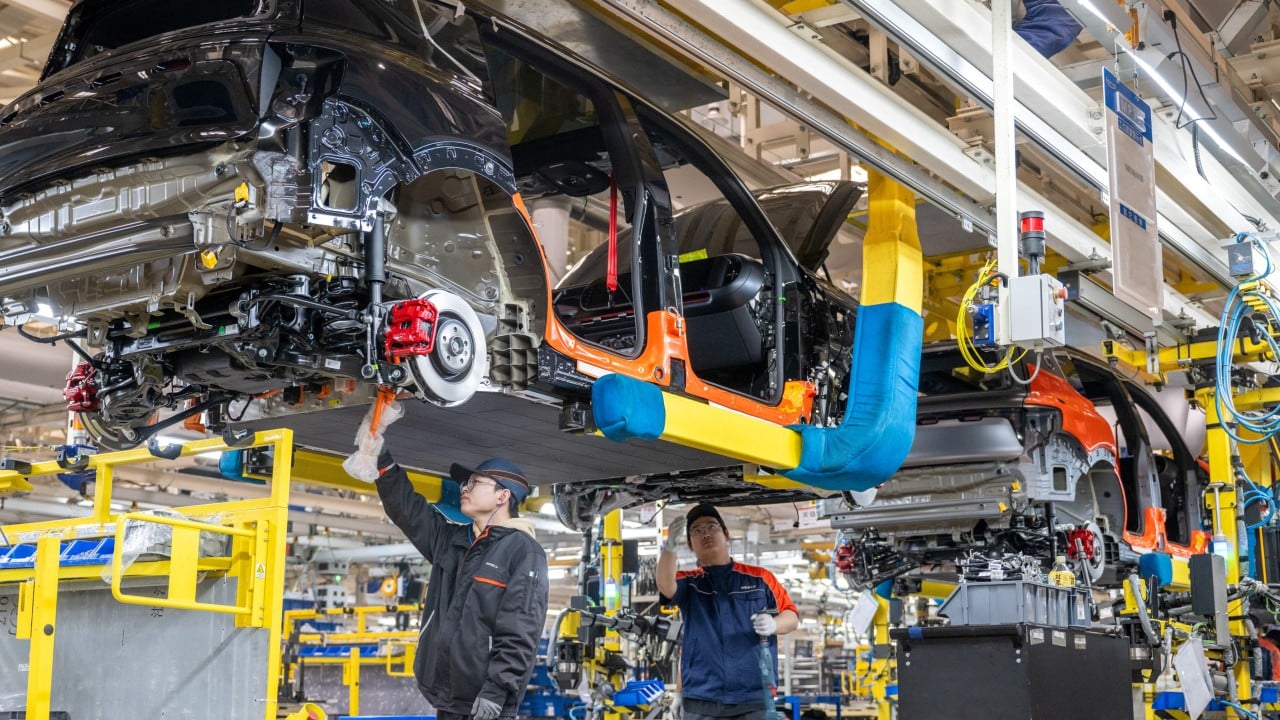
Chinese automakers, who have been pioneers in electric vehicle (EV) technology and manufacturing, are now aiming to challenge the full-hybrid vehicle dominance held by global giants. Established manufacturers like Geely Auto and Changan Automobile have observed strong sales of hybrid electric vehicles (HEVs), drawing domestic buyers away from established players such as Toyota's Prius.
Chen Jinzhu, the CEO of Shanghai Mingliang Auto Service consultancy, remarked that Chinese-designed HEVs benefit from their manufacturers' expertise in intelligent features and computing power, providing superior smart driving capabilities and in-car entertainment. HEVs operate with an internal combustion engine powering an electrical generator, either charging batteries or powering electric motors directly.
Unlike pure electric or plug-in hybrid vehicles, HEV batteries cannot be recharged at charging stations. In China, nearly all car producers have concentrated on developing pure electric and plug-in hybrid models since Beijing introduced subsidies for buyers in 2009. HEV vehicles are not classified as new-energy vehicles in mainland China, hence they are not eligible for government incentives, like subsidies or tax exemptions.
Consequently, Chinese firms such as Geely, Changan, Great Wall Motor, and Chery Automobile have intensified their focus on full-hybrid technology. The HEV segment was previously monopolized by international brands like Toyota and Honda for two decades, with annual sales reaching approximately 1.2 million units, accounting for roughly 5 percent of total car deliveries nationwide, as per analyst estimates.
Geely Auto's freshly appointed CEO, Jerry Gan Jiayue, declared at an August 17 press conference that GEELY's new energy and AI technologies had outperformed Japanese products in i-HEV's technical specifications. "We confidently consider our technology as the global benchmark for HEVs," he asserted. Geely's i-HEV intelligent hybrid system, introduced early this year, is backed by an AI-powered energy management platform able to monitor temperature, humidity, and altitude to improve fuel efficiency, according to the company.
Highway tests revealed that the i-HEV consumed an average of 2.22 litres of fuel per 100 kilometres, the lowest among any HEV globally. Geely, the second-largest carmaker in mainland China after BYD, the world's largest electric vehicle manufacturer, aims to deliver 30,000 units monthly of HEVs on the domestic market by the end of 2026.
These new HEV models would be exported to non-mainland markets starting in 2027. The European Union imposes tariffs on Chinese-made pure electric cars ranging from 17.8 percent to 45.3 percent, whereas HEV exports from the mainland incur a duty of only 10 percent.
Written by urgent.news from SCMP Business's reporting — not their text. Machine-written — may contain errors; check the original before relying on it.