50 years on, California sanctuary's rare gibbons tell a survival story
Nestled north of Los Angeles, a gibbon sanctuary has championed the protection of endangered species for five decades. Established in 1976, this facility currently houses roughly forty primates of five diverse species. Beyond managing breeding initiatives, it facilitates animal exchanges and pursues non-invasive research while educating college students about animal husbandry. Looking ahead, the…
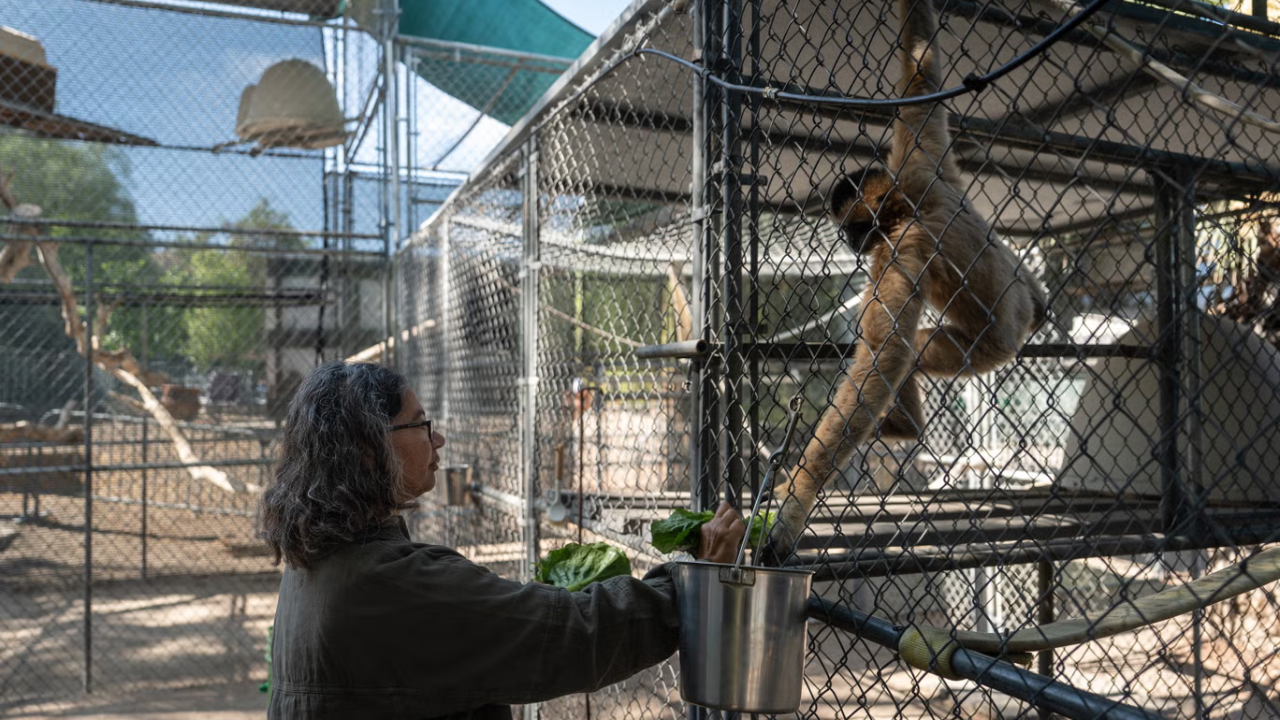
Every morning, a chorus of deep hoots and high-pitched calls rings out across the Santa Clarita Valley from the Gibbon Conservation Center, a sanctuary dedicated to preserving some of the world's most endangered primates. Founded in 1976, the center now houses around 40 gibbons from five different species, facing the threat of extinction due to deforestation, habitat loss and the illegal pet trade.
Alan Mootnick, a self-taught primatologist, established the sanctuary after purchasing a 10-acre property in 1980. Despite lacking formal biology education, Mootnick transformed the land into a major research and conservation hub for gibbons. After his death in 2011, director Gabi Skollar continued the mission, moving from Hungary to the US to study under Mootnick.
The sanctuary employs breeding programs to maintain genetic diversity and has successfully bred the endangered Javan gibbon, one of the species with fewer than 2,000 individuals left in the wild. They also prepare to send northern white-cheeked gibbons to the Pittsburgh Zoo as part of global conservation efforts.
Caretakers like Jodi Kleier prepare specialized diets, and some gibbons, like Pepper the northern white-cheeked gibbon, have distinct personalities and vocal habits. The center not only provides a home for these endangered animals but also conducts non-invasive research on gibbon vocalization patterns and collaborates with educational institutions.
Animal care specialist Sophia Paden emphasizes that gibbons, like humans, live in family groups and should never be kept as pets due to their complex needs and potential danger to people. The sanctuary aims to raise funds for larger enclosures and a permanent education center, emphasizing the importance of preserving these endangered apes for future generations.
Written by urgent.news from Times of India's reporting — not their text. Machine-written — may contain errors; check the original before relying on it.