UK retail sales drop, while government borrowing rises
AgenciesBritish retail sales fell back as expected in July after a surge in June when hot weather boosted demand for fans and air conditioners and supermarkets offered promotions a...
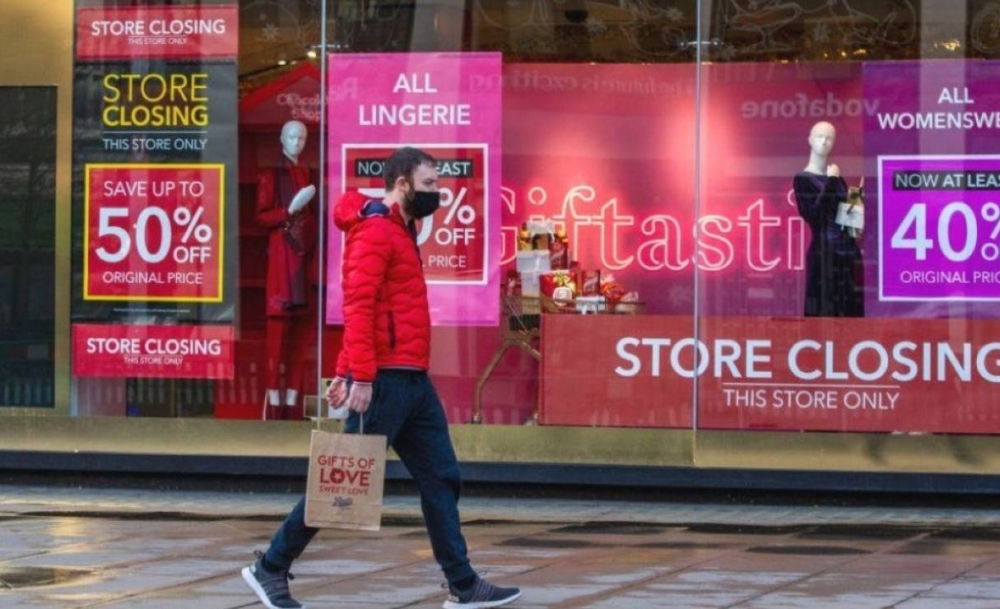
British retail sales experienced a decline in July as anticipated, according to official figures released on Friday. The decline was largely expected, following a surge in June driven by hot weather, promotional offers, and increased demand for fans and air conditioners following the World Cup soccer tournament. Retail sales volumes in July decreased by 0.5 percent from the previous month, aligning with the median forecast of economists polled by Reuters.
However, annual sales growth slowed to 1.6 percent in July from a previously revised downward 3.8 percent, slightly below expectations for a reduction to 2.2 percent. The main contributor to this decline was the clothing and footwear sector, which saw sales drop by the largest amount since May 2025, falling by 2.7 percent on the month. This decline occurred as many stores began their summer sales in June rather than July.
The pound remained relatively stable against the US dollar following the release of these figures. Additionally, data showed a higher level of government borrowing than anticipated in July. Martin Beck, chief economist at WPI Strategy, suggested that the drop in retail sales could be viewed as a temporary pause rather than the beginning of a renewed consumer downturn.
Despite higher energy costs resulting from the US-Zionist conflict with Iran, consumer sentiment surveys indicate that demand has remained robust. The decision by the government to remove value-added tax from household electricity bills, set to commence in October, is anticipated to boost demand later in the year. However, there is a risk that households may become concerned about potential tax increases in the upcoming finance minister's October budget, despite Prime Minister Andy Burnham's pledge to maintain the rates of all major taxes unchanged.
Recent surveys have shown a two-year high in consumer confidence, released earlier by GfK. However, Jacqueline Windsor, head of retail at PwC UK, warned that headwinds to consumer spending are likely to intensify later in the year, particularly with the anticipated increase in regulated household energy prices. Recent performance reports from major British retailers have yielded mixed results.
Clothing retailer Next raised its annual profit outlook for the third consecutive year, attributing the increase to the prolonged period of hot weather. Conversely, sportswear and fashion retailer JD Sports issued a profit warning, a move attributed to weakness in US markets rather than the UK.
In July, the UK government recorded an unexpected budget deficit, highlighting the financial challenges facing the new finance minister, John Healey, ahead of his October budget. The Office for National Statistics (ONS) reported that public sector net borrowing amounted to £1.8 billion ($2.5 billion) in July. This borrowing was a result of higher government spending to counteract inflation, which was offset by record self-assessed income tax receipts for the month.
Economists' predictions had indicated a balanced budget, while the Office for Budget Responsibility (OBR) had projected a £500 million surplus, the first such surplus since before the COVID-19 pandemic. According to the ONS, social benefits spending increased by £2 billion in July compared to the previous year, while spending on goods and services, which includes staff costs, rose by £1.2 billion.
Despite this, borrowing for the first four months of the 2026/27 financial year remains higher than the OBR's forecast, amounting to £56.7 billion compared to the projected £54.4 billion.
Chief economist at tax and consulting firm RSM, Thomas Pugh, expects government borrowing to continue to exceed the OBR's forecast throughout the rest of the year. This expectation is based on factors such as higher gilt yields, persistent inflation, and the government's determination to increase spending. As a result, borrowing is projected to remain above 4 percent of GDP this year, rather than decreasing to the projected 3.6 percent.
The current budget deficit, encompassing day-to-day spending against tax revenues and requiring a balanced state by 2029/30 under current fiscal rules, stood at £34.7 billion for the April-July period. Chancellor Healey emphasized the importance of fiscal discipline for UK economic stability and national security, stating that the government is committed to meeting its fiscal rules while maintaining a buffer against global uncertainties.
Written by urgent.news from Qatar Tribune Business's reporting — not their text. Machine-written — may contain errors; check the original before relying on it.