'The greatest unknown was how much energy would be released by the weapon': How scientists prepared for the Trinity nuclear test
In this excerpt from "Trinity: An Illustrated History of the World’s First Atomic Test," author Emily Seyl looks at the buildup to the 1945 test that changed history. She explores the huge effort to design experiments that would ultimately establish whether the gargantuan explosion in the middle of the desert was a success.
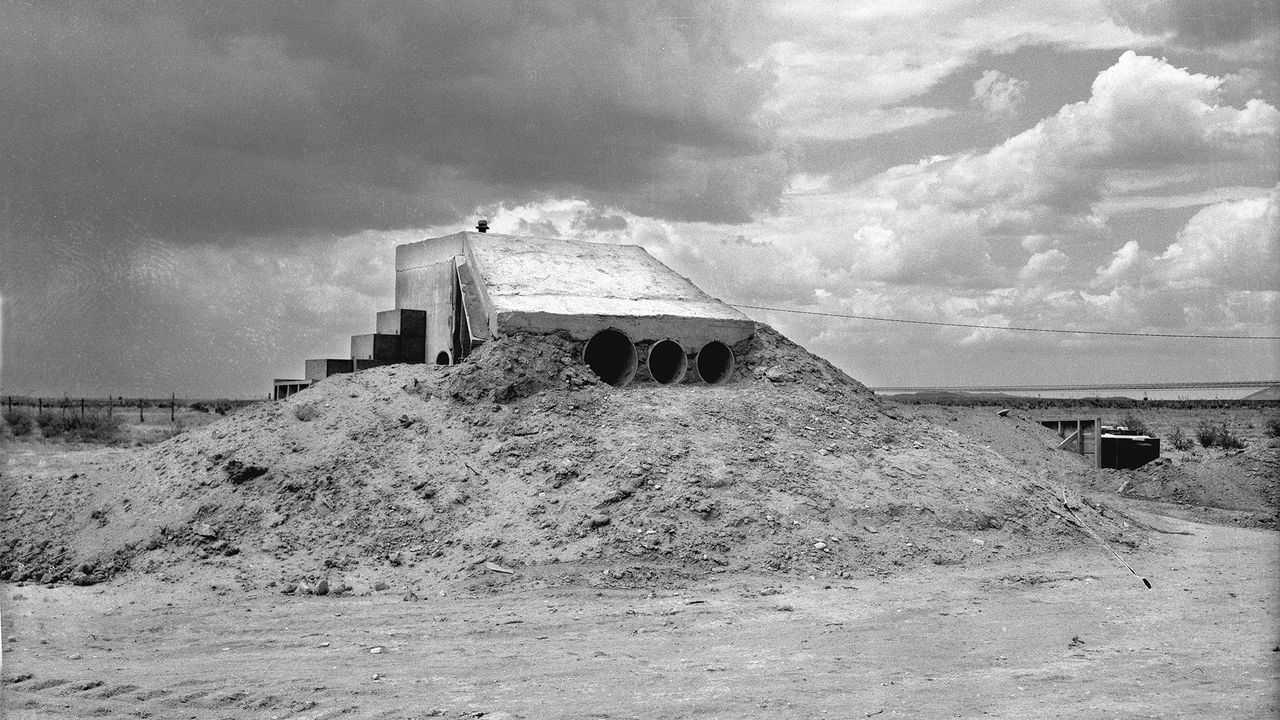
On July 16, 1945, in a remote New Mexico desert, a group of scientists, engineers and military personnel witnessed the successful Trinity nuclear test, marking a pivotal moment in history. Emily Seyl, a science writer and editor at Los Alamos National Laboratory's National Security Research Center, explores the human effort behind the Manhattan Project in her new book Trinity: An Illustrated History of the World’s First Atomic Test.
The most basic measure of success was determining whether the Gadget produced a nuclear explosion, but scientists went beyond this simple question by conducting numerous experiments to measure the weapon's yield. These experiments included observing radiation emissions, air and ground shock waves, and the fireball's size and temperature.
A committee headed by Kenneth Bainbridge, director of the Manhattan Project's Trinity nuclear test, evaluated the proposed experiments, categorizing them into essential, desirable, and unnecessary groups. Despite the unknown yield of the weapon, scientists applied their laboratory rigor to the desert, developing clever devices to record the various effects of the blast while ensuring their safety from potential destruction.
Written by urgent.news from Live Science's reporting — not their text. Machine-written — may contain errors; check the original before relying on it.