Microsoft Has Something Nvidia Doesn’t and Here’s Why it Matters
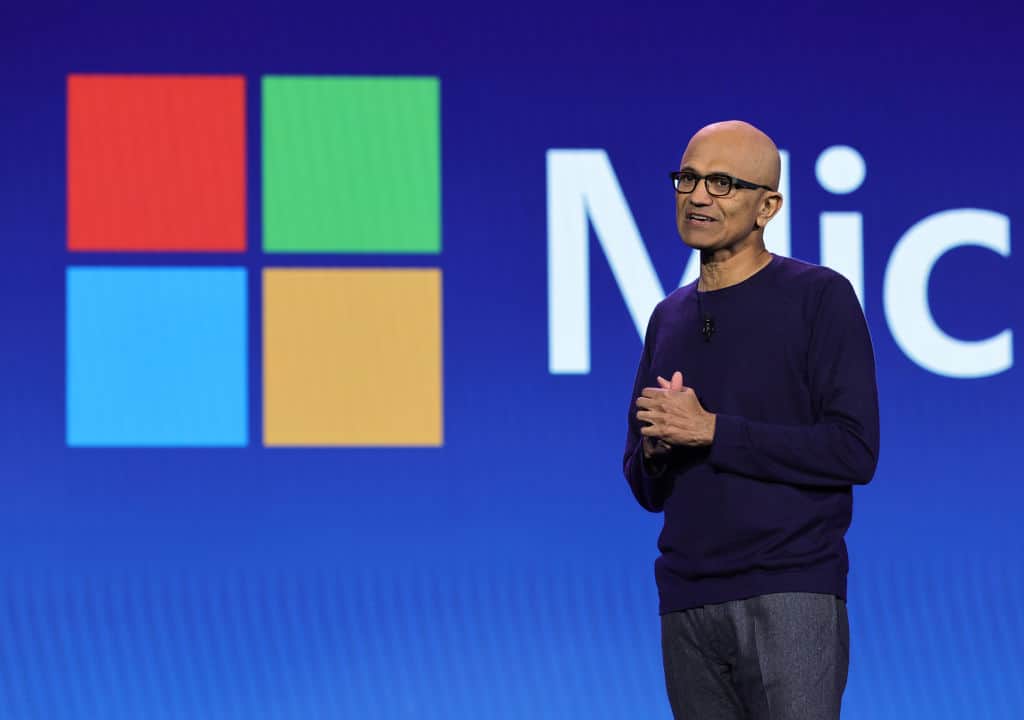
Microsoft's substantial $678 billion commercial backlog and the meteoric growth of its Azure platform underpin a $590 price target, which indicates a potential 22% upside for the stock. Microsoft's $332 billion in recurring revenue surpasses Nvidia's total, while Alphabet's Google (GOOGL) trades at a lower forward P/E of 17 compared to Microsoft's 24.
Despite Microsoft and Nvidia being recent poster children of the AI trade, Microsoft holds a key advantage that Nvidia lacks: the substantial commercial backlog. The 24/7 Wall St. price target for Microsoft stands at $590.43, and the model suggests a significant upside potential of over 22% over the next twelve months. This is primarily driven by the assumption that Azure, Copilot, and the commercial backlog will continue converting into revenue at the existing pace.
Microsoft reported a strong fiscal year 2026, with $331 billion in annual revenue, a 18% increase, and Azure reaching the $100 billion mark for the first time, growing at a 41% rate. In Q4, Microsoft generated $90.01 billion in revenue, beating market expectations, and its non-GAAP EPS of $4.74 surpassed by 11.81%, extending a five-quarter winning streak.
Commercial revenue reached $678 billion, reflecting an 84% increase. Microsoft 365 Copilot has attained over 30 million paid seats. The stock has seen a 21.2% increase over the past month but has dropped 2.98% in the past week, remaining nearly unchanged year-to-date at 0.12%. Recent reports about Microsoft's Maia 300 chip, which aims to challenge Nvidia's AI dominance, have added a vertical integration angle to Microsoft's software narrative.
Microsoft's leadership is highly optimistic, with Nadella expressing unprecedented confidence in the company's growth potential. Morningstar has even argued that Microsoft's stock is worth $600. Our bullish scenario suggests a price of $614.60, while our downside projection is $507.41, which is still above the current stock price.
Some bears point to challenges such as rising OpenAI investment losses ($3.1 billion in Q1 FY26), Xbox underperformance, and the dependence of AI capex on demand stability. However, proponents argue that Microsoft can manage data-center build-outs and GPU installations according to demand shifts, and while operating margins are lower than Nvidia's, Microsoft's revenue is significantly higher, and the company's subscription model is what the model values.
Alphabet (GOOGL) offers a cheaper cloud opportunity with a forward P/E of 17 and a 54.8% profit margin, making Microsoft appear more expensive in comparison but reasonable relative to Nvidia. Our recommended price target of $590.43 sits between the implied ranges of Microsoft and Nvidia. The tipping point is the commercial backlog, which acts as a visible return-on-investment question, contingent on the success of Azure, Copilot, and enterprise AI monetization.
Risks include potential compressions in enterprise AI budgets in 2027 and continued declines in free cash flow. The success of this projection hinges on the execution of Azure, Copilot, and enterprise AI initiatives. Significant upside or downside could arise from AI demand normalization, regulatory measures, or the speed of first-party silicon adoption.
The report also highlights that the suppliers of power, cooling, and networking systems for data centers could benefit from Microsoft's AI-related investments.
Written by urgent.news from Yahoo Finance's reporting — not their text. Machine-written — may contain errors; check the original before relying on it.