MERCOSUR collapsing? EU blocks Brazilian meat over sanitary rules: Spanish farmers say ‘we told you so’
Brazilian meat, chicken, eggs and other animal products face a full ban from entering the European Union from September 3 […]
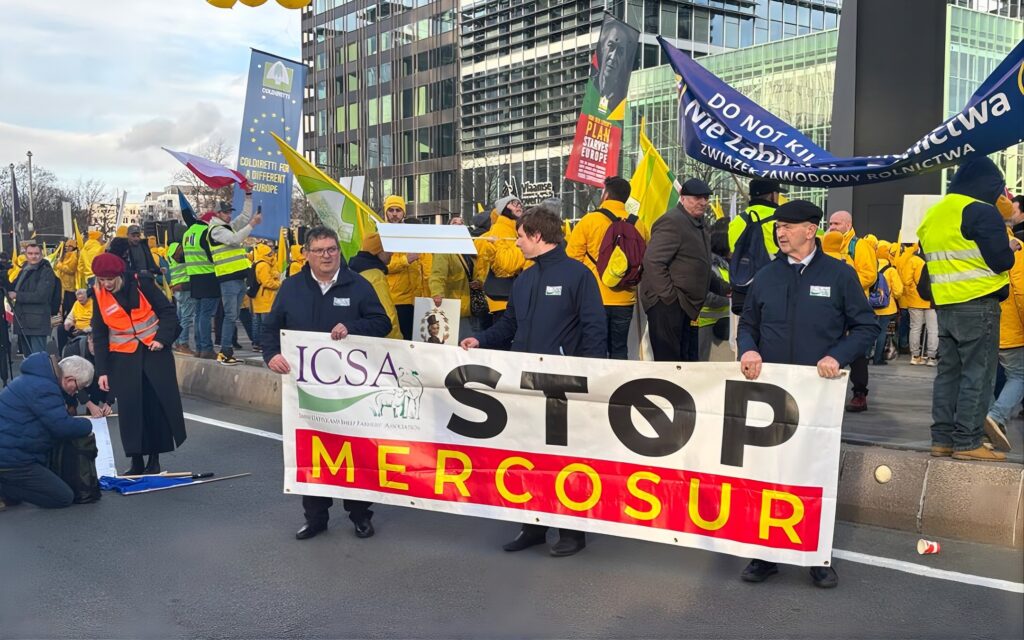
Spanish farmers in Brussels staged protests against the potential ban on Brazilian meat imports, warning that cheaper, less regulated products would harm local agriculture. Brazilian meat, chicken, eggs and other animal products will face a full ban from entering the European Union starting September 3 due to concerns over antibiotic use in livestock.
European Commission officials have ruled Brazil off the list of countries authorized to export these goods to the EU, citing a lack of guarantees that Brazilian cattle and poultry stay free of restricted drugs throughout their lives. The ban stems from long-standing worries about antimicrobial resistance, a major health threat as highlighted by the World Health Organization.
Trade in these products currently generates around $1.8 billion annually for Brazil. The decision comes just months after the EU-Mercosur trade agreement took effect, which includes preferential quotas for South American beef and poultry. Spanish farmers, led by ASAJA, COAG and UPA, were among the most vocal protesters, arguing that European standards on animal health, antibiotics and animal welfare should apply equally to all imported goods.
Spanish producers claim the ban serves as proof that sanitary rules must be upheld for all trade, despite Brazil's promise to reverse the decision. Spanish beef production exceeds 700,000 tonnes annually, with distinct regional specialties like Ternera Gallega, Ternera Asturiana, and Carne de Avila. The country's reputation for quality is built on native breeds, traditional rearing methods, and official quality labels.
Spanish farmers now view the ban as an opportunity to push for local quality standards in the EU market.
Written by urgent.news from Euro Weekly News's reporting — not their text. Machine-written — may contain errors; check the original before relying on it.