KI: Chinas humanoide Roboter tanzen, aber können sie auch arbeiten?
Trotz spektakulärer artistischer Einlagen sind humanoide Roboter bislang nur beschränkt kommerziell einsetzbar. Mit einem neuen Aktionsplan will Peking das ändern.
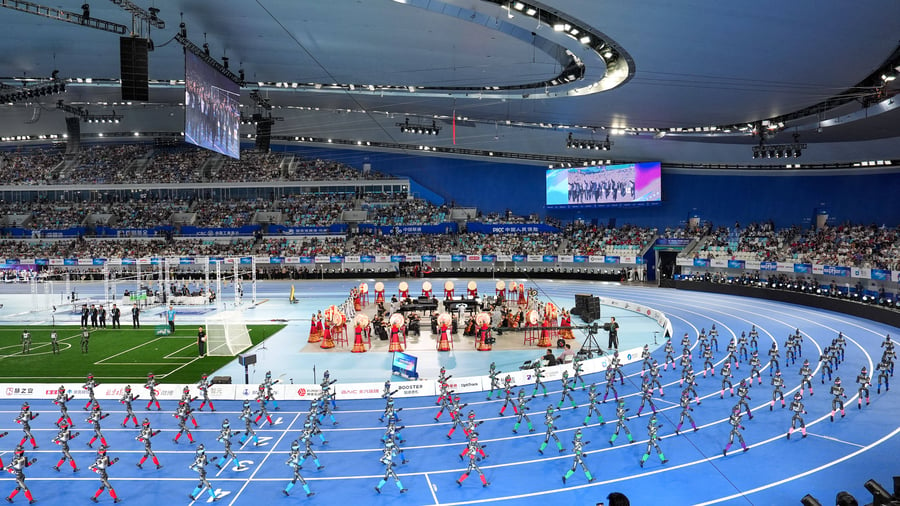
In the heart of Beijing, a palpable tension filled the air at the packed Olympic ice rink. China's fastest humanoid robots sprinted on stage during the opening ceremony of the World Championship for humanoid robots. Yet, they galloped past the 100-meter target and careened into a blue rubber mat with a resounding thud, eliciting laughter.
This scene illustrated both the remarkable strides China has made in humanoid robotics and its current limitations. Six hundred and sixty-six teams from sixteen countries, with over two thousand robots, competed on Sunday in the second World Championship. Most participants hailed from the People's Republic of China. The images of robots boxing, kicking, racing, and playing tennis will once again travel around the world in the coming days.
While China celebrated its dominance in robotics publicly at this World Championship and the robotics fair in Beijing, the United States banned the import of new, intelligent autonomous robots from China at the end of July. This action underscores how embodied artificial intelligence (AI) is increasingly at the center of the global technology competition.
This is especially true following recent successes of Chinese AI companies such as Alibaba, Deepseek, Moonshot, and Zhipu. These firms have caught up to leading US companies Anthropic and OpenAI with their large language models, despite US export restrictions on high-tech chips and machines for their manufacture. This catch-up was also accelerated by the fact that China's leading AI firms largely made their models freely available.
This strategy ensures that "Made in China" technology quickly spreads and is used in Chinese industry. "China's open AI model strategy and its manufacturing dominance reinforce each other," a report from the US Congress's Congressional Commission on Review of Economic and Security Relations with China (UCSS) notes.
Written by urgent.news from Handelsblatt's reporting — not their text. Machine-written — may contain errors; check the original before relying on it.