Into the storm: MMEA pilots fly where others fear to go
SUBANG: Far out at sea, there is nowhere to pull over when the weather turns vicious, no runway to land on when visibility disappears and no second chances when a rescue operation turns critical.
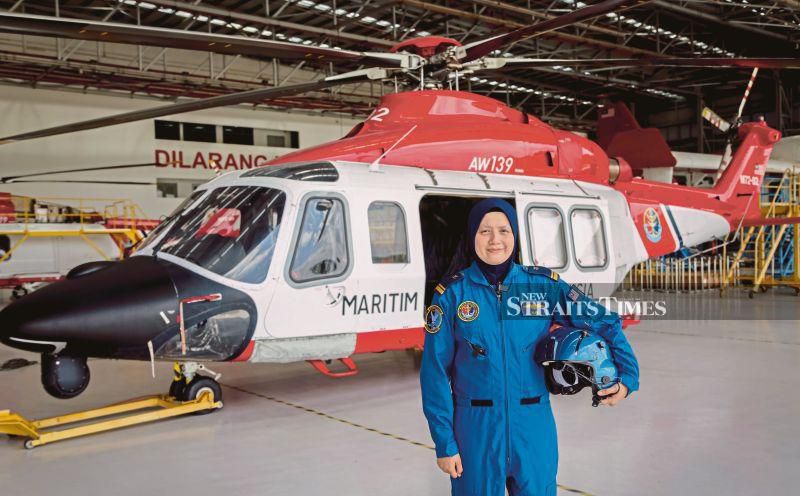
In Subang, Malaysia, maritime pilots for the Malaysian Maritime Enforcement Agency (MMEA) routinely navigate hazardous conditions to carry out critical missions. These aviators fly in severe weather and stormy seas, often in the dark, to perform surveillance, enforcement, and search-and-rescue operations. Their work is vital, as Malaysia's maritime zone spans over 600,000 square kilometers, a task that cannot be accomplished by ships alone.
The MMEA's air wing includes a mix of helicopters and fixed-wing aircraft, each tailored for maritime operations. The helicopter fleet comprises the Leonardo AW139 and Airbus Helicopters AS365 N3 Dauphin, which play a crucial role in SAR missions, winch rescues, and night operations in challenging weather. The fixed-wing aircraft, including the Bombardier CL415MP, are used for maritime patrol, SAR, and aerial firefighting.
MMEA's Subang Air Station commander, Maritime Captain Mohd Ikmal Ridzuan, highlighted the increasing demand for their services due to rising maritime threats such as illegal fishing, smuggling, and migrant activities. The air wing logs between 600 and 1,200 flight hours annually, with 150 sorties dedicated to search and rescue alone. These figures underscore the critical nature of their role, especially in the South China Sea and the Strait of Malacca, areas of heightened activity.
Unlike conventional aviators, MMEA pilots often fly into hazardous conditions without communication from the ground, especially during SAR missions. Captain Ikmal emphasized the unique challenges they face, including unpredictable sea movements and adverse weather, which require precise judgment and swift action. Despite the high costs associated with helicopters, he noted that UAS (unmanned aerial systems) could serve as a valuable addition, enhancing surveillance while reducing operational expenses.
The agency is working to integrate drones into its operations, complementing rather than replacing existing aircraft.
Written by urgent.news from New Straits Times's reporting — not their text. Machine-written — may contain errors; check the original before relying on it.